


.webp)

Recruitment is as much about storytelling as it is about sourcing candidates. And at the heart of that story? Your employer brand — the deliberate plan that narrates how people perceive your company as a place to work.
A strong employer branding strategy turns a job listing into an opportunity people want to pursue, and a company into a place they want to belong. It shapes how candidates discover you, evaluate you, and ultimately decide whether to apply.
And with talent shortages continuing to grow, employer branding has increasingly become a strategic competitive advantage.
If you’re an HR leader, recruiter, or talent marketer looking to stand out in a crowded market, this guide is for you. Inside, you’ll learn:
- What an employer branding strategy really is
- The core components that make it effective
- How to build and evolve your employer brand step by step
We’ll also leave you with a practical checklist you can use to turn theory into action and strengthen your employer brand over time.
What is an employer branding strategy?
Employer branding strategy is a structured plan that defines how an organization attracts, engages, and retains talent by shaping how it presents itself as an employer — across its culture, values, messaging, and candidate experience.
It’s how a company intentionally communicates what it’s like to work there, not just to job seekers, but also to current employees.
Key components and goals
An employer branding strategy is built on a set of core components that shape how people perceive your company as a place to work— including its value proposition, target talent, positioning, and the experiences that bring that promise to life.
The following make up an employer brand strategy’s key components:
- Employer value proposition (EVP). Your EVP outlines how the company is different from other employers and what employees gain by working there. It clarifies your differentiators, values, and competitive strengths, and guides how you communicate your brand across channels.
- Target candidate personas. These are research-based profiles that describe the types of candidates you want to attract. Personas capture skills, motivations, career goals, and expectations, helping you tailor messaging and experiences to the right talent segments.
- Employer messaging and storytelling. This component covers the narratives, tone, and messaging used to communicate your employer brand — from job descriptions and career pages to social content and recruitment campaigns.
- Candidate and employee experience. This reflects the real experience of interacting with your company, from first touchpoint through long-term employment. A consistent, positive experience reinforces credibility and ensures that your employer brand aligns with reality.
Dig deeper: 9 practical ways to improve candidate engagement and hire faster.
Why employer branding strategy matters now
Employer branding has always influenced how companies attract talent, but in today’s hiring landscape, it has become a critical driver of hiring success.
Based on insights from our research across 5,649 companies, employer branding is no longer a “nice to have” — it’s a strategic priority.
Rising competition for talent, shifting candidate expectations, and longer hiring cycles have made employer brand a defining factor in whether candidates apply, engage, and ultimately accept an offer.
Data from our State of Hiring report highlights this shift:
- Candidates are more selective than ever. Jobseekers actively research company culture, values, and work models before applying — and increasingly opt out early if expectations aren’t clear.
- Hiring speed now impacts outcomes. As hiring timelines stretch, candidate interest drops. Organizations with hiring cycles exceeding 40 days see their drop-off rates increase by 12%, underscoring the critical importance of speed, clarity, and strong employer branding in converting interest into an an accepted offer.
- Employer brand directly affects conversion. With 41.2% of candidates abandoning applications mid-process, a credible employer brand plays a crucial role in maintaining engagement and reducing drop-off.
- Market conditions and role flexibility have raised the bar. While over 72% of companies now offer hybrid roles, unclear expectations around flexibility and in-office requirements make these roles harder to fill than fully remote positions, reinforcing the need for transparent and consistent employer messaging.
In this environment, employer branding is no longer a reputational asset. It’s a practical lever for improving hiring efficiency, candidate quality, and long-term retention — and a key differentiator in increasingly competitive talent markets.
How to build your employer branding strategy in 15 steps
A standout employer brand isn’t built overnight. It takes planning, consistency, and iteration. To help you focus your efforts, we’ve broken the employer branding process into three broad, repeatable phases:
- Planning. In this first phase, you’ll lay the groundwork. It involves researching your reputation, aligning with leadership, defining your culture, and crafting your Employer Value Proposition (EVP).
- Execution. In this stage, you’ll put the strategy into action. Update your branding assets, activate your EVP, and get employees involved.
- Refinement. Here, you’ll monitor the impact, collect feedback, and make data-informed improvements.
Keep in mind, these phases aren’t linear. Employer branding is an ongoing process — one you’ll revisit often as your team evolves, your market shifts, and your brand grows.
With that, let’s take a closer look at how each phase works and the 15 steps you need to take to build a candidate-attracting employer brand:
Phase 1: Planning your employer branding strategy
Before you launch into job ads or social media posts, you need a plan. This phase is all about building a foundation by understanding your company’s identity, aligning with business goals, and setting the direction for all employer brand efforts.
Without this groundwork, your messaging risks being inconsistent or misaligned. Here’s how to set it up right:
1. Align your employer brand with business goals
Before anything else, understand your company’s broader business priorities — from growth targets and expansion plans to skill gaps and organizational changes.
Then start by aligning with leadership on what the business is trying to achieve and how hiring supports those goals.
Whether you’re scaling new teams, entering new markets, or reshaping company culture, your employer brand should reflect and reinforce those priorities.
As Karim Gharsallah, former Head of Talent at Tellent Recruitee, put it:

2. Assess and define company culture
Candidates don’t just want a job — they want to fit in.
Objectively review how your current culture shows up day to day:
- Do your stated values manifest in your daily behaviors?
- Are they inclusive and consistent across teams and regions?
Culture is one of your strongest differentiators.
When clearly defined, it helps candidates self-select, sets realistic expectations, and ensures your employer brand reflects what it’s actually like to work at your company — not just what you aspire it to be.
3. Set clear employer branding goals
Define what success looks like for your employer brand. Clear goals help you focus efforts, prioritize initiatives, and measure progress over time.
Start by identifying the outcomes you want to influence, such as:
- Increase qualified applications
- Increase referral hires
- Reduce time-to-hire
- Boost Glassdoor ratings
- Raising offer acceptance rates
Once done, assign measurable metrics to track progress. These include application volume and quality, time-to-hire, conversion rates, or engagement metrics across your careers site and employer content.
These performance indicators create a baseline for evaluating performance and connect directly to step 14, where you’ll track results and refine your strategy over time.
4. Secure leadership alignment
Employer branding only works when leadership actively supports it.
Executives also play a critical role in shaping how the company is perceived — both internally and externally — and their behavior sets the tone for the entire organization.
Work closely with leadership to align them on the following concrete points:
- What values and behaviors are they supposed to model publicly
- How will leaders show up in employer branding (e.g., internal comms, career pages, hiring conversations, or public channels)
- What messages must remain consistent across leadership, HR, and recruiting
5. Assign ownership and allocate resources
Candidate-winning employer branding is a collective effort, not something that the hiring team can accomplish alone. To this end, focus on three core actions:
- Build a cross-functional group that includes HR, recruitment, marketing, leadership, and employee advocates to make sure you’re representing multiple perspectives.
- Clearly define ownership. Identify who’s responsible for strategy, content creation, channel management, and measurement — and make those responsibilities explicit.
- Finally, allocate the resources needed to execute properly. That includes time, budget, tools, and internal support for content creation, campaigns, and ongoing optimization.
6. Create your target candidate personas
To attract the right talent, you need a clear picture of who you’re trying to reach.
Start by analyzing your top performers, speaking with hiring managers, and identifying the skills, motivations, and career goals that define your strongest hires.
Past hiring data also plays a key role here. Review applicant sources, how candidates move through the funnel, and hiring outcomes to see patterns across successful hires.
But while pulling data from disparate sources can be time-consuming, an applicant tracking system (ATS) makes this step fairly easy.
For example, Tellent Recruitee helps you:
- Identify which channels consistently deliver high-quality candidates, showing where your ideal talent actually spends time.
- Understand how candidates move through your hiring funnel with insights into application drop-off, time-to-interview, and offer acceptance rates. These signals help define what motivates or discourages candidates.
- Spot patterns across successful hires by connecting performance data with job descriptions, campaigns, and sourcing channels.
Together, these insights inform how you build accurate, evidence-based personas — so your messaging aligns with what your ideal candidates actually care about, not just what you assume they do.
7. Develop your Employer Value Proposition (EVP)
Your employer value proposition defines why someone would choose to work at your company — and what makes that experience distinct.
All of the work you do in steps 1 to 6 will assist you here as you develop a thorough and authentic EVP:
- Identify what you genuinely offer, for instance, growth opportunities, culture, flexibility, purpose, learning, or impact.
- Validate it against reality. Use employee feedback to understand what truly keeps people engaged and why they stay — and ensure your messaging reflects the real employee experience, not just aspirational language.
- Align it with your target candidates. Focus on what matters most to the people you want to attract, not generic perks, so it resonates with the personas you’ve created.
- Translate it into clear messaging that can be used consistently across job descriptions, career pages, and hiring conversations.
8. Identify the right channels for your employer brand
Once you know what you want to say, the next step is deciding where to say it.
Choose channels your target candidates already use — whether that’s LinkedIn, industry communities, job boards, social platforms, or your careers site.
But remember, not every channel deserves equal effort, so prioritize the ones that consistently reach and influence the talent you want to attract.
You can do this by using your ATS to see which channels actually perform and focus your time and budget accordingly:
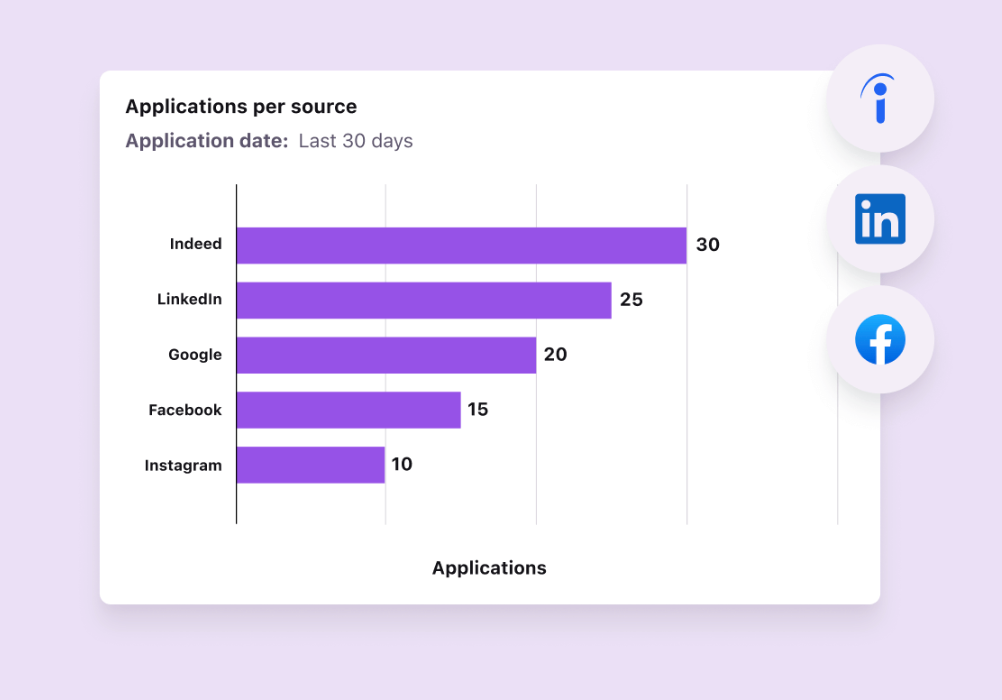
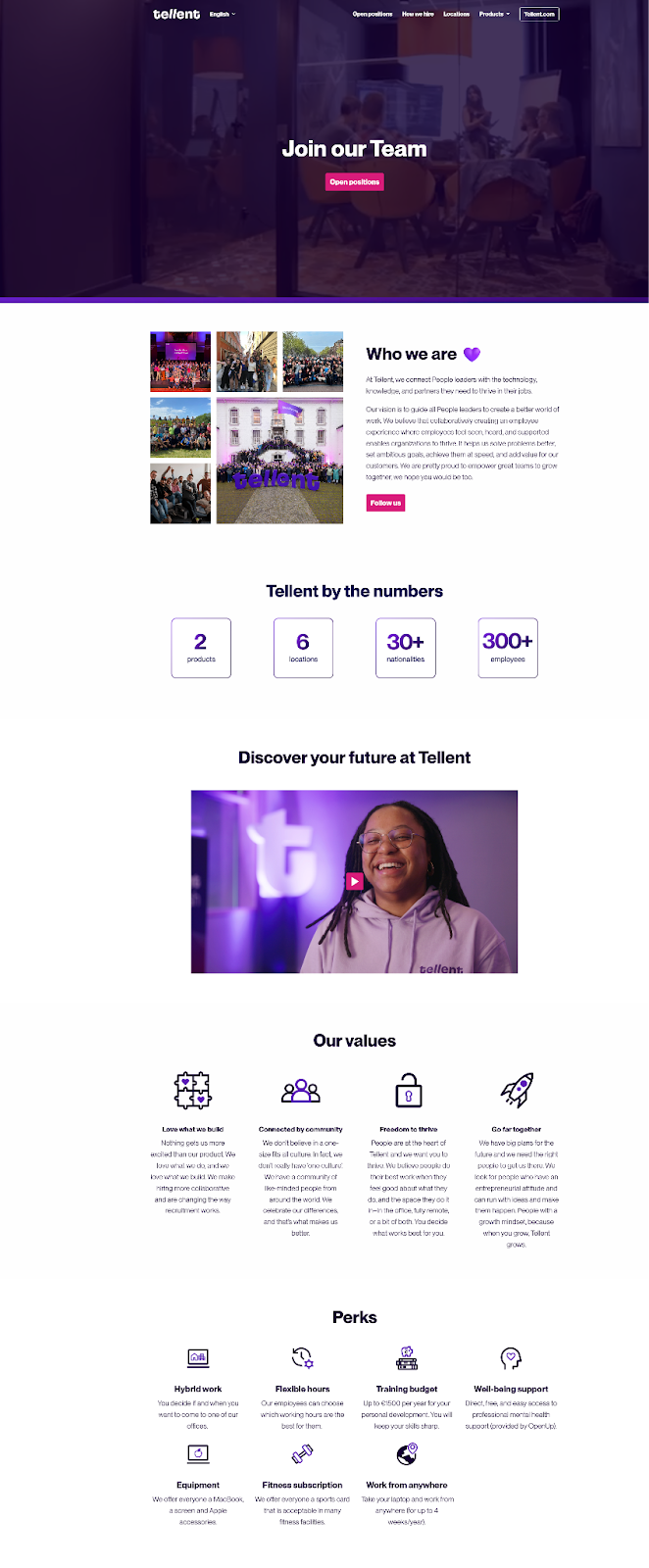
Ultimately, all employer channels lead candidates to one place: your careers site. It’s often the final destination they visit before deciding whether to apply.
So, make sure it provides talent with the information they need to decide if your company is the right fit.
To make your channel strategy effective, focus on a few core principles:
- Use a mix of formats, including job posts, employee stories, videos, and social content
- Match the format to the channel (e.g. short-form video on social, deeper context on your careers site)
- Maintain consistency in tone and messaging across all touchpoints
Phase 2: Executing your employer brand strategy
This phase is about turning strategy into action.
With your messaging defined and personas in place, the focus shifts to execution across every touchpoint. This typically involves close collaboration between HR, recruitment, marketing, and internal stakeholders.
Here’s everything you need to do:
9. Audit your existing employer branding materials
Take stock of the assets you already have. This includes your careers site, job descriptions, recruitment ads, and onboarding materials.
Create a spreadsheet of these assets and flag anything outdated, off-brand, or inconsistent with your updated employer brand:
- Is the messaging current and accurate?
- Does it reflect your values and culture today?
- Is the tone consistent across channels?
Pay particular attention to whether these materials answer the questions candidates care about most — such as growth opportunities, flexibility, team culture, and day-to-day work.
Want to check if your employer branding efforts are up to speed? Find out quickly with our employer branding checklist.

10. Evaluate your application process
Next, step into the candidate’s shoes and evaluate how your application process actually feels in practice.
Ask yourself:
- Is the application flow simple, fast, and mobile-friendly?
- Are follow-up emails timely, clear, and consistent with your employer brand?
- Are candidates kept informed at each stage of the process?
Even minor points of friction can lead to drop-offs.
Use an ATS to review your recruiting funnel end-to-end and identify where candidates drop off, how long each stage takes, and which steps create unnecessary friction.
These insights make it easier to pinpoint where candidates disengage and where small changes can significantly improve completion rates and overall experience.
11. Create and update employee brand content
Once your messaging is aligned, the next step is bringing it to life across your candidate-facing content.
Based on your audit, update key touchpoints to ensure they reinforce your employer brand, including:
- Job descriptions written in your brand voice
- Your About page, with clear messaging around mission and values
- Career site content, such as employee stories or behind-the-scenes features
As Charlène Hemery, Founder of TalentCatcher and former recruiter, explains:
“Stories, immersive behind-the-scenes content, and clear job insights [to] build trust, engage candidates, and increase [your career site’s] conversions.”
At the same time, clarity matters:
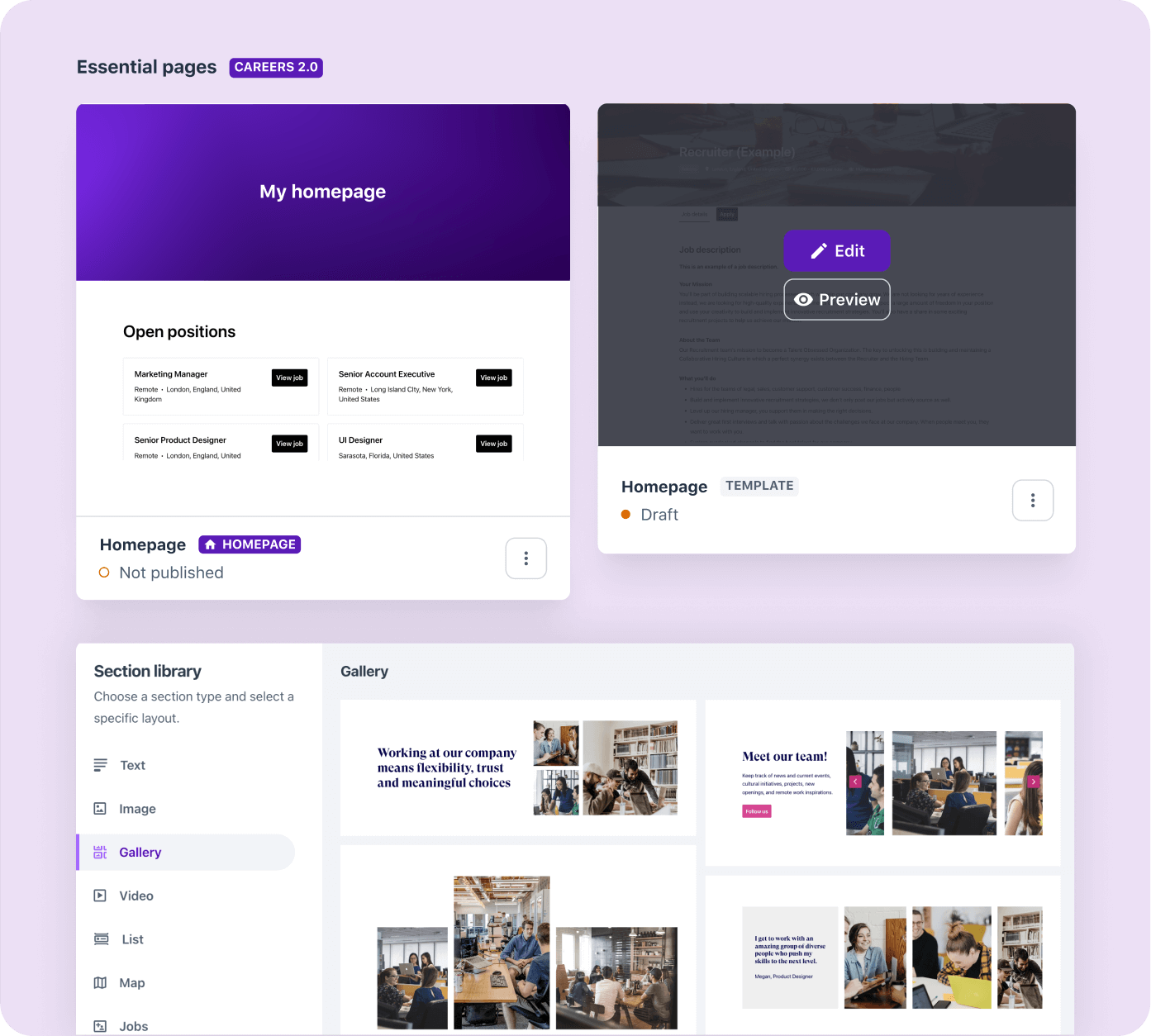
Pro tip: Tools like Tellent Recruitee’s CareersHub make it easy to build, update, and maintain a rich, on-brand career site fast with customizable templates:
1
2. Involve employees as brand advocates
Your employees are some of your most credible brand ambassadors.
Candidates trust employees more than corporate messaging, which is why empowering them to share their experiences can significantly strengthen your employer brand.
To support consistent participation, make it easy for employees to contribute:
- Provide ready-to-use content such as captions, visuals, or post ideas
- Encourage authentic storytelling rather than scripted messaging
- Highlight real moments: team wins, milestones, or behind-the-scenes snapshots
Here again, the right tools can make running an effective employee referral program simple.
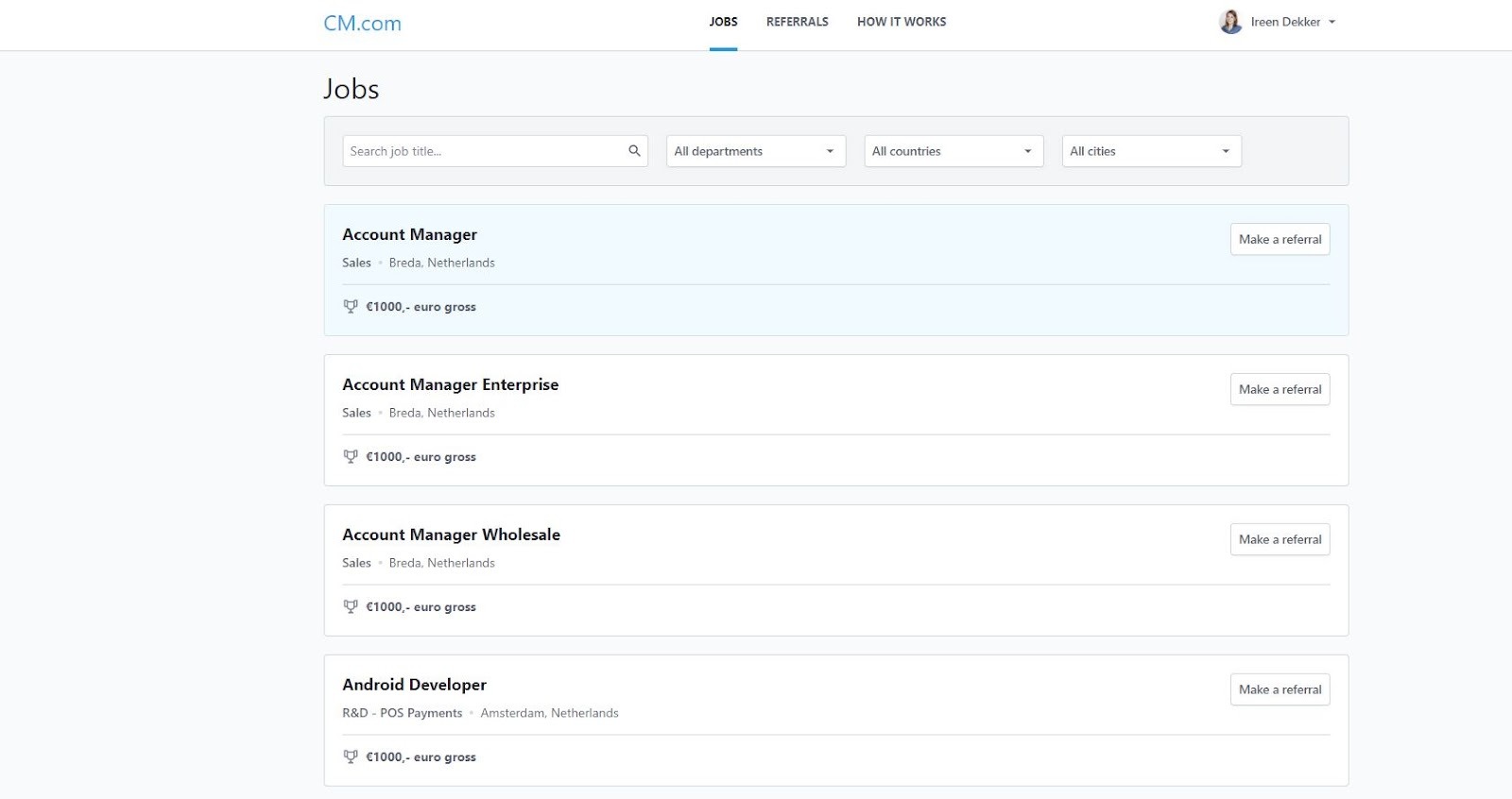
For example, CM.com used Tellent Recruitee’s ReferralsHub to build its referral program and saw a 45% conversion rate from referred candidates to hires.
Phase 3: Measuring and refining your employer branding strategy
Employer branding isn’t a “set it and forget it” initiative.
So this phase is about turning your strategy into an ongoing practice — continuously evaluating what’s working, what isn’t, and how expectations are evolving.
The strongest employer brands treat this as a feedback loop. They monitor performance, test new approaches, and refine their messaging to stay aligned with both business goals and candidate expectations.
13. Test and experiment with employer branding initiatives
Avoid treating your employer brand as static. Instead, run small, intentional experiments to understand what resonates most with candidates.
This might include A/B testing career page visuals, trialing different EVP messaging, or adjusting tone and language in job descriptions. Some changes will deliver meaningful gains; others won’t — both outcomes are valuable.
To ground these decisions in real insight, collect feedback directly from candidates.
Use short surveys or questions like “What made you apply?” to understand which messages, channels, or experiences are driving engagement and which need refinement.
14. Measure performance against goals
This is where you assess whether your employer branding efforts are actually delivering results.
Track performance across key areas such as:
|
Employer branding goals |
Metrics to track |
|
Talent attraction |
Volume and quality of applicants, conversion rates, and career site performance |
|
Candidate experience |
Drop-off rates, interview feedback, and offer acceptance rates |
|
Employer reputation |
Employee referrals, social engagement, and employer review trends |
|
Hiring efficiency |
Time-to-hire and cost-per-hire |
ATS tools like Tellent Recruitee’s reporting and analytics make it easy to monitor these signals in real time — with easy-to-understand, visually engaging dashboards that show you metrics most relevant to you:
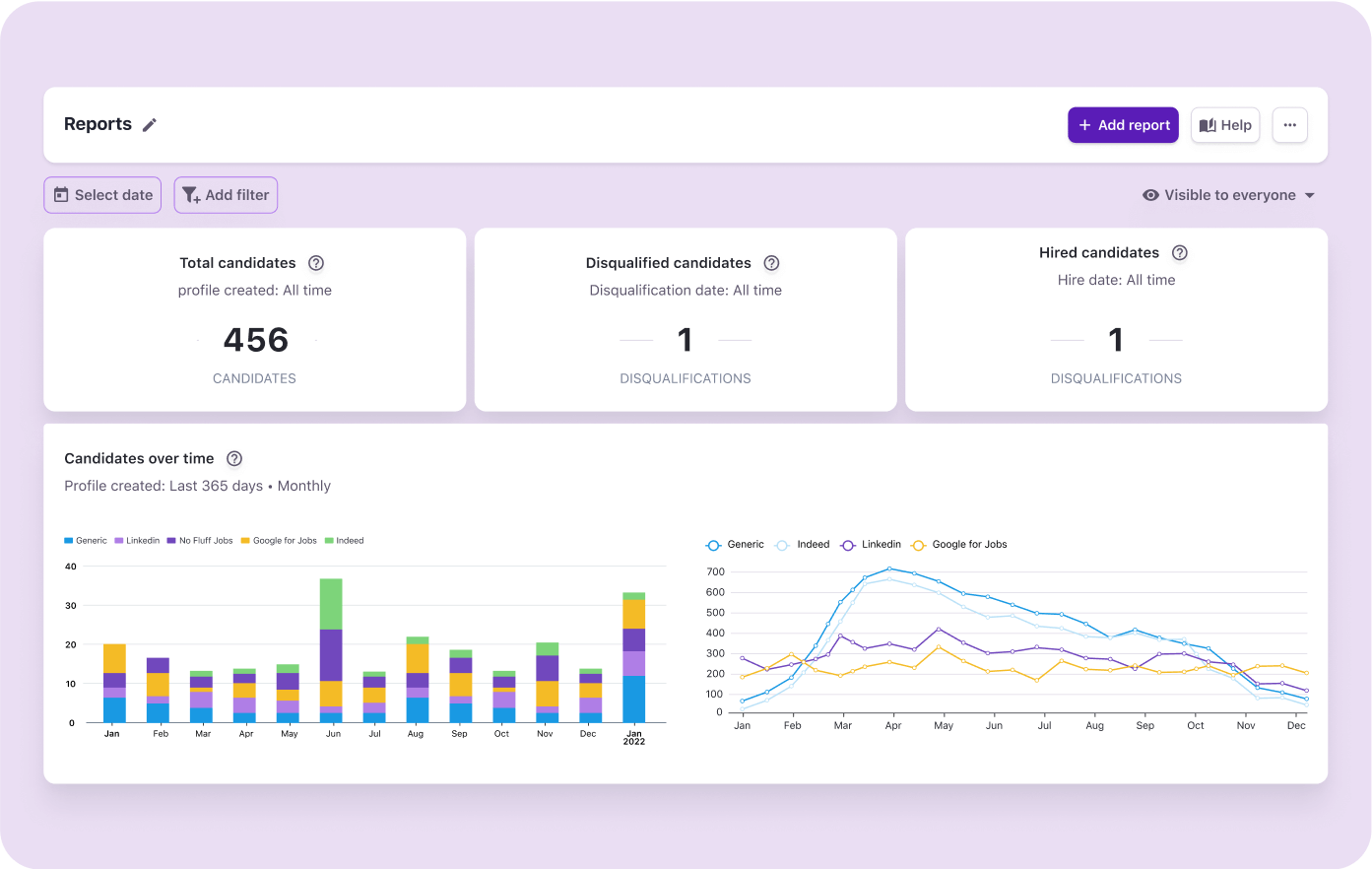
This visibility helps you spot what’s working, identify gaps early, and make informed adjustments — turning employer branding into a measurable, continuously improving process rather than a one-off initiative.
Side by side, complement the data by gathering qualitative insight. Candidate experience surveys, employee pulse checks, and recruiter insights all review how your brand is perceived in the wild.
Ask your team what they’re hearing in interviews. Encourage employees to flag inconsistencies or share fresh ideas. They’re your frontline brand ambassadors and a rich source of insight.

15. Regularly review and optimize your employer branding strategy
Set aside time each quarter to review performance and identify opportunities to improve. Combine quantitative data with qualitative insight to answer questions like:
- What are people saying in exit interviews or online reviews?
- What content drove the most traffic or engagement?
- What are your recruiters hearing in their screening interviews?
Additionally, at least once a year, reassess your employer branding strategy as a whole.
Business priorities shift, teams evolve, and candidate expectations change — your employer brand needs to keep pace.
Use these check-ins to update your EVP, refine your content, and adjust your approach based on what’s working and what’s no longer effective.
Done consistently, this turns employer branding into a long-term advantage that supports stronger hiring outcomes over time.
Examples of great employer branding strategies
Employer branding doesn’t have to follow a single formula. The strongest strategies reflect each company’s unique culture, values, and voice. Here are two standout examples to inspire your own approach:
Netflix—culture-first transparency
Netflix’s employer brand is built around its bold “Freedom & Responsibility” culture. Their original culture memo laid the groundwork for a high-autonomy, high-performance environment that’s not for everyone, and that’s the point.
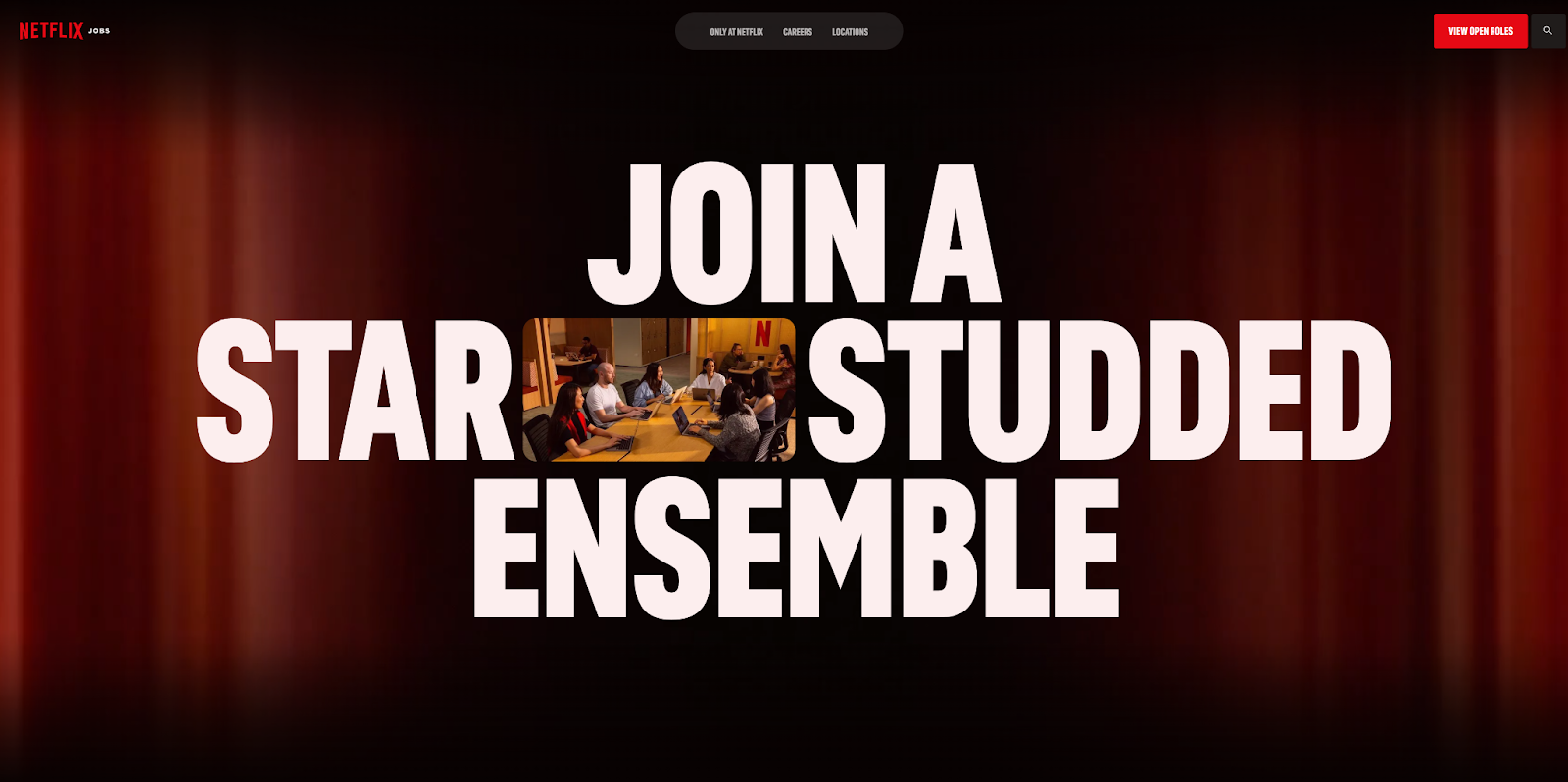
Through their careers site and “WeAreNetflix” podcast, they share real stories and insights from employees, giving candidates an unfiltered view of what it’s like to work there.
Takeaway: Boldly and consistently communicate your real culture to attract the right-fit talent.
Heineken—personality-driven storytelling
Heineken’s “Go Places” campaign positioned the employee journey as an adventure, celebrating diversity, creativity, and international opportunities across their 70+ markets.
That campaign was in 2016, but they’ve continued this theme and playful brand ever since. This makes their messaging authentic, and distinctly “Heineken”—and it attracts talent seeking both fun and purpose.
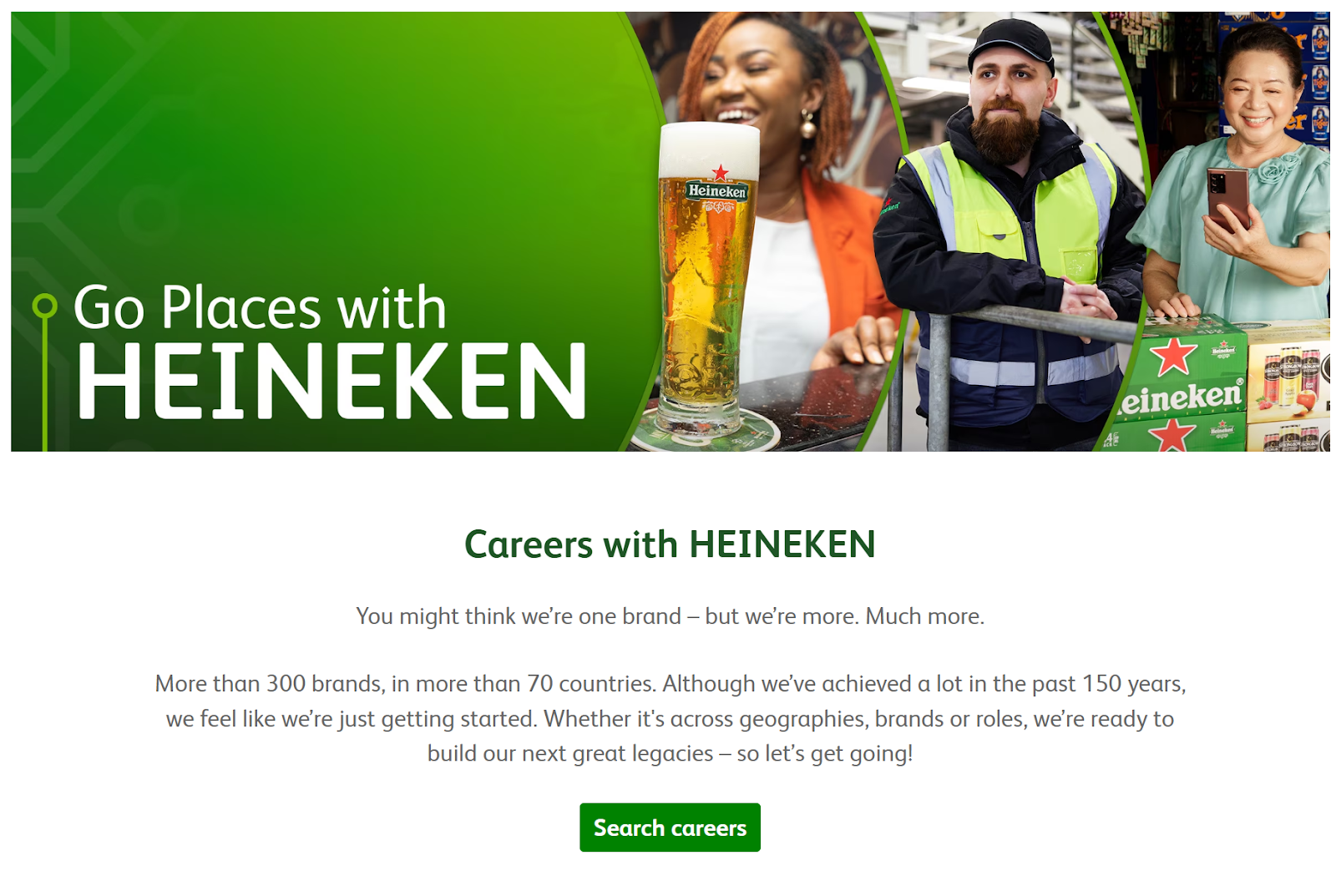
Takeaway: Infuse your employer brand with personality and a clear sense of journey to engage globally minded candidates.
These examples show there’s no one-size-fits-all approach. The best employer branding strategies reflect your unique DNA. The common thread is always authenticity and consistency.
Wrapping up: Build an employer brand that top talent can’t ignore [Plus checklist]
Building an employer branding strategy takes time, but it pays off in every stage of hiring — from faster fills to better fit.
So if you haven’t yet, start today. Assess where you are. Define where you want to go. And focus on the fundamentals:
- Clarify your employer value proposition: Define what makes your company distinct as a place to work and ensure it reflects real employee experiences.
- Build clear target candidate personas: Identify who you’re trying to attract, including their skills, motivations, priorities, and career goals, so your messaging speaks directly to the right audience.
- Audit existing employer branding assets: Review your careers site, job descriptions, and recruitment materials to identify gaps, inconsistencies, or outdated messaging.
- Align messaging with candidate expectations: Shape your content around what candidates actually care about, not internal assumptions.
- Activate your employer brand across key channels: Use the right mix of platforms and formats to reach your target talent where they already spend time.
- Measure performance and engagement: Track application quality, conversion rates, and candidate feedback to understand what’s working.
- Refine and evolve continuously: Use insights from data and feedback to adjust your messaging, improve clarity, and keep your employer brand relevant over time.
To help you put this into practice, we’ve created a practical employer branding checklist you can use to build your employer brand strategy.