



.webp)

Candidates today approach job decisions much as they do buying decisions. They research companies, compare options, read employee reviews, and evaluate whether a role fits their goals before taking action.
As a result, hiring is no longer just about posting open roles and waiting for applications. To attract the right candidates, companies need clear employer messaging, intentional outreach, and a way to stay visible throughout the decision process.
This is where recruitment marketing comes in.
It helps organizations attract, engage, and convert candidates by treating hiring as an ongoing journey — not a last-minute scramble when roles open.
In this guide, we look at how recruitment marketing works in practice, covering:
- What recruitment marketing is and why exactly you need it
- How to build an effective recruitment marketing strategy step by step
- Which recruitment marketing tactics help attract more qualified applicants
Let’s get started.
What is recruitment marketing?
Recruitment marketing refers to the tactics companies use to attract, engage, and nurture potential candidates over time.
It involves promoting your employer brand and communicating the organization’s value proposition to reach the right talent.
Much like traditional marketing, recruitment marketing requires a clear strategy supported by tactical methods — such as content marketing, social media outreach, and talent nurturing — to attract both active and passive candidates and create a consistent, positive candidate experience.
Recruitment marketing vs recruiting
Recruitment marketing focuses on attracting and engaging potential candidates before roles are open, while recruiting focuses on filling open positions once hiring begins.
Meaning, where recruitment marketing builds awareness and interest over time, recruiting converts that interest into applications and hires.
Comparison area |
Recruitment marketing |
Recruiting |
|
Primary focus |
Builds talent pipelines and long-term candidate interest |
Fills open roles |
|
Time horizon |
Proactive and long-term |
Reactive and short-term |
|
Candidate stage |
Engages candidates before they apply |
Engages candidates after roles open |
|
Core activities |
Employer branding, messaging, and candidate engagement |
Screening, interviewing, and selection |
|
Hiring impact |
Supports hiring consistency over time |
Supports immediate hiring needs |
Recruitment marketing vs employer branding
Employer branding defines how your company is perceived as a place to work, while recruitment marketing uses that brand to attract, engage, and convert candidates.
So where employer branding shapes long-term perception, recruitment marketing applies that perception to support active and future hiring needs.
Comparison area |
Employer branding |
Recruitment marketing |
|
Primary purpose |
Shape long-term perception as an employer |
Attract and engage candidates for hiring |
|
Time horizon |
Long-term |
Short- to mid-term (but ongoing) |
|
Focus |
Defining company values, culture, and identity |
Driving candidate interest and applications |
|
Scope |
Company-wide and ongoing |
Role- and hiring-driven |
|
Output |
Employer reputation and positioning |
Job visibility, engagement, and applications |
|
Relationship to hiring |
Indirectly supports hiring over time |
Directly supports open and future roles |
What are the benefits of recruitment marketing?
Recruitment marketing is a long-term investment that supports more consistent, effective hiring over time. While results may not be immediate, sustained efforts increase awareness, improve candidate fit, and strengthen hiring outcomes across future roles.
Here are five key benefits of recruitment marketing:
- Attract higher-quality candidates
Recruitment marketing helps organizations intentionally target and attract top talent.
By using clear messaging and role-specific content, companies are more likely to attract applicants who are both qualified and aligned with the organization’s culture — leading to stronger hiring outcomes and improved retention.
- Strengthen employer brand awareness
Consistent recruitment marketing increases employer visibility and recognition among both active and passive candidates.
A clear employer brand also helps differentiate your organization from competitors and positions your company as a more attractive place to work.
- Improve candidate engagement
Recruitment marketing supports ongoing engagement with potential candidates, even when no immediate roles are open. This helps maintain a warm talent pipeline of candidates who are more likely to apply when the right opportunity becomes available — reducing time-to-hire and ensuring a smoother recruitment process.
Across the candidate journey, recruitment marketing also helps reduce drop-off by setting clearer expectations, delivering the right information earlier, and removing friction from the application process.
- Enhance hiring success rates
By targeting and engaging the right candidates, recruitment marketing helps improve hiring decisions.
Candidates reached through these efforts are more likely to align with role requirements and company values, leading to higher acceptance rates, fewer mis-hires, and lower turnover.
A data-driven approach here also helps teams identify which channels and messaging resonate most with candidates and contribute most to stronger hiring outcomes.
- Increase employee retention
As hiring efforts become more targeted and refined over time, employee retention also improves.
When candidates have a clear understanding of the company’s culture, expectations, and role requirements before applying, they are better able to self-select — reducing early attrition and supporting longer-term retention.
When do you need a recruitment marketing strategy?
You need a recruitment marketing strategy when:
- Roles take longer to fill than expected
- Candidate quality is inconsistent across roles
- Hiring becomes reactive instead of planned
- Sourcing volume is high, but application conversion remains low
- Teams repeatedly reopen the same roles due to poor fit
A structured recruitment marketing approach will help you build earlier awareness, engage the right candidates over time, and create a more reliable talent pipeline.
Key components of an effective recruitment marketing strategy
Effective recruitment marketing doesn’t rely solely on tactics. It’s shaped by a set of foundational components that guide decision-making, determine priorities, and influence how efforts scale over time.
And while recruitment marketing involves many familiar tactics, those tactics aren’t the strategy itself.
A strong recruitment marketing strategy defines the structure behind those tactics — ensuring efforts are focused, consistent, and measurable. (You’ll see how these pieces come together below).
With that context, let’s break down six key components of a strong recruitment marketing strategy:
1. Market research and persona development
Before you can do any recruitment marketing, you need clarity on:
- Who you’re trying to attract
- How you want to speak to them
- And what other employers are already saying to the same audience
Most teams already have a sense of the types of candidates they want to hire. Market research and building personas formalize that understanding around candidate skills, motivations, and expectations.
This clarity guides how roles are positioned, what messaging resonates, and where recruitment marketing efforts should be focused.
2. Employer Value Proposition (EVP)
Employer Value Proposition (EVP) is the core value your organization offers employees — from growth opportunities and ways of working to culture, benefits, and expectations.
At its core, it clearly answers a single question: why should a candidate choose to work for your organization over another?
A well-defined EVP helps your company stand out in a crowded hiring market and ensures your recruitment marketing communicates a consistent, credible message across job ads, career pages, and outreach.
3. Competitor analysis
Another key component of recruitment marketing is understanding how other employers in your industry or geographical area attract the same talent.
Competitor analysis involves reviewing their career sites, social media presence, job postings, and employee reviews on platforms like Glassdoor to understand:
- What messaging do competing organizations use
- Which benefits and promises do they emphasize
These insights help you identify market gaps that your recruitment marketing plan can fill.
It also informs your employer brand positioning—ensuring your messaging feels distinct, credible, and clearly differentiated, rather than blending into the same language candidates see everywhere.
4. Goals and Key performance indicators (KPIs)
Define clear recruitment marketing goals and performance metrics to track, helping focus your efforts and create a baseline for measuring performance.
Without defined goals and KPIs, it becomes difficult to understand what’s working, where to adjust, and how to justify investment.
5. Candidate nurture flows
Candidate nurture flows define how potential candidates move from initial awareness to application over time.
Not every candidate is ready to apply when they first discover your company. Nurture flows help you stay present through relevant touchpoints — sharing the right information at the right moment rather than relying on one-off job posts.
Clear nurture flows support a warmer talent pipeline, reduce reliance on reactive sourcing, and increase the likelihood that candidates apply when the right role becomes available.
6. Budget and resource planning
Recruitment marketing involves a mix of costs — from paid advertising and tools to content creation and employer branding initiatives.
Budget and resource planning clarifies how much you can allocate across these areas and what support you’ll need, whether that’s internal ownership, dedicated tools, or an external partner(s).
In turn, this clarity keeps your strategy realistic and executable, letting you prioritize what matters most and sustain recruitment marketing efforts without overspending.
How to build a recruitment marketing strategy in 6 steps
A recruitment marketing strategy is a structured approach to attract, engage, and convert candidates based on your hiring priorities. It makes sure your recruitment marketing delivers stronger hiring results— rather than jumping straight into tactics.
Take these 6 steps to plan, execute, and refine your recruitment marketing over time:
- Define your hiring priorities and goals
- Identify critical roles and build candidate personas
- Clarify your employer value proposition (EVP)
- Choose and optimize marketing channels
- Design candidate nurture flows
- Track performance and iterate
On to the details now.
Step 1. Define your hiring priorities and marketing goals
Before planning any recruitment marketing activity, clarify what you’re hiring for and why. To do so:
- Review your upcoming hiring needs with HR, leadership, and hiring managers. Identify which roles are most urgent, which teams are scaling, and where hiring delays would create the biggest business risk.
- Define clear hiring goals that recruitment marketing should support — such as increasing qualified applicants or improving career site conversion rates within a defined timeframe.
- Tie these goals to clear KPIs like time-to-hire and pipeline volume so you can evaluate impact and refine your recruitment marketing strategy over time.
This step ensures your recruitment marketing goals are tied to real hiring needs, not generic visibility or top-of-funnel activity.
Step 2. Identify critical roles and build candidate personas
Once your hiring priorities are clear, identify which roles require focused recruitment marketing support.
These are typically roles that are hard to fill, hired repeatedly, or critical to business growth.
Narrowing your focus prevents spreading efforts too thin and allows you to prioritize where recruitment marketing will have the biggest impact.
For each priority role, build a candidate persona outlining who you’re trying to attract and what influences their decision to apply. This should include:
- The skills and experience required
- What motivates them professionally
- Potential concerns or trade-offs they may consider
- Where they’re most likely to discover or research opportunities
These personas become the foundation for your messaging, content, and channel decisions — ensuring your recruitment plan resonates with the talent you want to attract.
Step 3. Clarify your Employer Value Proposition (EVP)
Next, define why candidates should choose your company over others.
You’ll want to:
- Gather input from HR, leadership, and current employees to understand what truly defines the employee experience.
- Identify consistent themes across why people joined, what keeps them engaged, and what differentiates your company from other employers competing for the same talent.
- Distill the input into a clear EVP that you can apply consistently across job descriptions, career pages, and recruitment messaging.
A well-defined EVP ensures candidates receive a coherent, credible message at every touchpoint throughout the candidate journey — and helps set accurate expectations before they apply.
Step 4. Choose and optimize marketing channels
With clear candidate personas and your EVP in place, decide where and how you’ll reach potential candidates.
Start by identifying the channels your target candidates already use to search for roles or research employers. This may include your career site, job boards, social platforms, talent communities, or referrals — depending on the role and seniority you’re hiring for.
Rather than trying to be everywhere, focus on a small set of high-impact channels and optimize them by ensuring your:
- Job listings are easy to find
- Career pages are up to date
- Messaging is consistent with your EVP across every touchpoint
Choosing the right channels — and using them intentionally — helps recruitment marketing reach the right candidates at the right time without spreading effort or budget too thin.
Step 5. Design candidate nurture flows
Map key stages of the candidate journey to understand how candidates typically move from discovering your company to applying for a role.
Then define what information they need at each stage to keep moving forward.
A simple nurture flow typically follows these four stages:
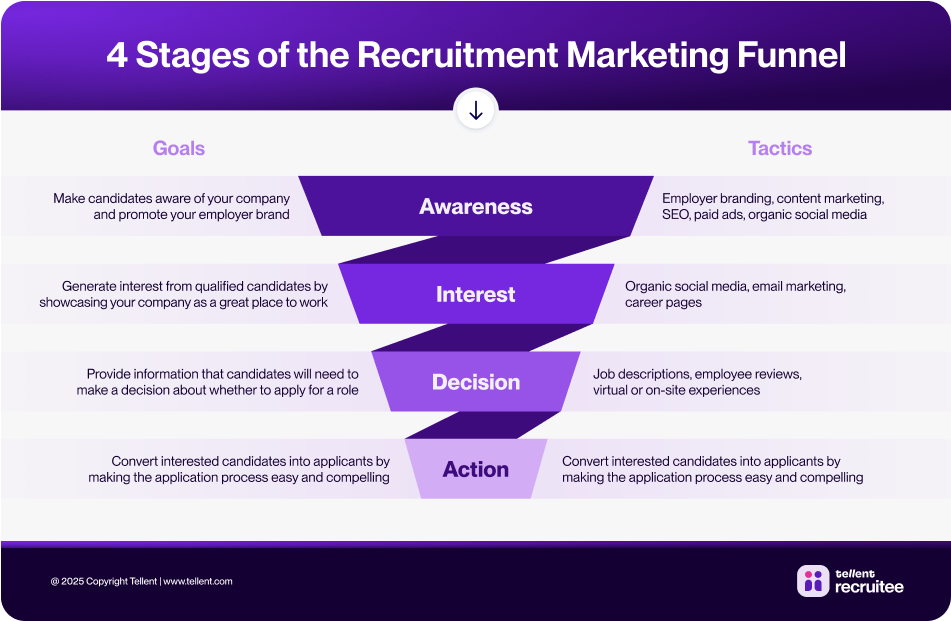
- Awareness — when candidates first discover your company
At this stage, candidates are forming their first impression.
Use employer content across your career site, social channels, and visible job listings to help them quickly understand who you are, what you do, and what types of roles you hire for.
- Interest — when candidates want to learn more
Here, candidates begin exploring whether your company could be a good place to work.
Support this stage with content that explains your ways of working, growth opportunities, and day-to-day team environment to deepen engagement and build familiarity.
- Consideration — when candidates are deciding whether to apply
Candidates evaluate fit here.
Provide clear, detailed job information and employee perspectives to let them assess whether the role aligns with their experience, expectations, and goals.
You can also support this stage through virtual or on-site touchpoints such as recruitment webinars, open houses, or job fairs that give candidates direct insight into your teams.
- Application — when candidates are ready to take action
Since candidates decide to apply here, aim to reduce friction.
Keep applications simple, mobile-friendly, and clearly guided, with visible next steps and timely confirmation once an application is submitted.
For an engaging post-application nurture flow, automate email confirmations and personalized follow-up messages to set expectations.
An applicant tracking system (ATS) like Tellent Recruitee can support this by automatically sending messages to your pipeline candidates, alerting teammates of key milestones, and moving candidates through each stage of the hiring process.
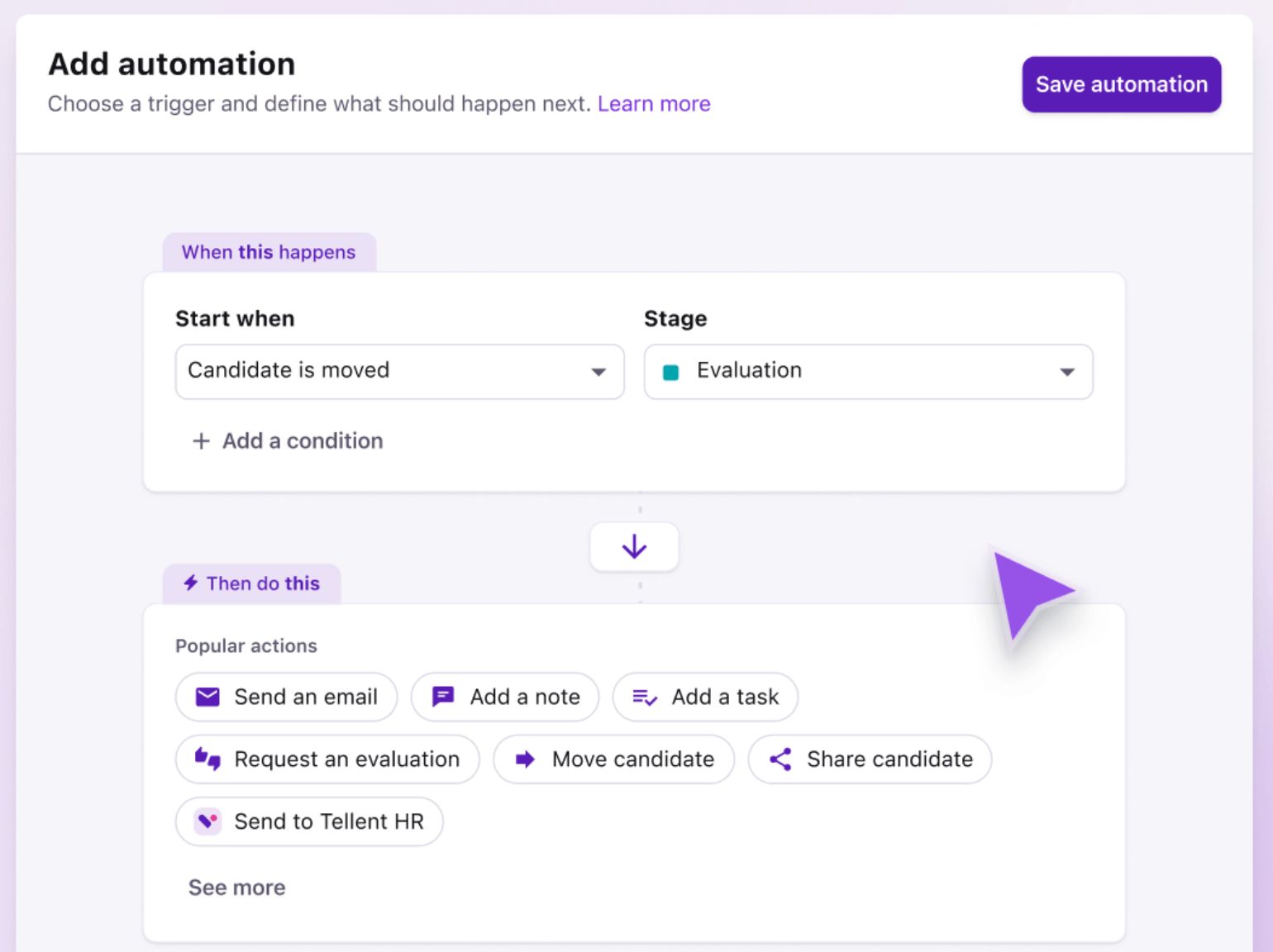
Set automated actions in your hiring pipeline using Tellent Recruitee
Designing content around these stages helps companies systematically guide candidates from initial awareness to taking action, ensuring smoother decisions and more consistent applications.
Step 6. Track performance and iterate
Once your strategy is live, regularly review results to understand what’s working and where adjustments are needed.
Doing so helps you move beyond assumptions and use real hiring data to understand which channels and messages drive qualified applicants, not just visibility.
With an ATS in place, you can track and review performance regularly without manual data collection. For instance:
- Track applications per job, how long it takes them in each stage, and trends over time to evaluate which channels and campaigns contribute to stronger hiring outcomes.
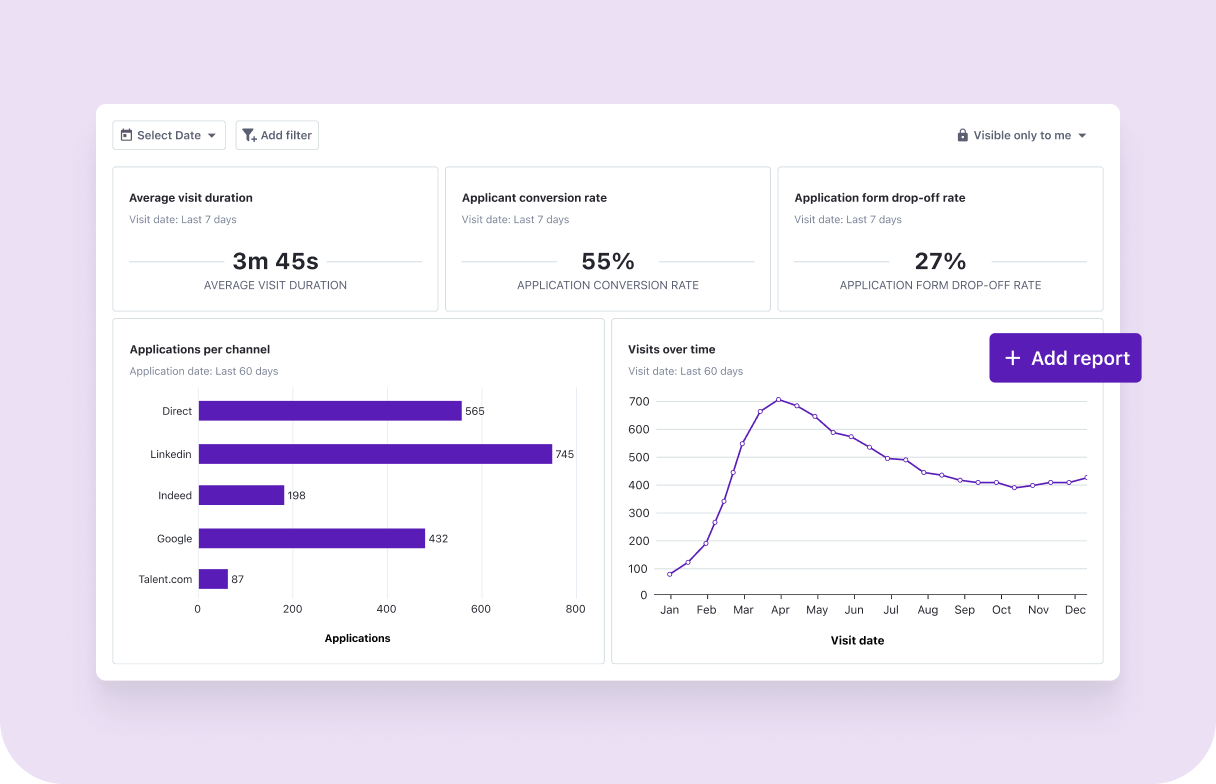
Recruitment marketing channels performance and applicant behavior in Tellent Recruitee
- See where candidates are coming from (job boards, career sites, referrals, campaigns) to understand which recruitment marketing channels drive qualified applicants — not just volume.
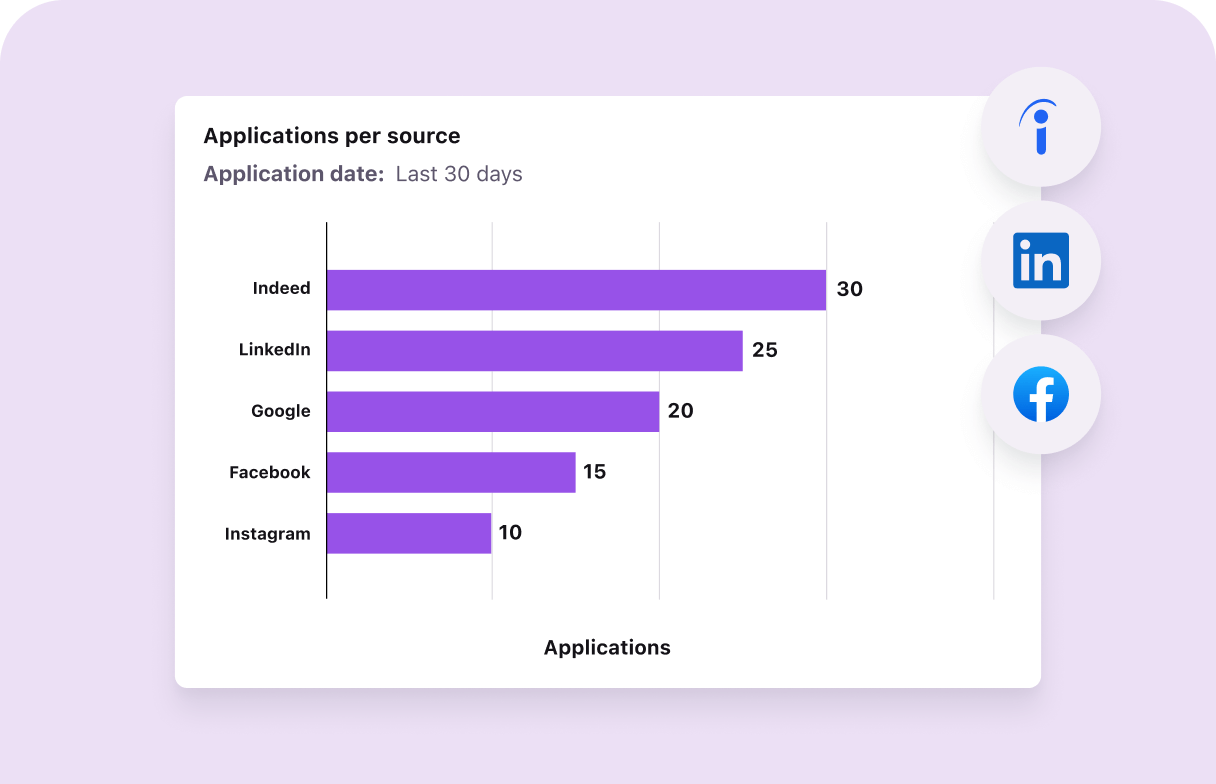
Track applications per channel over a defined time frame in Tellent Recruitee
Use these insights to refine messaging, reallocate budget, and improve results with each hiring cycle.
23 recruitment marketing tactics that drive qualified applicants
Recruitment marketing tactics work best when they support a specific goal in the candidate journey — not when they’re applied all at once.
Below, we’ve grouped common tactics by what they help you achieve, so you can prioritize what matters most for your hiring needs:
Recruitment marketing tactics to attract the right candidates
- Career site optimization
Make sure your career site (often the most important touchpoint in the candidate journey) clearly communicates role expectations, team context, and growth opportunities — not just open positions.
- Search engine optimization (SEO)
Optimize job listings and employer brand pages so candidates can discover your job roles when searching for job titles, locations, or career-related questions.
- Geotargeted campaigns
Use location-based targeting to tailor messaging for candidates in specific regions, particularly for hybrid or on-site roles where geography strongly influences fit.
- Employee advocacy and social sharing
Encourage employees to share open roles or behind-the-scenes content to increase reach through trusted, human networks and attract candidates better aligned with your culture.
- Paid job advertising (PPC)
Use paid ads on platforms like LinkedIn, Google, and job boards to amplify priority roles and reach candidates with skills, seniority, or location criteria — especially when organic reach is limited.
Recruitment marketing tactics to build trust with candidates
- Employee testimonials and stories
Share authentic stories from current employees across your career site and social media to help candidates understand what it's like to work at your company and build trust with them.
- Job preview and “day-in-the-life” content
Include role-specific previews to set realistic expectations, help candidates assess fit before applying, and reduce mismatches later in the process.
- Video content
Create short videos featuring teams, managers, or workplace environments to humanize your brand and help candidates connect emotionally before taking action.
- FAQs for candidates
Add clear, straightforward answers to common questions around hiring processes, compensation ranges, flexibility, or team structure, and reduce friction in the application process.
- Employer review site management
Monitor and respond to reviews on platforms like Glassdoor or Indeed to address concerns early and prevent negative perceptions from deterring qualified candidates.
- Consistent employer branding across channels
Align messaging across job ads, social posts, and career pages to create clarity and trust — especially for candidates encountering your brand multiple times.
- Social responsibility campaigns
Highlight your company’s involvement in social responsibility initiatives, such as charity work, sustainability, or diversity and inclusion efforts. This is increasingly important for candidates who prioritize companies with a strong social mission.
Recruitment marketing tactics to turn interest into qualified applications
- Email nurture campaigns
Use segmented emails to keep passive or returning candidates engaged with relevant updates — such as new roles, team growth, or hiring timelines.
- Retargeting campaigns
Use retargeting to re-engage candidates who visited your career site or job pages but didn’t apply to stay at the top of their mind.
- SMS and text messaging
With proper consent, use SMS as an effective way to follow up with candidates who have shown interest in your company, share reminders, or clarify next steps quickly.
- Application flow optimization (CRO)
Improve application load times, simplify forms, and clarify calls to action to significantly increase completion rates — without artificially increasing application volume.
- Personalized job recommendations
Direct candidates toward relevant roles based on skills or interests to improve application quality and reduce irrelevant submissions.
Recruitment marketing tactics to improve applicant quality
- Career site and traffic analytics
Track visits, drop-off points, and behavior patterns to identify where qualified candidates disengage.
- Source quality analysis
Understand which channels produce high-quality applicants (not just volume) to invest the budget more effectively.
- Engagement metrics
Monitor interactions with emails, videos, and job pages to assess whether messaging resonates with your target audience.
- A/B testing
Test job titles, descriptions, emails, or CTAs to drive evidence-based insights into what improves engagement and applications.
- Heatmaps and behavior tracking
Use visual data to understand how candidates navigate your career site and improve layout and clarity.
- Predictive and historical hiring analysis
Review past hiring outcomes to anticipate future needs and refine targeting for upcoming roles.
The goal isn’t to use every tactic listed above — but to choose the ones that align with your hiring priorities, candidate profiles, and stage of growth.
When applied intentionally, these tactics work together to attract more relevant candidates, reduce drop-off, and build a healthier hiring pipeline over time.
Wrap up: Recruitment marketing for consistent hiring
Recruitment marketing is no longer a nice-to-have — it’s a foundational part of how modern teams attract and hire talent.
As candidates research, compare, and evaluate employers before applying, successful hiring today requires a clear recruitment strategy, consistent messaging, and intentional engagement across the candidate journey.
When approached strategically, recruitment marketing helps teams attract better-fit candidates, reduce drop-off, and build a more reliable hiring pipeline over time.
Remember: the goal isn’t to do everything at once, but to build a system you can refine as your hiring needs evolve.