



.webp)

A recruitment plan helps growing companies hire with clarity, rather than reacting role by role.
For small- to medium-sized businesses, where hiring demand often shifts quickly and resources are limited, this plan brings order to the chaos that comes from recruiting for multiple positions simultaneously.
Without it, hiring quickly becomes reactive rather than strategic.
Structure starts to slip between job intake, sourcing talent, conducting interviews, and coordinating offers for multiple vacancies — even when everyone involved is doing their best to keep things moving.
The best way to reduce stress? Take the time to evaluate and refine your recruitment process.
In this guide, we show you how to do just that as we walk you through:
- What a recruitment plan really is and why you need one
- 8 key factors to consider before defining your hiring plan
- How to build an effective recruitment plan (and what’s included in it)
There’s also a recruitment plan template included that you can use to turn the steps below into a practical plan of action that supports better hiring without adding unnecessary work to your plate.
Let’s get on with it.
What is a recruitment plan?
A recruitment plan is a strategic blueprint that outlines the entire hiring process, from identifying staffing needs to onboarding new employees.
These plans help companies streamline their recruitment efforts by setting clear timelines, defining roles and responsibilities, establishing a budget, and using the right tools and methods for sourcing, interviewing, and selecting candidates.
Why is a recruitment plan important?
A structured plan makes it easier to prioritize roles, align stakeholders, and avoid delays so companies don’t suffer downtime due to vacant positions.
Here’s why having a well-structured recruitment plan matters:
- Improve hiring efficiency
A recruitment plan sets clear hiring priorities, timelines, and ownership, helping teams avoid last-minute requests and reduce time-to-fill.
- Improve candidate quality
By clarifying role requirements and sourcing strategy upfront, recruitment plans help teams attract candidates who better match the role, team needs, and company culture.
- Align hiring with business goals
A recruitment plan connects hiring activity to company priorities, ensuring headcount supports growth targets and meets current and future staffing needs.
- Reduce hiring costs
Planned hiring minimizes rushed decisions, overreliance on agencies, and repeated backfills caused by misaligned or premature hires — helping you avoid costly hiring mistakes.
- Improve collaboration across hiring teams
Defined roles and responsibilities reduce friction between HR, recruiters, and hiring managers, making decision-making faster and more consistent.
- Create a consistent candidate experience
Standardized processes and communication help prevent drop-offs, delays, and confusion for candidates, especially when multiple roles are open simultaneously.
- Strengthen employer branding through consistency
A structured recruitment plan also creates consistent messaging, timelines, and candidate communication — reinforcing trust and shaping how candidates perceive your company as an employer.
- Reduce risks of bad hires
By standardizing the evaluation and selection process, recruitment plans reduce the likelihood of poor hiring decisions.
One thing to keep in mind: a recruitment plan only delivers value if it’s practical and repeatable.
So with that, the sections below walk through how to assess your hiring needs and define priorities to build a recruitment plan your team can realistically maintain — without adding unnecessary admin or complexity.
What to consider before creating a recruitment plan?
Before creating a recruitment plan, it’s important to understand the inputs that will shape your hiring direction.
These factors influence how you prioritize roles, allocate resources, and determine what’s realistic within a given recruitment cycle.
But these factors aren't limited to your internal hiring needs alone.
Effective recruitment planning requires balancing external market conditions with internal constraints — including business priorities, team capacity, and available resources.
Here are 8 key factors to consider before defining your recruitment plan:
- Company growth and expansion goals. Short- and long-term growth projections, upcoming strategic initiatives, or new market entry plans often determine which roles to hire first and which skill sets are most critical.
- Economic conditions and job market trends. Talent shortages, competition for in-demand roles, and shifting compensation expectations all affect how you position roles and how aggressive your sourcing strategy needs to be.
- Turnover and retention rates. Higher-than-expected attrition may require targeted or time-sensitive hiring to replace lost institutional knowledge and maintain team continuity.
- Available recruitment budget. Budget constraints influence hiring pace, sourcing channels, and whether external support or additional tools are feasible.
- Your company and employer brand. Brand awareness and reputation affect how much you can rely on inbound applicants versus proactive sourcing to attract qualified candidates.
- Internal mobility, referrals, and promotions. Strong internal pipelines may reduce the need for external hiring or allow you to shift focus toward upskilling and succession planning.
- Recruitment team capacity and capabilities. Team size, experience, and workload determine how many roles can be supported simultaneously without compromising quality.
- Technology and recruitment tools. Existing or newly adopted tools streamline workflows, improve visibility, and expand what your team can realistically manage with limited resources.
Remember, this list isn’t exhaustive.
Every organization operates within its own set of constraints and opportunities. So yours will be unique to your company, market, and areas of operation — and will impact how you build your recruitment plan.
The bottom line is: recruitment planning should never happen in isolation — these inputs provide the context you need to build a realistic, balanced plan that your team can actually execute.
How to build a recruitment plan in 7 steps
Creating a recruitment plan takes a series of strategic steps that help you align your efforts with your company’s goals.
This includes accounting for strategic staffing needs and the sourcing channels, tactics, and processes you’ll use to fill those gaps.
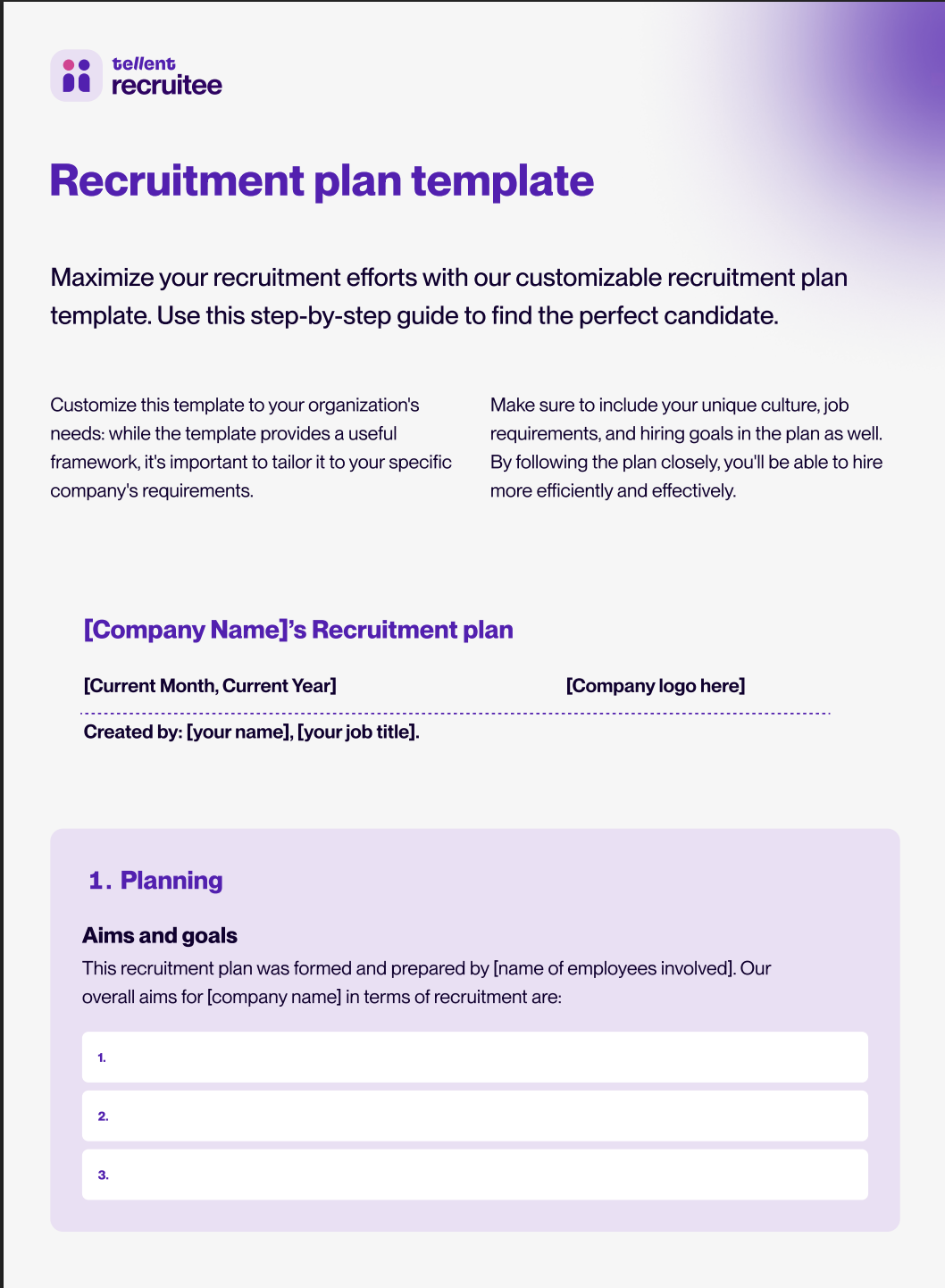
Here’s a 7-step recruitment plan blueprint to follow to create yours:
Step 1. Assemble a cross-functional recruitment team
By definition, recruiters are experts in hiring new talent. But they don’t necessarily have deep knowledge of your company’s strategic needs or the state of specific industries and professions.
To make sure recruiters have this essential context, put together a cross-functional recruitment team with people from across your organization, including:
- HR and recruitment team members who understand the recruitment strategy.
- Hiring managers who understand their niche industries and areas of expertise.
- Department heads who have knowledge of the company’s wider strategic priorities.
- Finance team members who can help set realistic budgets and resource allocations for the plan.
- Marketing and brand teams that can provide direction on employer branding.
- Employees who can provide input and feedback on your current hiring process and where it can be improved.
You can either assemble this team as a group or individually, with one-on-one conversations, to gather everyone’s insights and perspectives. This way, you’d be off to a strong, informed start for planning the rest of your recruitment plan.
Step 2. Identify skills gaps and hiring needs
Next, take stock of your company’s current and imminent job requisitions and conduct a skills gap analysis to understand future needs.
Compare the skills currently available across your workforce with the capabilities your teams need for upcoming business priorities — a process called conducting a skills gap analysis.
Any skills gaps that you can’t address through training, internal mobility, or temporary support should feed directly into your hiring plan.
As you do this, factor in signals such as employee turnover, anticipated promotions, and new projects that could impact your staffing needs over the coming months.
Together, these inputs will help you identify which roles you need to hire, when, and for what purpose — whether to replace departing team members, support new initiatives, or strengthen critical skill areas.
Ultimately, it allows you to proactively align hiring with your staffing requirements, making sure your team is prepared to handle future workloads.
Step 3. Build a recruitment calendar
With your short- and long-term hiring needs defined, turn those inputs into a recruitment calendar that outlines when each role needs to be hired and the anticipated timelines for each role.
Start by listing all planned roles by department and mapping them against the quarter or months in which you need to fill them.
Sequence roles based on business priority, delivery timelines, and team capacity — identifying which hires can run in parallel and which need to happen first.
As you build the calendar, also factor in realistic hiring timelines for each role, including the time it’d take to source, interview, and approve candidates.
By the end, your recruitment calendar should clearly show:
- Quarterly hiring goals
- Total headcount requirements per department
- Expected timelines for each stage of the hiring process
This’d give your team a shared view of what’s coming next, letting you plan sourcing efforts earlier and avoid last-minute hiring pressure.
Step 4. Define role scope and candidate evaluation criteria
In the next step, define each role’s scope upfront to align stakeholders and clarify what success looks like before hiring begins.
Start by meeting with hiring managers to clarify each position’s responsibilities, core job requirements, and expected outcomes.
As part of this role scoping, review and document the following:
- The level of seniority you’re hiring for
- Which skills are must-haves versus nice-to-haves
- How difficult the role is likely to be to fill based on market availability
- The level of assessment depth required for the role
Once the role scope is clear, define how candidates will be evaluated against those requirements.
Outline the key elements of your candidate selection process, including:
- The number of interview rounds
- Who will be involved in interviewing and decision-making
- Whether assessments will be used to evaluate skills or competencies
- The level of background verification required based on the role and industry you’re hiring for (particularly for positions with access to sensitive data, financial systems, or regulated environments.)
An Applicant Tracking System (ATS) can support candidate selection by structuring evaluation criteria into a repeatable process.
Inside Tellent Recruitee, for example, you can organize the interview process into defined stages so hiring follows a consistent structure rather than ad hoc rounds.
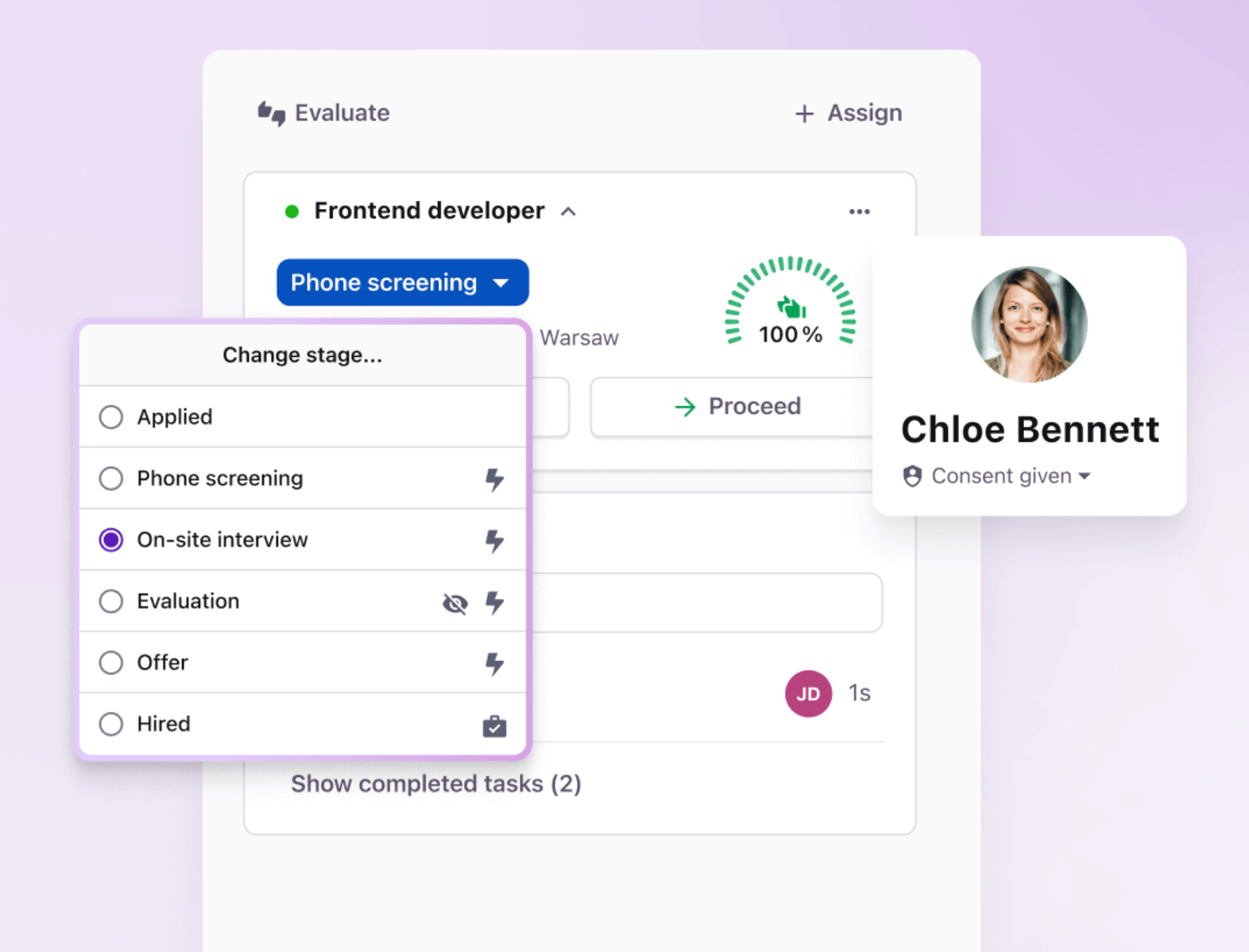
Different candidate evaluation stages in Tellent Recruitee.
You can also use shared, customizable evaluation templates and scorecards to ensure consistent assessment — even when multiple interviewers are involved.
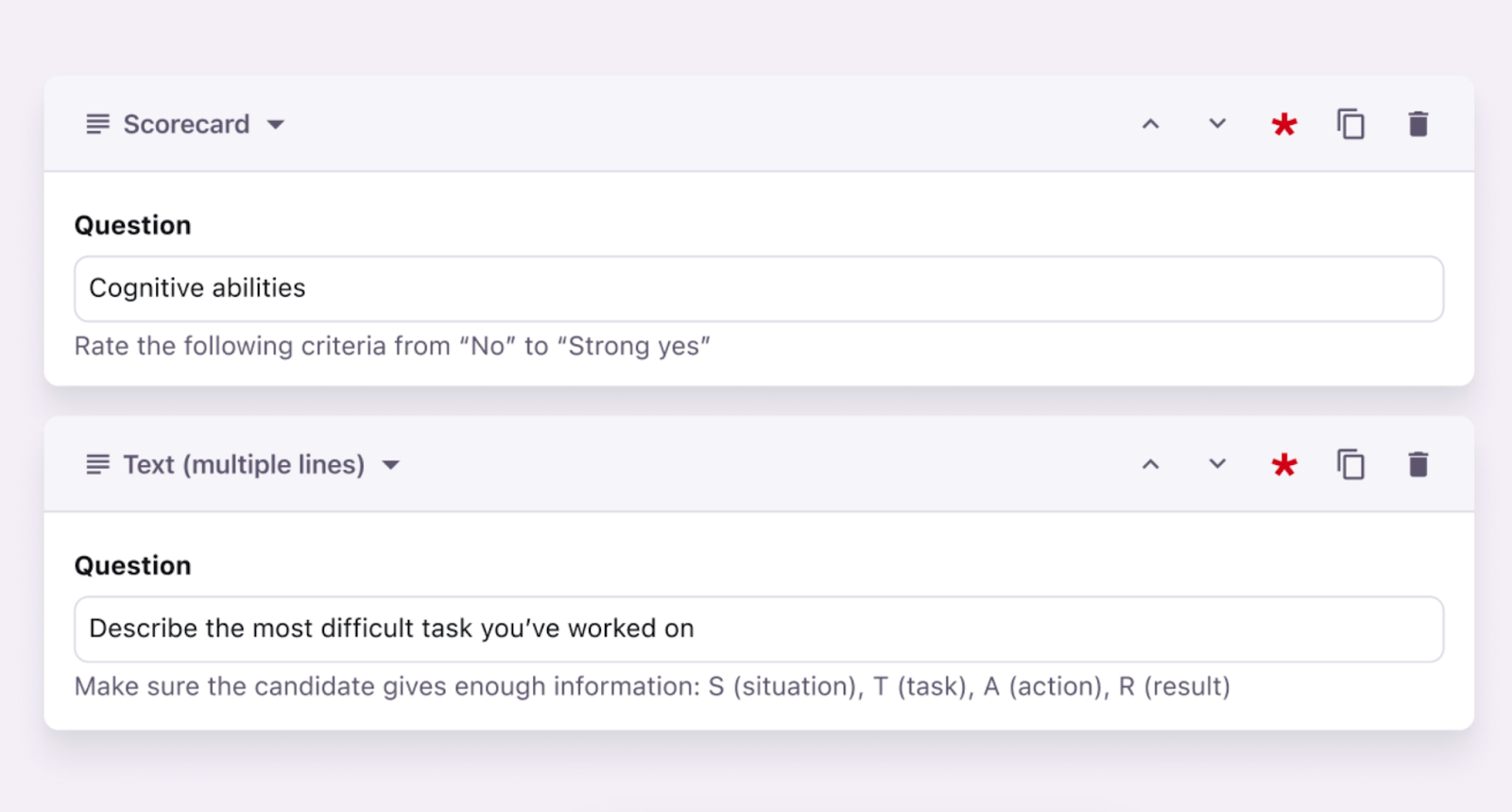
Evaluation forms in Tellent Recruitee
Because all interview notes and feedback also live on the same candidate profile, you can make informed decisions faster without having to pull input from scattered emails or documents.
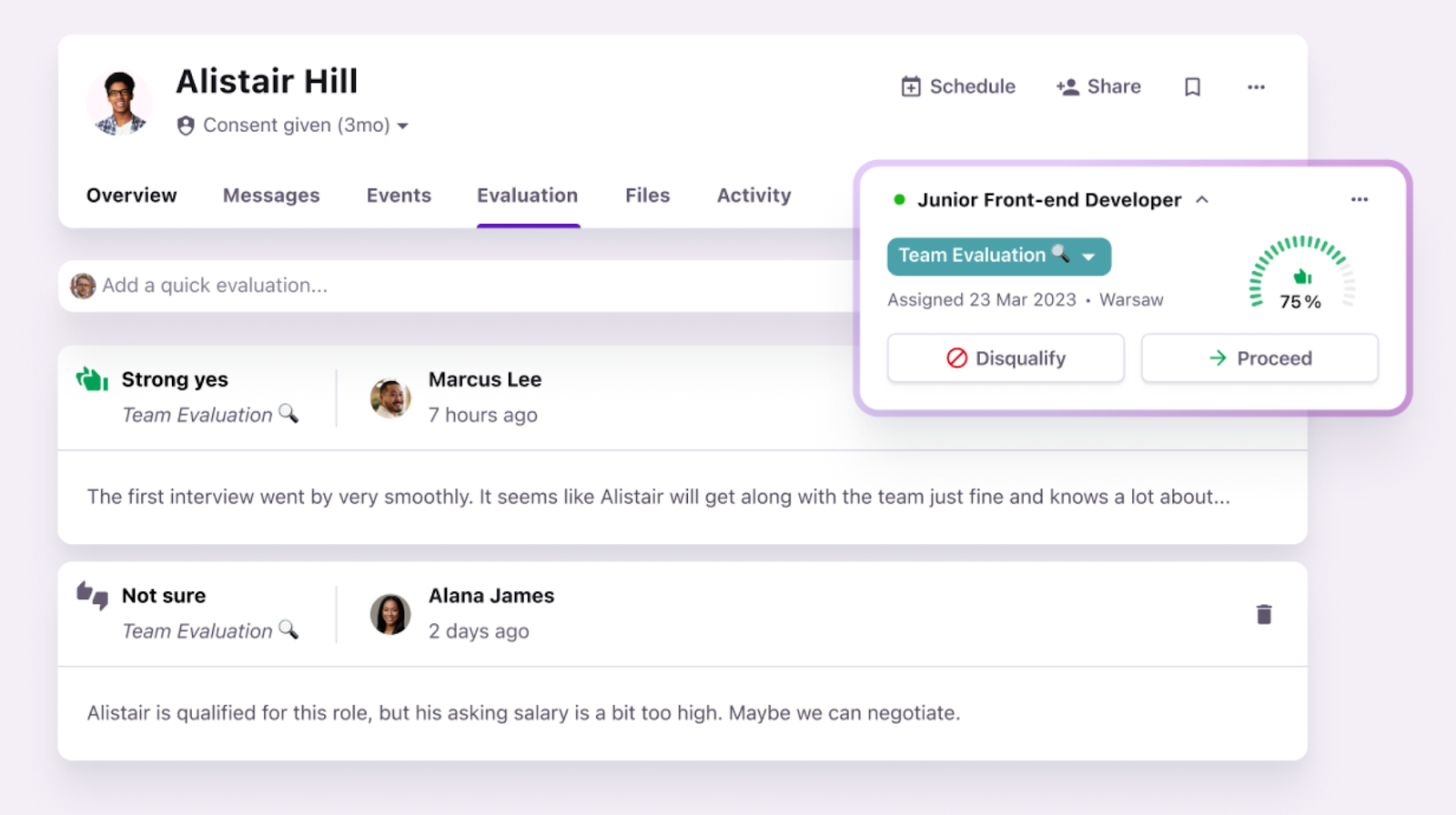
Collaborate with the hiring team: all interview scheduling, notes, and coordination happen in one place.
All in all, avoid using a one-size-fits-all evaluation process. Instead, tailor assessment criteria and interview structure to each role based on the skills and competencies required.
By defining all these requirements early, you can prevent delays at the offer stage and reduce the risk of losing qualified candidates late in the process.
Step 5. Establish a role-specific recruitment budget
Using the macro budget insights from your conversations with finance and leadership in step 1, define a recruitment budget for each role.
Remember: rather than working from a single, high-level hiring budget, allot an estimated budget to every role on your recruitment calendar.
This helps you make informed trade-offs, allocate resources intentionally (aligned with hiring priorities and business impact), and avoid reactive spending when hiring pressure increases.
Use historical hiring data in your ATS — such as cost-per-hire and time-to-hire — to ground these estimates, especially for roles you’ve hired for before.
Reviewing how long candidates typically spend in each stage also helps surface bottlenecks, such as delays between interviews or approvals, so you can set more realistic timelines and budgets.
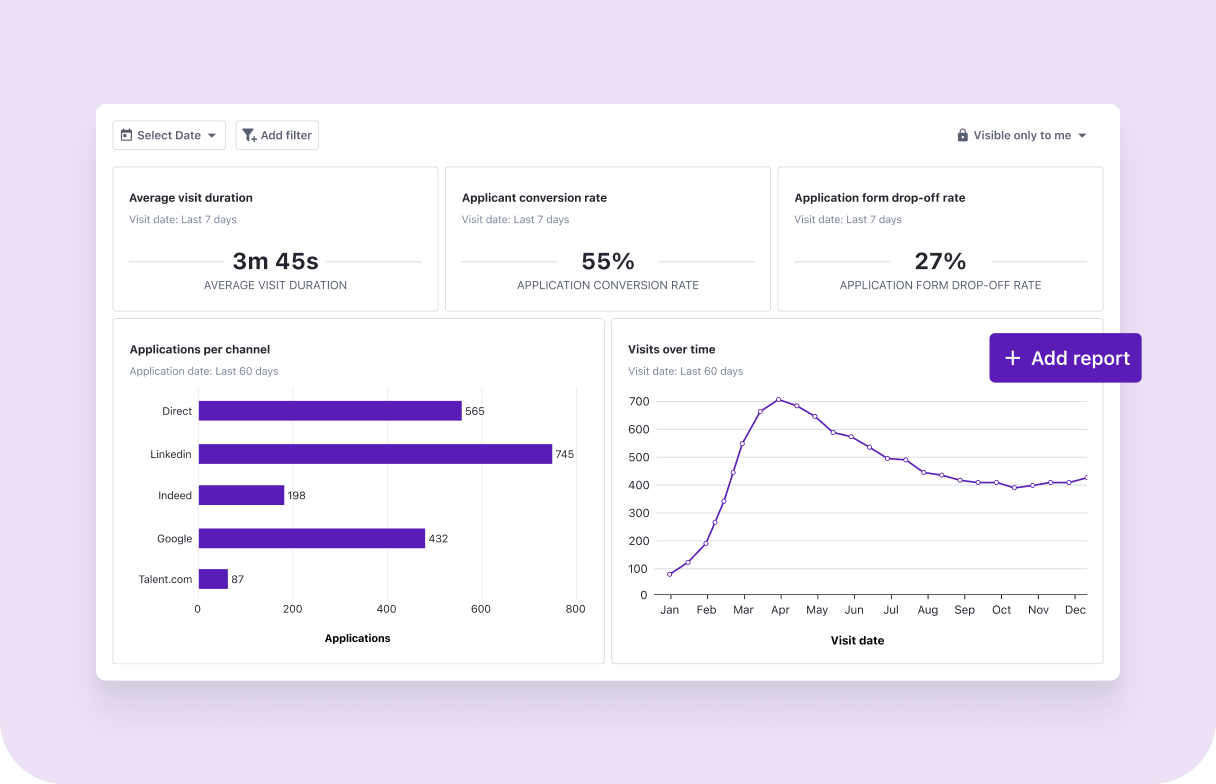
Reports showing candidate quality from various sourcing channels to improve your recruiting plan
Once done, factor in the costs that typically vary by role, including:
- Job advertising and paid sourcing channels
- Recruiting tools and technology
- Employer branding or campaign spend
- Internal recruiter capacity or external support
- Background verification and compliance-related costs
But don’t just stop there. Review budget assumptions regularly (say, every quarter) and adjust based on the effectiveness of your sourcing channels and changes in market conditions.
Step 6. Plan a smooth handoff from hiring to onboarding
A recruitment plan doesn’t end with selecting candidates. It also covers what happens between offer acceptance and a new hire’s first day.
To this end, define how you’ll issue offers and manage candidates once they’re selected, ensuring a consistent, timely experience.
Decide the following in advance:
- Who owns extending the job offer and communicating next steps
- How compensation, benefits, and final terms will be approved
- What flexibility exists for negotiation — and where boundaries sit
- How and when formal offer letters will be issued
Once an offer is accepted, map all the steps from hiring to employee onboarding.
With the hiring manager:
- Define the steps for pre-boarding and onboarding, including training schedules, orientation sessions, and initial project assignments.
- Assign responsibilities across HR, hiring managers, and relevant team members so the onboarding process is coordinated, clear, and supportive.
By connecting your ATS with your HRIS, you can also automate this hiring-to-onboarding process.
For instance, with Tellent Recruitee, you can use templates or custom-build employee onboarding flows for different hires that trigger as candidates join.
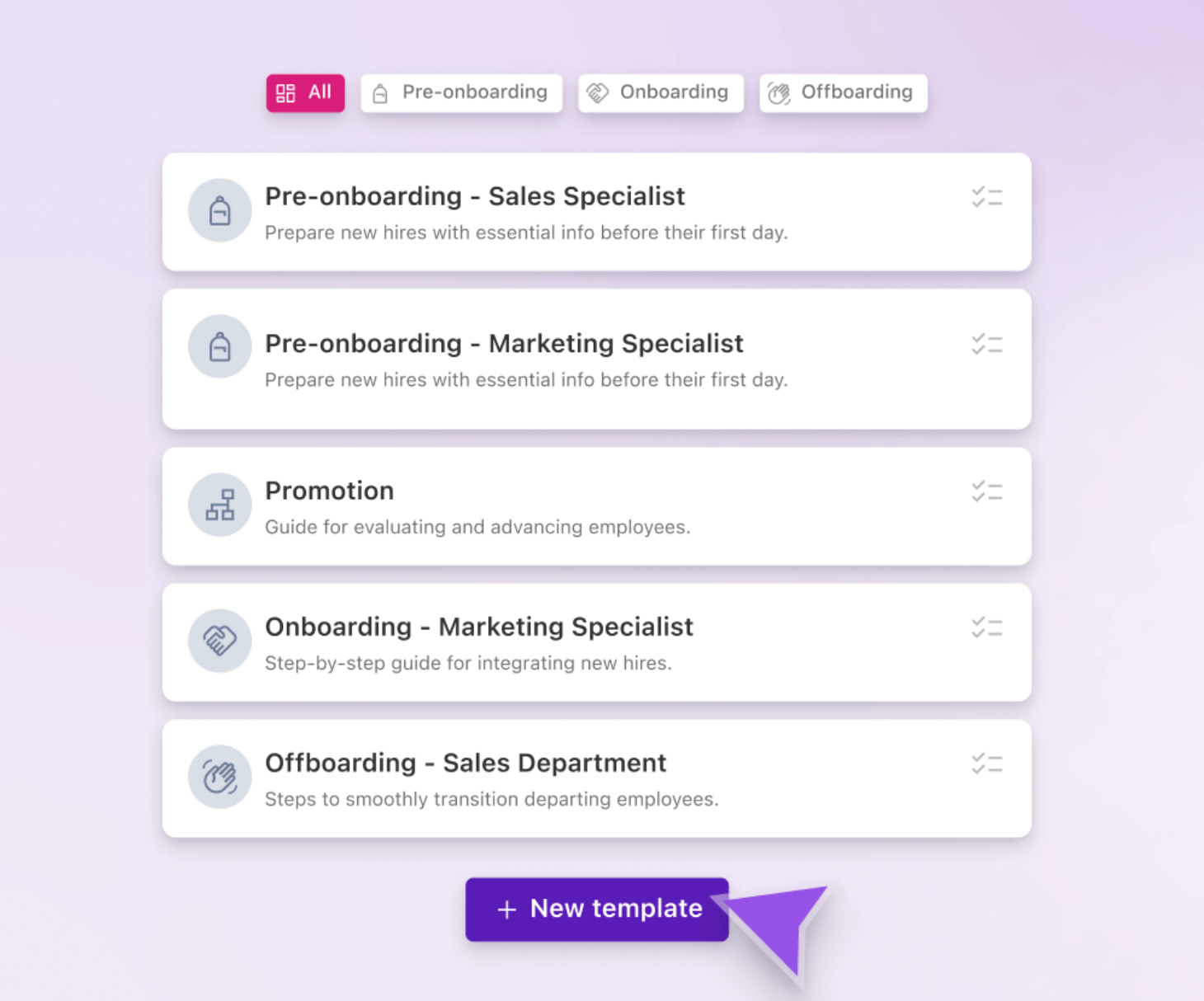
Onboarding Journeys that automate candidate to employee workflow
Step 7. Continuously review and optimize your recruitment plan
To remain effective over time, your recruitment plan should evolve as your hiring needs, market conditions, and internal priorities change.
Build regular review points into your process so you can intentionally improve it before hiring problems surface.
Determine which metrics you’ll review on an ongoing basis to evaluate hiring effectiveness. Common indicators include:
- Time-to-hire
- Quality of hire
- Early turnover or probation-period attrition
- Candidate drop-off across hiring stages
Use these metrics to identify patterns, bottlenecks, or inconsistencies in your recruitment process.
Depending on your hiring stack, either pull these insights from disparate sources or use your ATS to track and review trends across roles, teams, and time periods to spot areas for improvement.
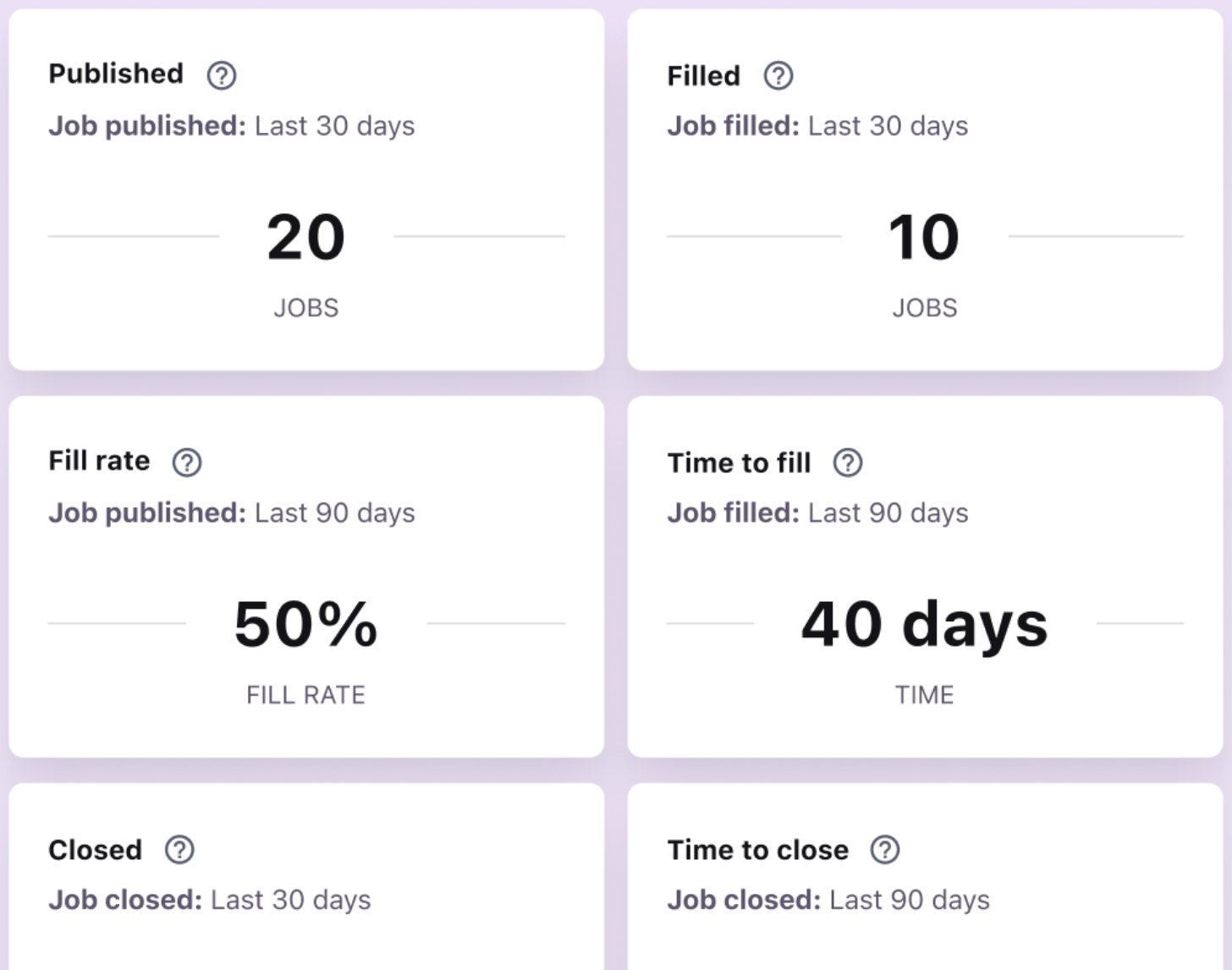
Custom and template reports in ATS, Tellent Recruitee
That said, don’t forget to complement quantitative data with qualitative feedback.
Gather input from new hires, hiring managers, and recruiters to understand what worked well and where the process felt unclear, slow, or misaligned.
Based on these insights, revisit your recruitment strategy, tools, and workflows regularly to ensure your plan remains aligned with business goals and continues to support effective, scalable hiring.
Turn theory into practice with this recruitment plan template
When a new job requisition lands in your inbox, it’s tempting to jump into action immediately. But moving forward without a well-informed recruitment plan makes each new hire a standalone effort.
With a recruitment plan in place, teams move from reactive hiring to a more consistent, repeatable approach — without locking themselves into a rigid process.
Remember: A strong recruitment plan should be structured enough to provide clarity, yet flexible enough to adapt to changing hiring needs, market conditions, and business priorities.

.jpg?width=1000&name=%5BEN%5D%20Recruiting%20automation%20-%20Website%20image%20-%201220x740%20(1).jpg)