



.webp)

When sourcing, role definition, or screening criteria aren’t aligned, candidate quality drops — often leading to high application volume but low relevance.
The result? Recruiters end up spending time reviewing applicants who don’t meet the must-have criteria or investing time in candidates who later drop out.
This slows down hiring, increases recruiter workload, and makes it harder to identify strong candidates early.
To improve candidate quality, recruiting teams need to be more deliberate about how they source, filter, and progress candidates through the pipeline.
This guide shows you how to do just that as we cover:
- 7 potential reasons impacting your applicant quality
- 7 steps to attracting higher-quality candidates
TL;DR — Key takeaways:
|
What is candidate quality — and why does it matter?
Candidate quality refers to how well an applicant's skills, experience, and motivations align with the requirements and expectations of a role. A high-quality candidate isn't simply someone with an impressive resume — they're someone whose background, working style, and career goals make them a strong fit for the specific position and team they're joining.
When candidate quality is consistently low, the impact reaches well beyond the recruiter's inbox.
How do unqualified applicants affect the hiring process?
When a large share of applicants don’t meet the role’s requirements, recruiters and hiring managers spend significant time reviewing unsuitable candidates instead of focusing on strong ones.
Over time, this can make it harder to fill roles, frustrate hiring teams, and slow down business performance — impacting your:
- Teams. Hiring managers become frustrated when most candidates don’t meet expectations, which can hurt morale and collaboration between teams.
- Efficiency. Recruiters spend more time reviewing irrelevant applications, repeating screening work, and restarting hiring processes.
- Results. Open roles stay unfilled longer, slowing down projects and reducing overall team productivity.
- Reputation. Candidates who experience a disorganized hiring process may share negative impressions of your company as an employer.
The good news is that you don’t have to remain a victim of poor applicants. By auditing your recruitment efforts and being more strategic with how you attract and screen candidates, you can reverse this trend.
7 reasons your applicants aren’t good enough
Before we look at ways to find the right talent, let’s first look at some reasons why your applicants might not be up to the expected standard:
1. Your recruitment strategy is too general (or maybe non-existent)
Adapt your requirements and processes not only to the specific job opening, but also to your industry and your company's specific requirements.
If you search too generally and don't address the target group directly enough, it will take longer to find good candidates. Without a defined talent sourcing strategy, job ads often attract broad audiences rather than the specific candidates you need.
2. Your application process is cumbersome and time-consuming
K.I.S.S. is the motto: Keep it short and simple. For example, have you ever considered omitting the cover letter? Or have you tried to apply via your company's CareersHub?
Are there questions or steps that seem too complicated or lengthy? Consider shortening these or removing them altogether.
3. You’re not using the right recruiting channels
Traditional job platforms such as Indeed and LinkedIn are still two of the most popular recruiting channels, followed closely by the companies' own career pages.
But, “there are a lot of different channels available these days. In addition to social and targeted hiring, expert networks and industry platforms can also be good paths,” advises Phil Strazzulla, Founder of SelectSoftwareReviews. The work model is also a key channel consideration. Tellent's State of Hiring found that candidates prefer fully remote positions by 21% over hybrid roles, and that hybrid jobs take 17% longer to fill — meaning your work model offering can be just as important as where you post the role.
4. Your job descriptions are too general
Being too general with your job ads is a great way to be inundated with a high volume of unqualified candidates. Instead, be super specific and descriptive about what it requires for this role, and what type of person you want:
- What skills and competencies are basic requirements for this position?
- What experience can help?
- What attributes does the candidate need to be a good fit with the company?
- What does the company and team want from this candidate?
5. You’re not filtering and evaluating your applications efficiently
Automate basic applicant screening early in the process to weed out applicants who do not meet minimum requirements like visa eligibility and language requirements.
Manual screening is necessary, but AI can save time by acting as a first filter — checking must-have eligibility and identifying how many of your pre-defined criteria applicants meet.
6. Your employer branding is not convincing
Top talent is rich with choices in today’s job market. They’re looking to join companies with the best reputations and offers.
If you’re not communicating your employer brand online — your company’s values, culture, and unique story clearly, then chances are you’re not putting your best foot forward to top candidates. Career site engagement is a key part of employer branding. Tellent's State of Hiring found that the longer candidates spend on a career site, the more likely they are to apply and progress — with France leading on applicant conversion at 10.36%, while DACH struggles with a 70% career site bounce rate.
7. The career paths in your company are opaque
“Anyone who doesn’t clearly communicate growth opportunities risks losing qualified candidates,” notes Sturgeon Christie, the CEO of Second Skin Audio.
Most applicants like to know what development opportunities exist at your company — both professionally and personally — before applying for a job. Be specific and transparent about these opportunities in your job ads.
How to improve candidate quality in 7 steps
Improving applicant quality involves tightening your definition of open roles, targeting the right candidates, and filtering for fit throughout the hiring process.
The 7 steps below focus on making those improvements practical and repeatable — so you're not just attracting more candidates, but better candidates:
1. Align with the hiring manager on what “qualified” actually means
One of the most common reasons teams receive too many unqualified applicants is unclear expectations about the role.
Before opening the job, run a short intake meeting with the hiring manager and key stakeholders to define what a strong candidate looks like.
Clarify:
- Must-have requirements versus nice-to-have skills
- Key responsibilities the hire will own in the first 6–12 months
- Traits or working styles the team values
- Compensation range and hiring timeline
This alignment ensures your job ad, talent sourcing strategy, and screening process all target candidates who actually meet the role’s requirements — reducing irrelevant applications from the start.
During the intake meeting, it’s also helpful to align on hiring logistics, such as your team’s interview availability, hiring timelines, and how quickly the team can provide candidate feedback.
Starting this alignment early ensures the hiring process runs smoothly and that recruiters and hiring managers evaluate candidates using the same criteria.
2. Define a clear candidate profile
Once expectations are aligned, translate them into a candidate profile that guides the rest of the hiring process.
A useful profile typically includes:
- Core skills and experience required for the role
- Typical backgrounds that succeed in similar positions
- Key soft skills or collaboration traits
- Motivations that might attract the candidate to the role
Use this profile as the foundation for creating job requirements and expectations for the role, writing job ads, choosing sourcing channels, and screening applicants consistently
Without a defined candidate profile, hiring teams often rely on vague criteria, leading to inconsistent evaluations and lower-quality applicants. When every stakeholder is evaluating candidates against the same benchmark, the quality of candidates who progress through the recruitment pipeline improves significantly.
This matters more than many teams realize — Tellent's State of Hiring found that organizations with hiring cycles above 40 days experience a 12% increase in candidate drop-off rates, meaning a slow, poorly aligned process will cost you qualified candidates before you even reach the offer stage.
3. Write job ads that attract the right candidates (and deter the wrong ones)
A vague or overly broad job ad is one of the fastest ways to attract unqualified applicants.
To attract better candidates, focus on clarity and specificity rather than trying to appeal to everyone.

Make sure your job ads clearly communicate:
- What the role actually involves day-to-day
- The key skills or experience required
- What success in the role looks like
- Salary range and important benefits, where possible
And don’t be afraid to get creative.
A job description doesn’t always have to follow the same structure and tone. Add personality, humor, and a bit of storytelling into your ad.
The clearer your expectations are, the more likely qualified candidates will self-select into applying — while less relevant applicants opt out. This directly reduces the volume of unqualified applicants entering your recruitment pipeline.
4. Use screening questions to filter unqualified applicants early
Screening questions help hiring teams identify whether applicants meet the role’s core requirements before recruiters spend time reviewing resumes.
By filtering out applicants who don’t meet those requirements, screening questions improve the overall quality of candidates moving forward.
Use insights from your intake meeting with the hiring team to determine which questions will help assess candidate-fit early in the process.
Then add a few targeted questions to the application form, such as:
- Eligibility to work in the required location
- Experience with key tools or skills
- Availability or required certifications
For non-negotiable criteria such as visa requirements, turn 2-3 screening questions into knockout questions. These questions allow your Applicant Tracking System (ATS) to automatically disqualify candidates who answer “No” to required criteria.
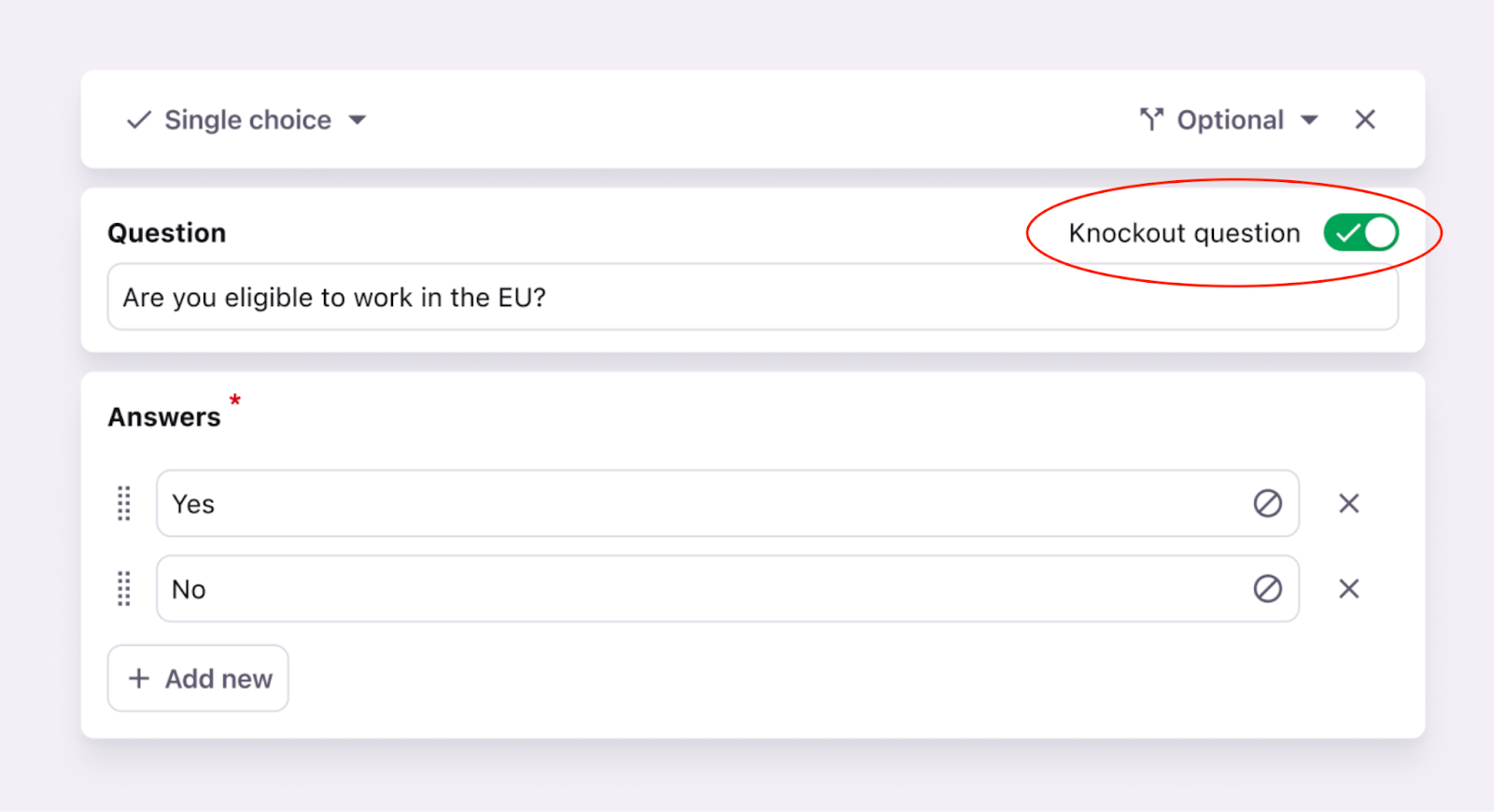
Knock out questions in Tellent Recruitee help you screen candidates who meet baseline criteria
In doing so, knockout questions effectively filter out applicants who don’t meet minimum requirements early in the process, improving the overall quality of candidates moving forward.
In Tellent Recruitee, you can also set up automatic rejection emails to go out to candidates who don’t meet your eligibility criteria. This ensures candidates receive timely responses while saving you time.
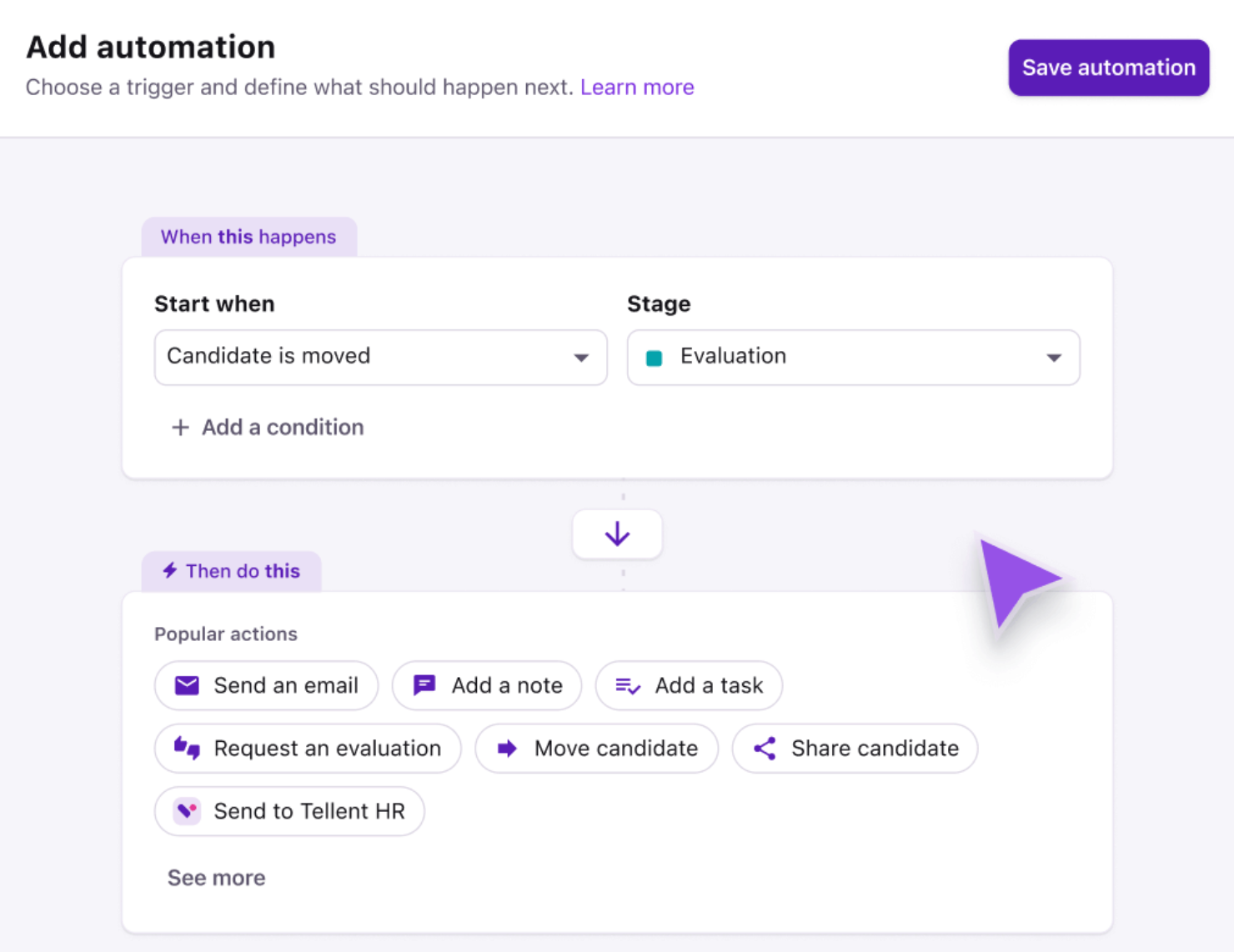
Easily set up email templates and automatically send rejections to applicants with a reason for their rejection
The impact is proven — one Tellent Recruitee customer, Livestorm, reduced their time-to-hire from 60 to 25 days after implementing pre-screening as the first stage of their recruitment process
5. Choose sourcing channels that reach the right candidates
If your job ads consistently attract the wrong candidates, the issue may be where you’re posting the role.
Different roles often require different sourcing approaches. For example:
- Broad job boards can generate high volume, but mixed-quality candidates
- Niche industry communities often attract more specialized candidates
- Employee referrals can surface highly relevant applicants quickly
Before launching a role:
- Review what’s worked in the past, and what hasn’t
- Check if there are any relevant passive candidates in your talent pool
- Ask the hiring team where strong candidates in that field typically spend time online
Targeting the right channels is one of the most direct ways to improve applicant quality before a single candidate screening begins — by adjusting your sourcing approach, you significantly improve the relevance of incoming applications.
If you’re running a job promotion campaign in Tellent Recruitee, you can also get recommendations for channels to target from the ATS based on the job details you provide. This allows you to compare over 2,900 premium and niche job promotion channels, filtering them by channel type, description, duration, and price.
6. Use structured evaluations to identify the strongest candidates
Attracting high-quality candidates is only part of the process. Hiring teams also need a consistent way to evaluate them.
Structured candidate evaluation helps teams focus on the criteria that actually matter. It allows you to compare candidates more objectively and avoid decisions based purely on resumes or gut instinct. According to a meta-analysis published in the Journal of Applied Psychology, structured interviews are approximately twice as effective at predicting job performance as unstructured ones — making them one of the highest-impact changes a hiring team can make.
For example:
- Define the skills or competencies each interviewer should assess
- Use standardized interview questions for all candidates
- Capture feedback using evaluation forms or scorecards
Reducing the number of interview rounds also helps — Tellent's State of Hiring found that companies tend to hire faster when they hold fewer interviews, with 4–6 interviews creating the best balance between hiring speed and candidate quality.
In Tellent Recruitee, you can create custom evaluation forms and scorecards for each role, for interviewers to use to assess candidates against the same shared criteria. This ensures hiring decisions are grounded in evidence rather than individual impression.
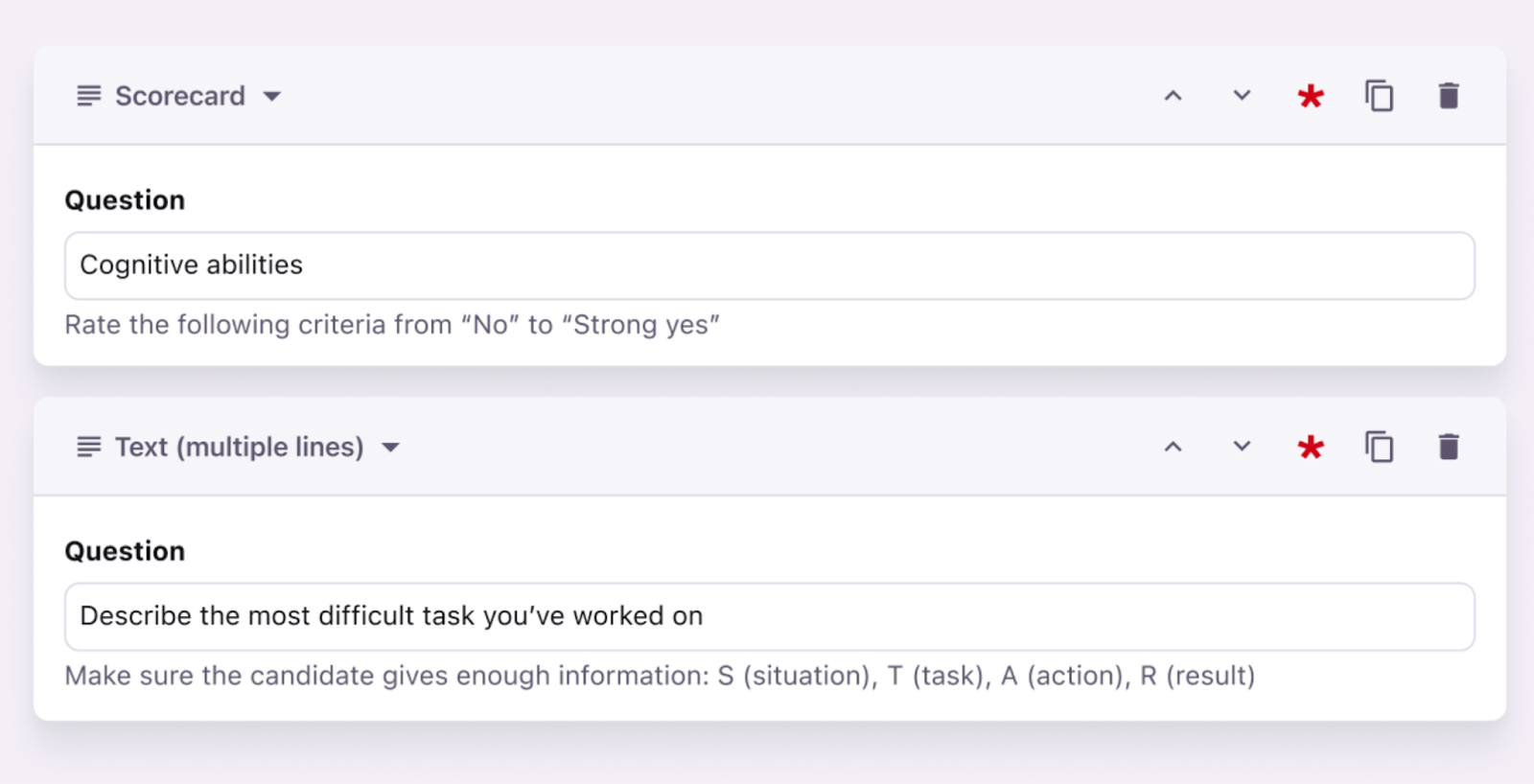
Custom candidate evaluation forms and scorecards for gathering hiring feedback
7. Continually improve your employer brand
A strong employer brand attracts not just more applicants, but more qualified ones by making your company more appealing to the right candidates. According to LinkedIn, companies with a strong employer brand receive 50% more qualified applicants and can hire up to twice as fast.
In Europe specifically, employer brand messaging increasingly needs to reflect values that matter to local talent — with a Deloitte report finding that over 70% of younger European employees cite a company's sustainability efforts as a deciding factor when choosing where to apply.
To strengthen your employer brand and attract better applicants:
- Showcase what it’s like to work at your company. Share team stories, employee experiences, and insights into how your company collaborates and grows.
- Highlight what makes your company compelling. This could include meaningful work, growth opportunities, flexibility, or the impact employees can have.
- Keep your messaging aligned with candidate expectations. As market conditions and priorities shift, periodically review how you present your culture, values, and opportunities.
- Monitor the talent market. Pay attention to competitors and industry trends to understand what candidates increasingly value in employers.
Improve applicant quality with a structured hiring process
Attracting better candidates rarely comes down to a single tactic.
It’s the result of clearly defining what you’re looking for, communicating it effectively in your job ads, and designing a hiring process that consistently sources, filters, and evaluates candidates — from talent sourcing through to final applicant screening.
Even small improvements — like clarifying role expectations or refining screening questions — can significantly improve the quality of applicants over time.
But long-term results come from designing a clear hiring process from the start.
So, whenever you’re ready, we’ll leave you with an in-depth guide to building a structured hiring process.
Article summary: How to attract qualified candidates at a glance
|
Topic |
Key takeaway |
|
What candidate quality means |
How well an applicant's skills, experience, and motivations align with the requirements and expectations of a specific role |
|
Why it matters |
Low candidate quality wastes recruiter time, frustrates hiring managers, and leaves roles open longer — with bad hires costing UK businesses more than £132,000 at mid-manager level |
|
Top reasons for poor applicant quality |
Vague job ads, wrong sourcing channels, weak employer brand, no screening process, and unclear role requirements |
|
The 7-step improvement plan |
Align with hiring managers → Define a candidate profile → Write targeted job ads → Add screening questions → Choose the right channels → Use structured evaluations → Strengthen employer brand |
|
Biggest lever for quality |
Defining what "qualified" actually means before the role opens — everything else flows from that clarity |
|
Key stat to remember |
72% of UK recruiters say screening irrelevant applications is one of the top reasons hiring slows down |

.jpg?width=1000&name=%5BEN%5D%20Recruiting%20automation%20-%20Website%20image%20-%201220x740%20(1).jpg)