



.webp)

Hiring shouldn’t feel chaotic — yet for many growing companies, it does.
And it certainly shouldn’t take so long to fill roles — but again, it does. Small teams take an average of 36.5 days to hire, according to our State of Hiring report.
For many organizations, hiring slows not because of a lack of effort but because there’s no clear strategy to hold the process together. So decisions shift mid-process. Ownership is unclear. Screening criteria vary.
A recruitment strategy fixes this. It clarifies which roles matter most, how success is measured, where strong candidates come from, and who owns each step.
Without it, hiring becomes inconsistent, slow, and driven by urgency instead of business priorities.
So how can you build a recruitment system that consistently reduces time to hire and mis-hires?
This guide walks you through the 6 practical steps to building an effective recruitment strategy in a competitive talent market, along with the common mistakes to avoid along the way.
TL;DR — Key takeaways:
|
What is a recruitment strategy (and what it isn’t?)
A recruitment strategy is a structured plan that outlines how a company attracts, evaluates, and hires talent in alignment with its business goals.
Recruitment strategy vs recruitment plan
A recruitment strategy defines the long-term direction of hiring — covering priorities, decision criteria, and sourcing approach. It explains how and why hiring decisions are made.
In contrast, a recruitment plan translates that strategy into execution by defining the roles to hire, when to fill them, and the budgets, timelines, and logistics required.
In short: a recruiting strategy defines how and why, and the plan defines what and when.
Why is a recruitment strategy important?
A recruitment strategy ensures hiring is aligned with business goals, structured, and consistent.
Without one, hiring becomes fragmented — leading to delays, mis-hires, and heavier workloads for already stretched teams.
Here’s why a structured recruitment strategy matters:
- Improves candidate quality. Clear role priorities, sourcing focus, and structured screening increase the likelihood of hiring candidates who perform well and stay.
- Reduces time-to-fill. Defined ownership, feedback timelines, and focused channels prevent delays that compound across interview stages.
- Protects the employer brand. Consistent communication and structured processes improve candidate experience and reduce negative impressions.
- Prevents understaffing and skill gaps. Workforce clarity ensures critical roles are prioritized before operational risk increases.
- Reduces attrition and mis-hires. Defined evaluation criteria and aligned expectations decrease early turnover and hiring mismatches.
- Improves team productivity. Faster, better-aligned hiring decisions prevent workload imbalances and protect team performance.
Recruitment has a cascading impact across the organization — which is why a well-structured recruitment strategy is fundamental for long-term success. It lays the foundation for successful hires who contribute meaningfully and strengthen the business over time.
What are the key components of a successful recruitment strategy?
A successful recruitment strategy is built on a set of clearly defined structural components. These elements ensure hiring is aligned with business goals, measurable, and consistently executed — not dependent on urgency or individual preference:
- Clear hiring objectives aligned with business goals. These determine which roles matter most, when they need to be filled, and how hiring supports revenue, delivery, or growth.
- Defined Employee Value Proposition (EVP). This is a clear articulation of what differentiates your company as an employer. It shapes how you position roles and helps attract candidates who are more likely to thrive and stay.
- Structured sourcing strategy. A focused approach to selecting candidate sourcing channels based on performance data rather than application volume. Strong strategies prioritize sources that consistently bring in high-quality, retained hires.
- Standardized screening and evaluation criteria. Defined candidate qualification benchmarks, structured interview steps, and agreed decision criteria. This creates consistency, improves decision quality, and reduces bias or shifting expectations.
- Clear governance and ownership. Documented decision authority, feedback timelines, and approval checkpoints. Clear accountability prevents delays and ensures hiring moves forward predictably.
- Measurable recruiting metrics. Defined metrics such as time-to-hire, quality-of-hire, and offer acceptance rates. These help you turn hiring from activity-based execution into a performance-driven strategy.
How to build a recruiting strategy in 6 steps
Whether you’re formalizing hiring for the first time or refining your existing process, the six steps below provide a practical framework to build a structured recruitment strategy:
- Clarify your hiring priorities and goals
- Define your Employee Value Proposition (EVP)
- Review and evaluate your sourcing channels and processes
- Define governance and ownership
- Define measurable hiring outcomes
- Use technology to scale and optimize your processes
Let’s dig in.
1. Clarify your hiring priorities & goals
A successful recruitment strategy is always anchored in clear, time-bound goals and priorities.
Having defined goals in place ensures you’re not just filling seats but enabling outcomes. In turn, this helps you set realistic timelines and allocate recruiter capacity intentionally.
Set SMART goals
Start by setting goals that are specific, measurable, and aligned with the company's wider objectives.
For example, if the business is expanding into a new market, your hiring priorities should directly support that initiative.
A SMART hiring goal here might look like: Hire 3 senior account executives for the DACH market within 90 days to support expansion targets.
Determine which roles truly matter most
Not every vacancy carries equal strategic weight.
Some roles directly influence revenue, product delivery, or customer retention. Others maintain operational continuity.
To prioritize, apply a simple filter:
- Does this role unlock revenue or unblock delivery?
- Does leaving it unfilled create measurable business risk?
- Is it difficult to hire for this role in the current market?
It also helps to distinguish between revenue-critical hires and replacement hires.
Revenue-critical or growth roles — such as sales, product, or expansion-focused positions — often require greater urgency, stronger sourcing investment, and stronger alignment among stakeholders.
Replacement hires, by comparison, maintain stability and can follow a more standardized hiring process.
Be explicit about the trade-offs you’re willing to make
Many hiring delays don’t stem from a lack of candidates; they stem from shifting expectations mid-process.
Every role involves trade-offs: speed vs thoroughness, senior experience vs long-term potential, immediate impact vs cultural alignment. If these aren’t agreed on upfront, stakeholders often change the bar halfway through hiring.
A recruitment strategy exists to prevent that.
Clarify and document what “good enough” looks like before opening the role. Once hiring begins, changing the definition of success causes significant delays and wasted effort.
2. Define your employee value proposition
An Employee Value Proposition (EVP) defines what your company uniquely offers employees in return for their skills, performance, and commitment.
You’ll likely see EVP as a branding layer for your recruitment marketing — but it’s more than that. It strengthens your positioning by helping you answer: Why would the right candidate choose us over a larger employer?
Without that clarity, hiring becomes volume-driven. You attract broadly, screen heavily, and still risk misalignment late in the process.
A clear EVP shifts the focus from attracting more candidates to attracting the right ones. It helps you:
- Clarify who will thrive (not just who is qualified)
- Reduce mis-hires by attracting aligned candidates
- Improve offer acceptance rates
- Create consistent messaging across hiring managers
Here’s what to do to determine your EVP:
Uncover what truly differentiates your company as an employer
- Analyze your top performers: What behaviors, motivators, and work styles do they share? What keeps them engaged?
- Run a focused internal survey: Ask why people joined, why they stay, and what they’d hesitate to lose if they left.
- Review exit interview patterns: Where have mismatches occurred? What expectations weren’t aligned?
Look for patterns in the answers. The themes that consistently show up form the foundation of your EVP.
Use your EVP to inform your recruitment strategy
Once defined, use your EVP to guide your:
- Channel selection. Where does talent motivated by your offer spend time?
- Job description positioning. What do you emphasize (impact, ownership, growth, flexibility)?
- Interview messaging. How do hiring managers consistently communicate what working here is really like?
- Cultural fit criteria. What traits and behaviors indicate long-term success?
3. Review and evaluate your existing channels and processes
An effective recruitment strategy focuses on attracting the right candidates — not just increasing application volume.
Begin by reviewing your recent hires
Look back at hires made in the past 6–12 months. Map the full path each successful hire took — from sourcing channels to offer acceptance.
Compare channels against outcomes, not just activity. Ask:
- Which platforms consistently bring in candidates who perform well and stay?
- Which channels generate high volume but rarely result in strong hires?
- Which sources convert from applicant to hire at the highest rate?
Examine your hiring funnel
Identify where candidates drop off and where delays occur.
- Are strong candidates stalling after the first interviews?
- Are offers declining at higher-than-expected rates?
In Tellent Recruitee, you can use your analytics to easily track where your most qualified candidates are coming from and the time they spend in each of your hiring workflows.
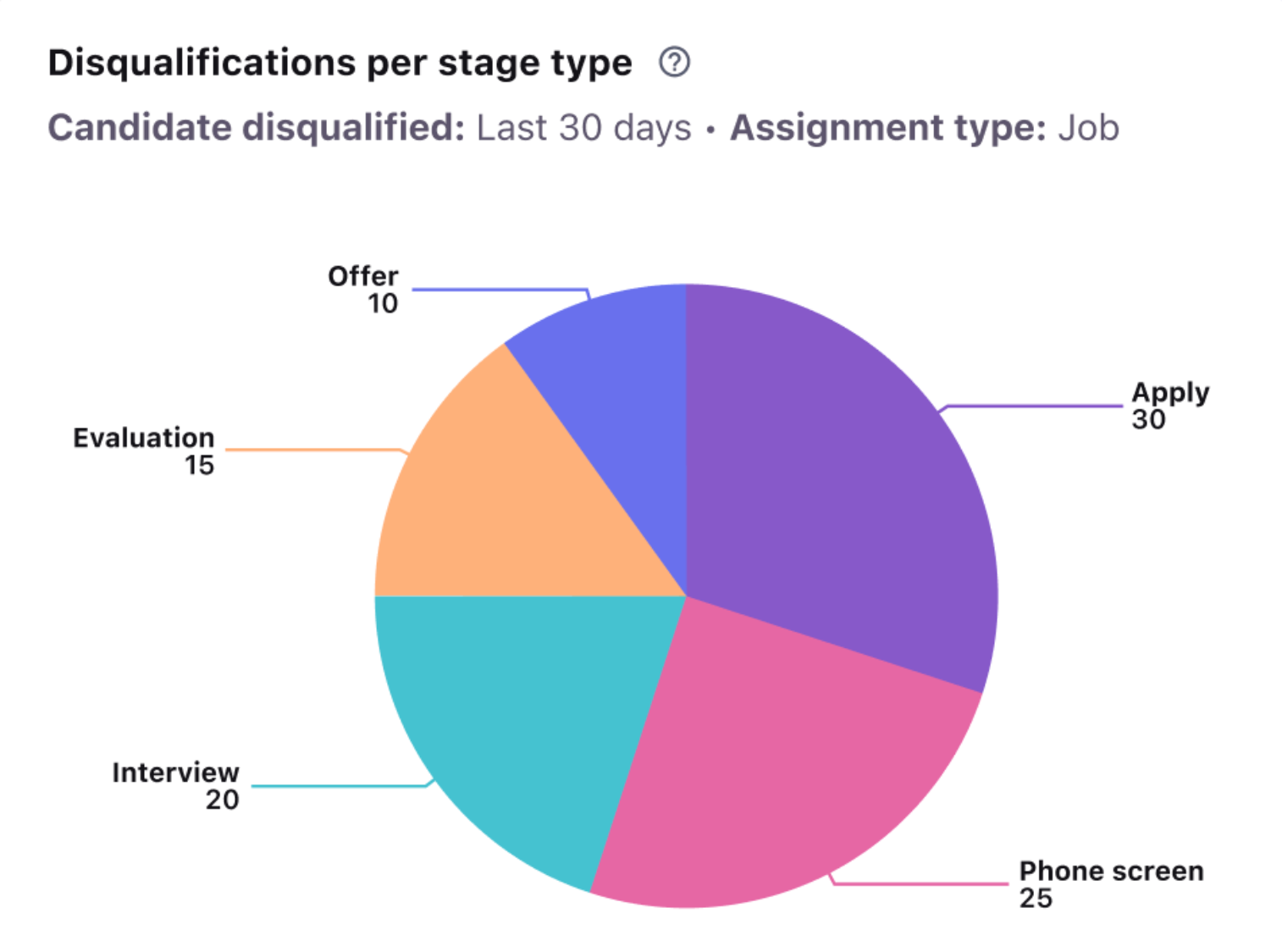
Understand where and why candidates drop off
Use the data to optimize your sourcing channels and internal process steps.
This evaluation helps you distinguish between:
- High-volume channels that create a screening burden
- High-quality channels that produce retained, successful hires
- Process bottlenecks that slow decision-making regardless of source
Based on what you find, reallocate time and budget toward the top-performing sources, and pause or redesign channels that consistently underperform.
Keep in mind, the goal isn’t to be present everywhere — it’s to prioritize channels that consistently bring in hires who perform and stay, while addressing process gaps that slow conversion.
4. Define governance & ownership
Without governance, hiring decisions tend to be driven by short-term urgency.
So in this step, aim to reduce friction and ambiguity, especially in growing organizations where structure is still maturing:
Clarify decision authority
Be explicit about who has final approval for each hire:
- Who makes the final call — the hiring manager, department head, or leadership?
- At what point and for which roles does senior leadership step in?
- Are there roles that require cross-functional sign-off?
Set feedback expectations
Clear feedback timelines protect candidate experience and reduce time-to-fill.
Define the following to prevent feedback lags that often cause hiring delays and candidate drop-off:
- What is the expected turnaround time for interview feedback?
- What happens if feedback isn’t submitted on time?
- When should recruiters escalate stalled decisions?
For example, require interviewers to submit feedback within 48 hours and automatically escalate to the hiring manager if it’s delayed.
Dig deeper: Learn how to get faster feedback from hiring teams
Define role clarity
Recruiters and hiring managers should have distinct, documented responsibilities:
- Who owns sourcing?
- Who defines evaluation criteria?
- Who schedules interviews?
- When does finance review compensation?
Ambiguity in ownership leads to duplicated work, missed steps, and slower hiring cycles.
Standardize documentation
Consistency improves decision quality.
- How are interview decisions recorded?
- Are structured scorecards required?
- Where is feedback stored?
Managing candidates, assigning roles, and running the recruitment process in one system ensures transparency, improves coordination, and drives better hiring outcomes.
Take it from Livestorm — they reduced their time-to-hire from 60 days to 25 days by using Tellent Recruitee to manage their recruitment process.
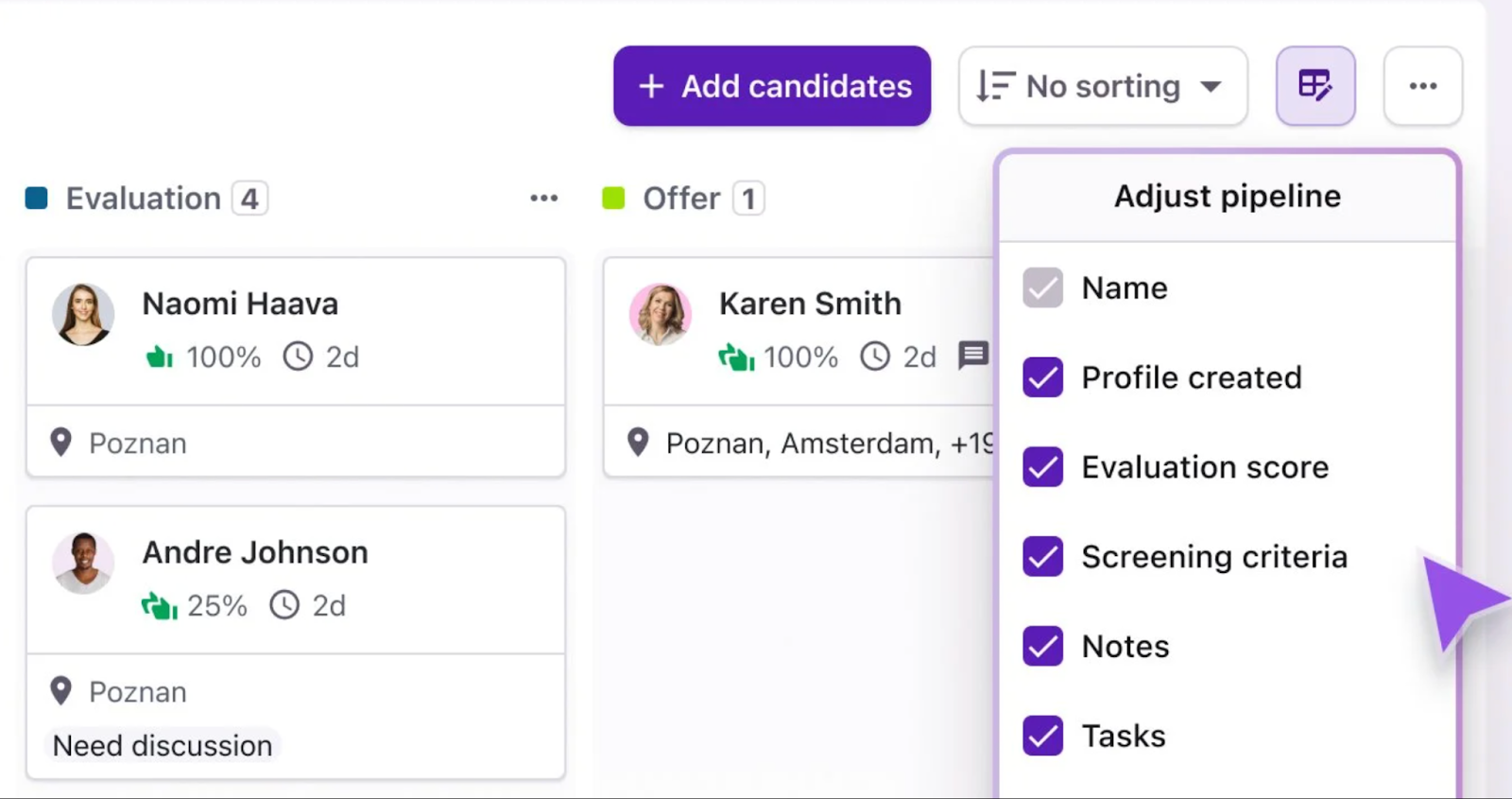
Easily manage candidates in a stage-based hiring pipeline
In your ATS, break your entire process into stages and move candidates through them for easy coordination and complete visibility into each candidate's selection status.
5. Define measurable hiring outcomes
A recruitment strategy isn’t just about filling roles; it’s about improving the quality, speed, and consistency of hiring decisions over time.
To do that, regularly track a set of measurable outcomes that signal whether your strategy is working:
Identify your core outcome metrics
These should go beyond activity and focus on results:
- Time-to-fill: Are roles being filled within realistic timelines, and where are delays occurring?
- Quality-of-hire: Are new hires performing well and staying beyond probation or year one?
- Offer acceptance rate: Are the candidates you want actually choosing you?
- Hiring manager satisfaction: Do stakeholders feel the process delivers strong, aligned hires?
Next, regularly review your funnel diagnostics
These metrics help you understand why outcomes look the way they do:
- Stage conversion rates: Where do candidates progress smoothly, and where do they stall?
- Candidate drop-off points: Are you losing strong candidates after first interviews, assessments, or offers?
- Source effectiveness: Which channels produce hires who perform and stay?
If your hiring process lives in an ATS, tracking recruiting metrics and funnel stages is fairly easy — using either reporting templates or custom dashboards that show specific metrics you want to review.
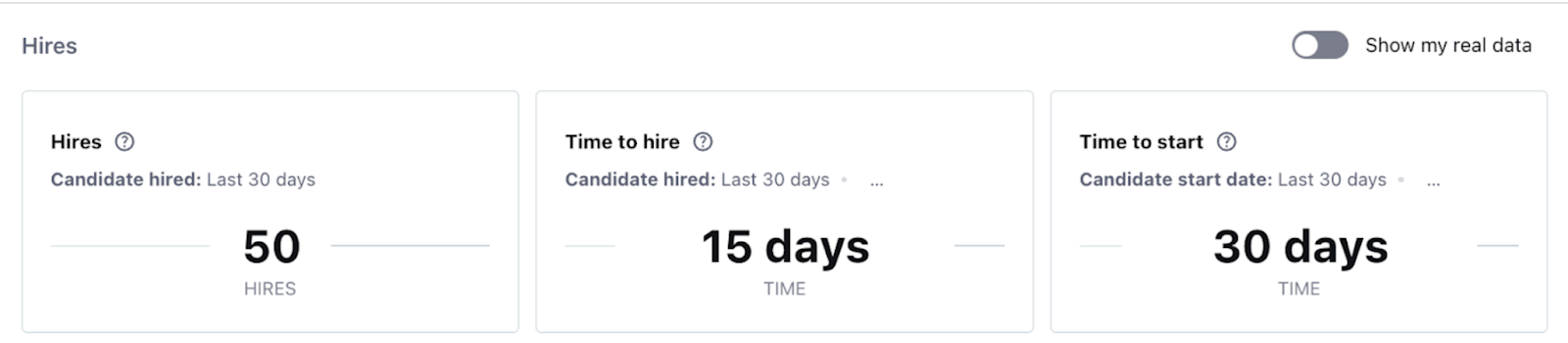
Don’t forget to establish a regular review cadence here so you’ve:
- Monthly performance check-ins to review key hiring metrics
- Quarterly strategy reviews to reassess priorities, channels, and trade-offs
Finally, define what success actually looks like for different role types
Not every position should be measured the same way.
For example, revenue-critical or hard-to-fill roles typically require more thorough assessment and greater precision. On the other hand, you can prioritize speed for high-volume or replacement roles.
So be explicit about role-specific benchmarks:
- What is an acceptable time-to-fill for different role types?
- What retention rate signals a strong hire?
Without defined targets, metrics become interesting data rather than strategic levers.
6. Use technology to scale and optimize your processes
By this point, you’d have clarified how hiring should work.
Next, use the right tools to run your processes consistently. In fact, companies that streamline hiring with tools like a specialized ATS can reduce time-to-hire by as much as 60%.
An ATS supports your recruitment strategy by automating repeat actions, centralizing visibility, and enabling data-driven decision-making. So make sure you:
Automate repeatable workflows
Manual coordination is a major driver of slow hiring cycles.
Teams using an ATS like Tellent Recruitee automate up to 80% of manual tasks and spend 64% less time on hiring admin.
This efficiency comes from automating predictable, recurring tasks such as:
- Scheduling interviews
- Publishing job openings across multiple platforms with one click
- Sending candidates automatic confirmation emails after each application
- Assigning tasks to team members when interviews are confirmed
Centralize processes
A structured recruitment strategy requires consistency in how decisions are made and recorded.
An ATS reinforces this by:
- Supporting structured screening and evaluation scoring
- Facilitating interviewer feedback with automated reminders
- Storing feedback notes, scorecards, and approvals in one place
Centralize visibility
A recruitment strategy needs visibility to remain effective. Use centralized dashboards to monitor:
- Pending tasks
- Pipeline health across roles
- Candidates in different stages
By keeping your process in one system, you make it easy to identify bottlenecks early rather than react after delays compound.
The goal here isn’t to add tools for the sake of it — it’s to remove approval delays, centralize feedback, and consistently improve hiring outcomes.
What are common recruitment strategy mistakes to avoid?
Even a well-designed recruitment strategy can fail if it’s not implemented consistently. The most common recruitment strategy mistakes usually surface from unclear ownership, overcomplication, or lack of follow-through.
So make sure you avoid the following:
- Overengineering processes. Adding too many approval layers, interview rounds, or assessments slows hiring. Complexity should match role impact, not internal preference.
- Copying enterprise templates. What works for a 5,000-person company won’t always fit a 250-person team. Adapt structure to your size, speed, and decision style.
- Adding tools before fixing workflow. Technology amplifies your existing process — good or bad. Define clear workflows first, then automate them.
- Tracking metrics without acting on them. Collecting data isn’t enough. If time-to-fill or drop-off rates are rising, adjust channels, screening, or feedback timelines accordingly.
- Treating recruitment strategy as static. Business priorities shift. Review and refine your strategy quarterly to keep hiring aligned with growth and market conditions.
Tailored hiring strategies beat one-size-fits-all
An effective recruitment strategy isn’t a template — it’s a system tailored to your company’s goals, size, and pace of growth.
When you clarify hiring priorities, define success, align on governance, and measure outcomes consistently, hiring becomes predictable rather than ad hoc. You reduce delays, improve quality-of-hire, and make decisions with greater confidence.
And because no business stands still, neither should your hiring strategy.
Successful recruitment strategies evolve. As priorities shift, review your strategy, refine what isn’t working, and continue optimizing for clarity, speed, and alignment.
That’s how tailored hiring strategies outperform one-size-fits-all approaches — and why the strongest teams treat recruitment as a continuous system, not a one-time plan.
Looking to understand how an ATS can support your recruitment strategy? Schedule a 30-min demo here.