




When your hiring process leaves candidates guessing about what happens next, the strongest ones often leave first. That shrinks your shortlist, slows time-to-hire, and leaves your hiring team making people decisions with fewer good options. Candidates now judge how quickly you communicate, how clearly you set expectations, and how respectfully you treat their time, not just the salary or job title.
And the stakes are high. According to our ‘The State of Hiring’ report, hybrid candidates drop off 14% more often in later stages than fully remote candidates, often because of vague or mismatched expectations. Meanwhile, companies that invest in candidate experience are reaping the rewards: faster time-to-hire, stronger employer branding, and lower drop-off rates.
This guide covers what candidate experience is, why it affects your hiring results, the mistakes that push candidates away, and 10 best practices you can apply from the first job ad to day one. It closes with the metrics that show whether your changes work.
Key takeaways
-
Candidate experience covers every interaction a job seeker has with your hiring process, whether or not you hire them.
-
Regular updates and specific feedback shape how candidates talk about you after the process ends.
-
State the pay range early. Under the EU Pay Transparency Directive, candidates can expect to see it in the job ad or before the interview, though national rules vary.
-
Drop-off rate, time-to-hire, offer acceptance, and candidate feedback show where your process loses people.
-
Technology helps you respond faster, but your recruiters and hiring managers make the hiring decisions.
What is candidate experience?
You shape it through every interaction candidates have with your brand, team, and tools at each stage of the candidate journey.
This includes the clarity of your job postings, the ease of applying, how your team runs interviews, how quickly you respond, and how you deliver feedback and decisions. Even a candidate who isn’t hired can leave the process as an advocate or a critic, depending on their experience.
In the European market, candidate expectations around transparency, efficiency, and respectful treatment are particularly high, so the way you run your hiring process shapes how candidates see your company.
Why is candidate experience so important?
Candidate experience affects whether you attract and keep the people you want to hire. In a competitive hiring market, where candidates often juggle multiple offers, even a small misstep such as slow follow-up or unclear communication can cost you the perfect hire and weaken future hiring efforts.
A poor experience also follows you into future hiring. In Survale’s 2025 Candidate Experience (CandE) Benchmark Research, 17% of EMEA candidates said they wouldn’t apply, refer, recommend, or buy from an employer again after a poor candidate experience. That was the highest rate of any region. A smooth, transparent process makes candidates more likely to reapply, recommend your company, or even become customers.
Positive experiences also increase your hiring efficiency. Our ‘State of Hiring’ report shows that slow, disjointed hiring processes drive top candidates away. This is especially true in hybrid roles, where expectations are often unclear or uncommunicated early in the application process. But when your process is fast, transparent, respectful, and candidate-friendly, it boosts offer acceptance rates and improves overall quality of hire.
Put simply: when two companies offer the same role, the one that communicates clearly and respects candidates’ time has the advantage over the one that ghosts applicants and delays decisions.
A great candidate experience makes hiring easier for your team and gives you stronger candidates to choose from when you make the final decision.
What’s considered a “bad” candidate experience?
To improve, we first need to know what a bad candidate experience looks like. In 2026, job seekers expect clarity, respect, and efficiency. Yet many still encounter processes that feel outdated or dismissive.
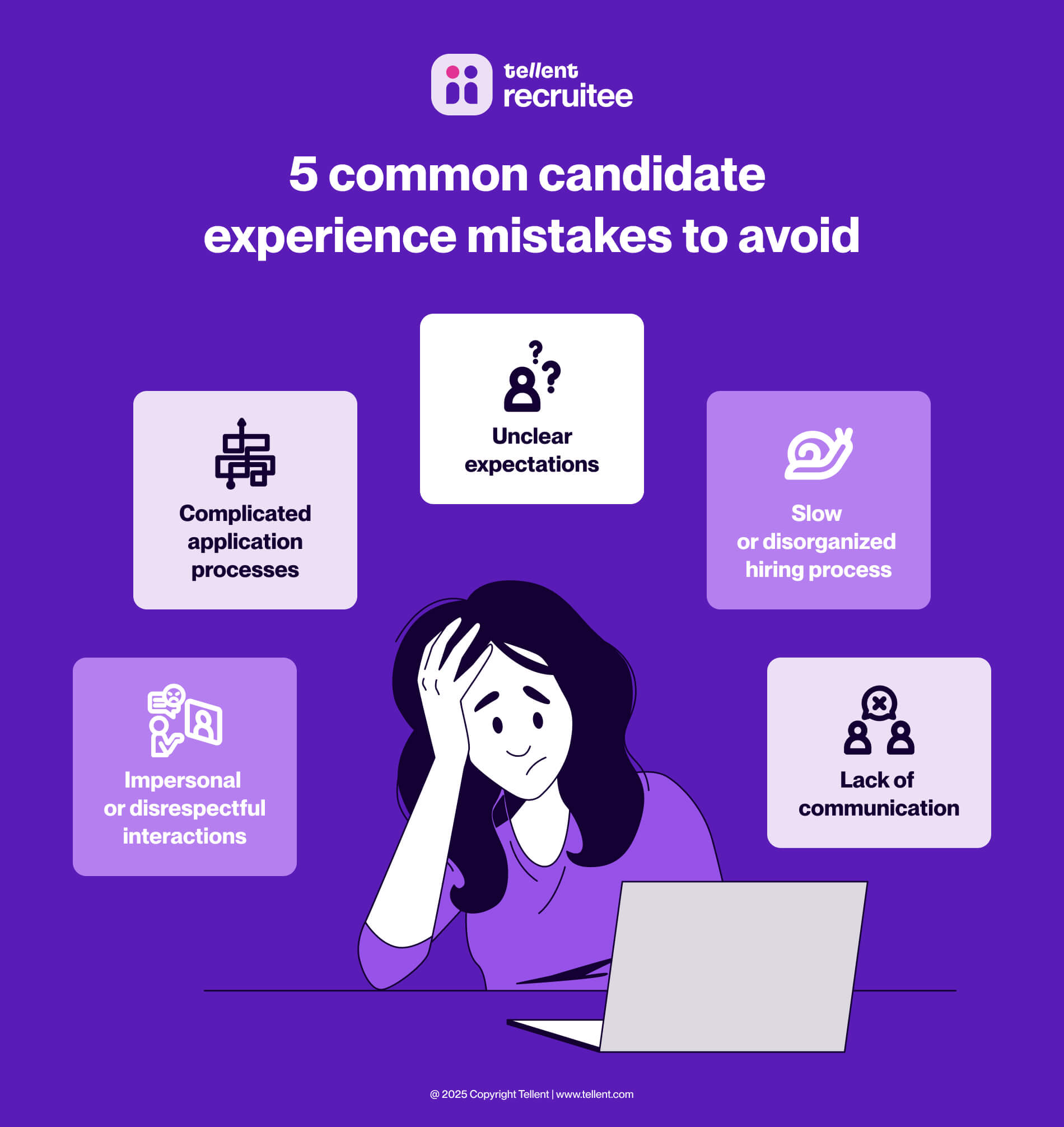
Most bad candidate experiences stem from five pitfalls.
-
Lack of communication: Recruiters and hiring managers leave candidates in the dark, with no updates, no feedback, and no closure after interviews.
-
Complicated application processes: Overly long application forms, duplicate data entry, and required tests before speaking to a human. Tellent Recruitee’s State of Hiring in 2025 report lists long, complicated applications as one of the most common reasons candidates abandon a job application.
-
Unclear expectations: Vague job descriptions or interviews that leave out key details can erode candidate trust and cause them to lose interest.
-
Slow or disorganized hiring process: Delays, reschedules, or endless interview loops push candidates to drop out, especially when they have other offers.
-
Impersonal or disrespectful interactions: Interviewers who show up unprepared or send generic rejections without feedback leave a lasting negative impression.
Each misstep not only causes resentment in the candidate who had this poor experience but may also spur them to share it with others, further damaging your employer brand.
10 best practices to improve candidate experience
Start by walking through every step of your hiring process as a candidate would, from the job ad to the first day. That review shows you where candidates wait, guess, or give up.
There’s no set recipe for a great candidate experience, but the 10 practices below cover the stages where small fixes make a visible difference.
1. Simplify your application process
If your job application is long-winded or confusing, top candidates may abandon it before they submit anything. Tellent Recruitee’s State of Hiring report names long, complicated applications, heavy upfront assessments, and asking candidates to upload a CV and then type in the same details as common reasons for drop-off.
Keep forms short and focused on the essentials. Use an applicant tracking system (ATS) to auto-fill details from a CV, or offer one-click apply via LinkedIn. For example, instead of asking for a cover letter, a full work history, and a skills test up front, ask for a CV and two must-have screening questions, and save the assessment for shortlisted candidates.
Be transparent from the start. List the salary range and work model (remote, hybrid, or on-site) in your job ad. Under the EU Pay Transparency Directive, applicants have the right to receive the initial pay or its range, for example in the job ad or before the interview, and employers can’t ask about their pay history.
National rules and reporting timelines differ by country, so map your pay transparency obligations for each entity before you publish ranges.
It’s easy to add a question for every stakeholder until the form takes longer than the role deserves. Ask only what you need to decide who to contact next.
2. Communicate early and often
Silence is the quickest way to lose a great candidate. Set up automated confirmation emails when someone applies and keep them informed at every stage. Aim to respond within two working days. Even without an update, a short note can keep engagement high.
Communication gaps are what candidates complain about most. In Survale’s 2025 CandE research, lack of communication, ghosting, and no follow-up were the #1 negative theme in candidate comments, and only 55% of candidates said they received an automated “thank you” message after applying.
Use your ATS to track where candidates are in the process and remind hiring teams to follow up. Collaborative hiring tools help everyone stay aligned, so fewer candidates go without an update.
Tip: Use status-update templates to quickly notify candidates of next steps or delays.

Don’t wait until you have news before you write. Kamila Kashayeva, Team Lead Talent Acquisition at Tellent, says, “I feel like it’s better to send a generic automated email than nothing in any case.”
3. Ensure a candidate-friendly careers site
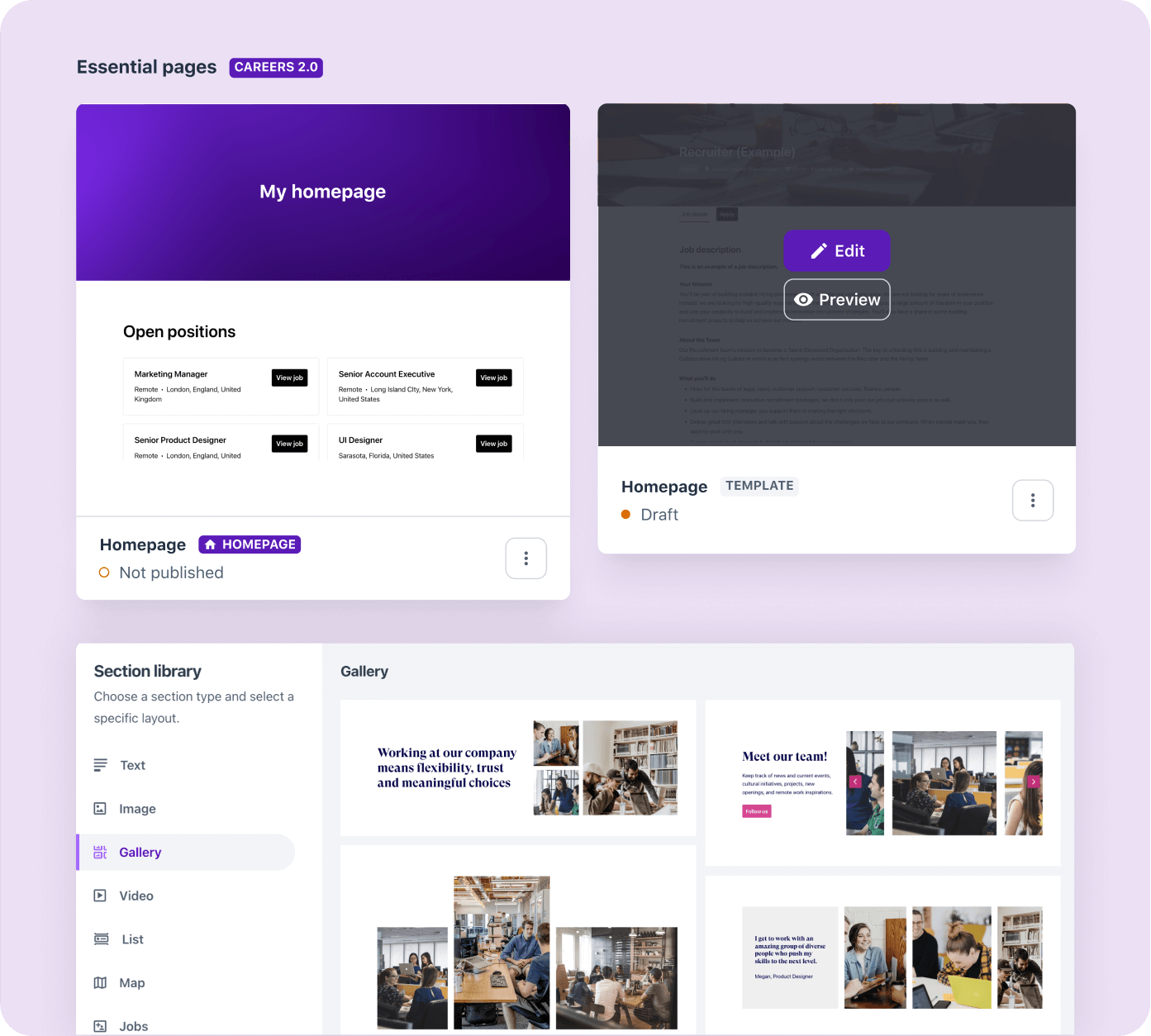
Think of your careers site as a digital front door. It should be easy to navigate, mobile-friendly, and rich with insight into your company culture. Include real photos, employee testimonials, FAQs, and local language support where applicable.
A well-designed site gives candidates confidence and reduces uncertainty. Highlight your values and show what daily life at your company looks like. This is especially important in European markets, where authenticity and cultural fit weigh heavily in decision-making.
Engagement on the careers site carries through to applications. Tellent Recruitee’s State of Hiring in 2025 report found that as visit duration increases, application form drop-off rate decreases, while higher bounce rates go hand in hand with higher drop-off.
Many careers sites are little more than a job list with a logo on top. The strongest ones answer the questions candidates would otherwise email you about, such as who’s on the team, which benefits you offer, and what the hiring steps are.
Tip: Include a “What to expect” section outlining your hiring process and timeline.
4. Write clear job descriptions
Candidates expect you to be open about the role from the first read. Use inclusive, plain language and clearly define responsibilities, must-have skills, and the hiring process.
List the number of interview rounds, any required tests, and how long the process might take. This aligns candidate expectations and avoids late-stage drop-offs. Spell out working hours and any flexibility the role offers.
Rigid filters such as “3-5 years of experience” can put off qualified people when “extensive experience” describes what you actually need. Write the description so the right candidates recognize themselves in it.
Tip: Use bullet points for clarity and make your job ads easy to scan. Need some help? Tellent Recruitee can draft and translate job descriptions for you, so you start by editing a first version instead of a blank page. Review the draft so it’s accurate and matches your employer brand.

5. Use technology to remove delays
Modern HR tools can noticeably improve candidate experience when they support a clear process. An applicant tracking system helps make sure no candidate falls through the cracks and speeds up internal collaboration. Self-scheduling tools make interviews more convenient for candidates. Chatbots can handle FAQs but shouldn’t replace the human touch.
For example, Tellent Recruitee’s platform enables real-time feedback sharing among hiring teams, reducing delays and keeping communication in one place.
The same applies to AI in recruiting. Use AI to draft job ads, summarize feedback, or surface information faster, and keep the decision about who moves forward with your recruiters and hiring managers. Candidates notice when that balance is off. Survale’s 2025 CandE research lists AI or automated screening complaints and impersonal rejections among the top three negative candidate comment themes.
Tools work best on top of a process that already works. Agree on stages, owners, and response times first, then let technology handle reminders and scheduling.
Tip: Let candidates book their own interview slots to save time for everyone.
6. Be transparent and honest at every stage
Share your expected hiring timeline with candidates, and tell them as soon as there’s a delay. Let finalists know how many other candidates are in consideration (within reason) and what’s coming next.
Candidates value openness. Tellent Recruitee’s data shows a lack of clarity on work models, and next steps often cause candidates to drop out late in the process. The State of Hiring in 2025 report also found that hybrid jobs take 17% longer to fill than remote positions, as candidates hesitate when job descriptions don’t say how many days they’ll spend in the office. Especially in Europe, transparent communication is key to trust.
If you promise a decision “by Friday,” send an update on Friday, even if the decision isn’t ready. Candidates shouldn’t have to chase you for news.
Tip: Always notify candidates before assigning take-home tasks or tests.
7. Provide a positive interview experience
Ensure interviewers are prepared, punctual, and respectful. Tell candidates in advance who they’ll meet and what to expect from the conversation.
Create space for candidates to ask questions. Provide thoughtful answers. If possible, give feedback after the interview, even if they’re not moving forward.
Respect for candidates’ time matters most at this stage. In Survale’s 2025 CandE research, the #1 reason candidates withdrew from recruiting processes was that their time was disrespected during interviews and appointments, cited by 32% of withdrawing candidates.
When each interviewer improvises, candidates answer the same questions in every round. Give each round a clear purpose and a structured set of questions instead.
Tip: Remember that candidates are evaluating you too. Before the interview, send a briefing email that explains the format, who they’ll meet, and how to prepare. That helps candidates show their real strengths and gives you a more accurate picture of each one.
8. “Close the loop” with every candidate
Don’t leave candidates hanging. Send timely rejections with a polite message, and offer feedback where possible. For final-round candidates, a quick call can soften the blow and preserve goodwill.
Most candidates don’t get that closure. Survale’s 2025 CandE research found that 56% of candidates received no feedback after being rejected during screening and interviewing. When employers gave candidates specific feedback, candidates’ willingness to refer others rose 69%.
Following up after each interview stage can make or break a candidate experience, and your employer brand and reputation. Marieke Drees, VP of People at Tellent, explains why specific feedback matters more than a polite template.
Watch for hiring managers who reject candidates outside the ATS, because then no one sends the rejection email. Every candidate should get an outcome and, where you can, a specific reason.
Tip: Use your ATS to track and tag silver-medalist candidates for future roles, and keep them in your candidate pool for later consideration.
9. Maintain engagement until onboarding
Keep in touch between offer acceptance and day one by sending paperwork promptly, inviting new hires to a team call, or sharing a “Welcome” message from their manager.
This phase is often overlooked but can prevent reneged offers. In Survale’s 2025 CandE research, only 34% of new hires received a call from their hiring manager before their start date, down from 43% in 2022. Small gestures like that call reinforce a new hire’s decision to join.
Going quiet once the contract is signed can leave new hires wondering whether they made the right choice. Send them a clear plan for their first week before they arrive.
Tip: Send a branded welcome pack or Slack invite before they start.

10. Deliver a strong onboarding experience
Candidate experience doesn’t end with the contract. A smooth employee onboarding process confirms that their choice to join was the right one. Yet few employers check in after the start date. In Survale’s 2025 CandE research, only 26% of employers said recruiters followed up with new employees within six weeks of the start date to confirm expectations matched reality.
Prepare their equipment. Schedule welcome meetings. Assign a buddy. Your onboarding sets the tone for their employee journey and directly impacts retention.
Before you hand new hires over to their team, check that the role matches what you described during hiring. A short check-in comparing the real job with the job description will tell you.
Tip: Ask new hires for onboarding feedback after 30 days to continuously improve the process.
How to measure candidate experience
Before you can improve, you need to know where you stand. Measuring candidate experience is essential to identify weak points and ensure your hiring process evolves in the right direction.
These five measures show where candidates struggle in your process.
-
Candidate satisfaction surveys. The most direct method. Send a short survey after the hiring process, ideally to both successful and unsuccessful candidates. Ask questions like, “How would you rate your overall experience?” or use a Net Promoter Score (NPS)-style question: “How likely are you to recommend applying to our company?” You can automate these surveys through your ATS.
-
Application drop-off rate. This metric shows what percentage of candidates begin but don’t finish your application. In Tellent Recruitee’s State of Hiring in 2025 report, the average drop-off rate across all regions and industries was 41.2%, and larger companies (1,000+ employees) had the lowest rate at 37.2%. If your rate sits well above that, look for friction: too many fields, unclear instructions, or a form that doesn’t work on mobile.
-
Time-to-hire and interview-to-offer ratios. Long hiring cycles can damage candidate perception. The State of Hiring in 2025 report found that organizations with hiring cycles above 40 days experience a 12% increase in drop-off rates. Tracking this helps you pinpoint delays.
-
Offer acceptance rate. A consistently low rate could indicate deeper issues in your candidate experience or in your offer’s competitiveness. Improving your process often leads to more accepted offers.
-
Candidate feedback themes. Monitor reviews on sites like Glassdoor or collect qualitative feedback through email. Positive and negative patterns both show where to improve.
To make your review easier, use our candidate experience checklist to audit each stage of your hiring process. Make a copy of the document to edit it and track your progress.
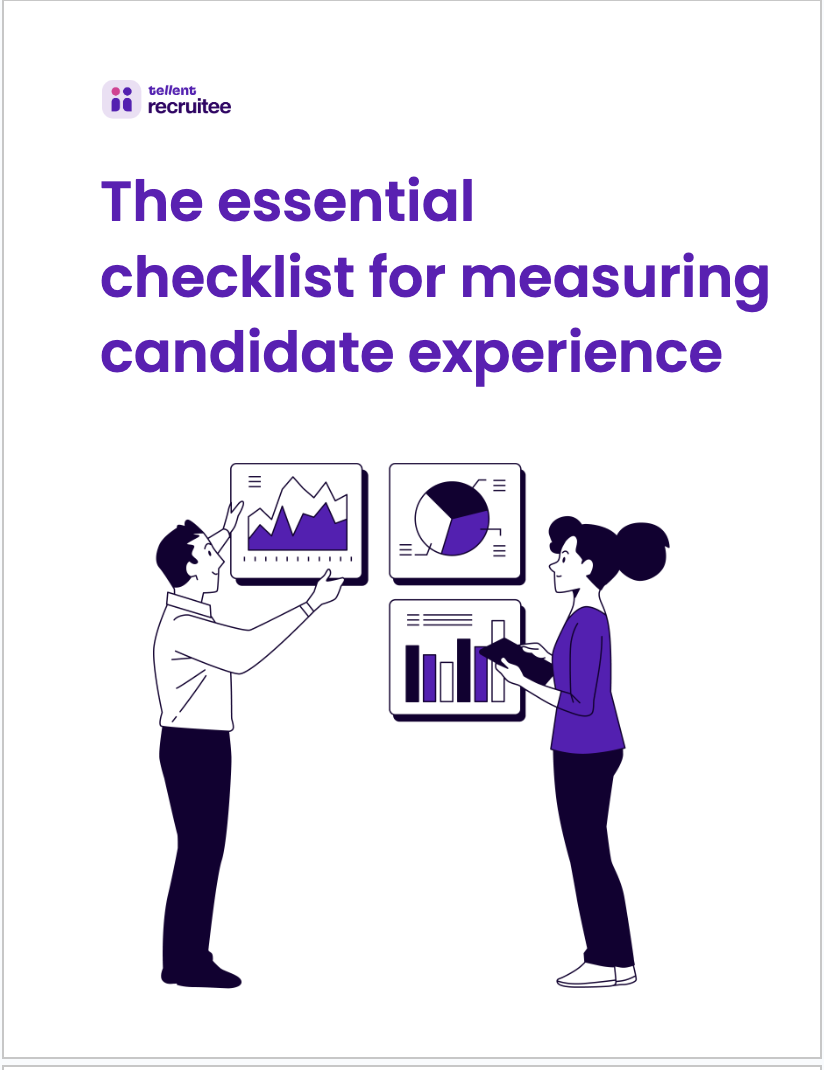
Preview of the candidate experience checklist
Lastly, we recommend setting up a candidate experience dashboard in your ATS or HR system to track these metrics regularly and guide continuous improvement. For example, Tellent Recruitee lets you create custom dashboards to track a wide range of candidate experience, candidate sourcing, and hiring efficiency metrics, so you can stay on top of trends and changes.
Measure, improve, and track your candidate experience
Candidate experience needs ongoing attention as your roles, teams, and markets change. Companies that treat recruitment as a strategic priority, with a focus on speed, data, and candidate experience, are better placed to compete for talent in 2026.
Improving candidate experience leads to measurable gains: stronger employer branding, better talent pipelines, and more efficient hiring. Livestorm cut its time-to-hire from 60 to 25 days after adding pre-screening as the first stage of its process, according to the State of Hiring in 2025 report.
But it doesn’t have to be overwhelming. Start small. Choose two best practices from this guide to implement this quarter. Perhaps that’s simplifying your application process or improving interview follow-ups.
By putting candidates at the center of your recruitment journey, you attract stronger applicants and build a reputation that sets you apart in a competitive market.
Start with the candidate experience checklist above, then book a demo to see how Tellent Recruitee’s customizable ATS helps your team keep candidates informed at every stage.