



.webp)

Most organizations treat recruitment as a response to urgency. A role opens, a job post goes live, and the clock starts ticking. It works — until it doesn't.
Fewer than 25% of leaders believe their organization consistently makes high-quality people decisions — including hiring decisions. Not because people aren't trying, but because recruitment is often disconnected from the organizational goals it's supposed to serve.
Strategic recruitment changes that. It's not a checklist of best practices. It's the structural shift from filling vacancies to making better decisions about people — decisions that affect performance, retention, and growth long after someone starts.
By taking a structured approach to attracting and hiring talent — rather than relying on ad-hoc efforts to fill roles as they appear — you attract better-fit candidates, fill roles faster, and build a strong, future-ready talent pipeline.
Without a strategic recruitment process, teams risk reactive hiring, longer time-to-hire, and mismatched talent. In practice, the impact shows up quickly across your hiring process:
- Lower candidate quality as you attract candidates that don’t meet your criteria, leading to longer hiring cycles and more mis-hires.
- Difficulty collaborating with hiring managers due to poor alignment on open roles and required skills, making it harder to screen consistently and retain new hires.
- Weak talent pipeline when the wrong channels and audiences are targeted, resulting in fewer qualified applicants and a smaller pool to hire from.
- Inconsistent candidate experience since disjointed steps across the hiring process create delays, confusion, and dropped communication — hurting your employer brand and pushing strong candidates away.
- Higher recruitment costs as inefficient processes and mis-hires compound, making recruitment more expensive and harder to scale.
This guide tells you how to fix this by taking a proactive approach to recruitment. Let’s dive in.
Key takeaways
|
What is strategic recruitment?
Strategic recruitment is the process of aligning hiring with long-term organizational goals — moving from reactive vacancy-filling to proactive, structured decision-making about talent.
It is not just about filling roles faster. It is about improving the quality of each hiring decision: why the role is needed, what success looks like, which criteria matter, how candidates are evaluated, and how the decision supports the business beyond day one.
The opposite is ad hoc recruitment, where urgency drives the process. In ad hoc hiring, teams often start from the vacancy. In strategic recruitment, they start from the decision: what capability does the organization need, why now, and how will this hire contribute to future performance?
| Strategic recruitment | Reactive recruitment | |
|---|---|---|
| Starting point | Organizational capability needs | Open vacancy |
| Planning horizon | 12–18 months ahead | Immediate need |
| Process structure | Standardized, criteria-based | Ad hoc, varies by role |
| Candidate evaluation | Consistent criteria across all candidates | Depends on the hiring manager |
| Talent pipeline | Built proactively with passive candidates | Sourced on demand |
| Data use | Tracked regularly (time-to-hire, source quality, quality-of-hire) | Limited or post-hoc |
| Candidate experience | Structured, consistent communication | Inconsistent; prone to delays |
| Primary goal | Better long-term people decisions | Fill the role as quickly as possible |
Why is strategic recruitment important?
Strategic recruitment matters because hiring decisions now carry greater business impact. Talent is harder to secure, candidate expectations are higher, and organizations need more consistent ways to decide who to hire, when to hire, and why.
A strategic approach helps organizations move away from intuition-led hiring and toward more structured, transparent, and repeatable people decisions. It helps teams:
- Attract and secure scarce talent. In tight labor markets, companies need a clear hiring strategy and strong employer positioning to reach candidates with in-demand skills before competitors do.
- Reduce time spent on manual recruiting work. Structured hiring workflows and recruitment automation reduce repetitive tasks, allowing recruiters to spend more time on the human aspect of recruiting.
- Meet rising candidate expectations. Candidates increasingly research employers before applying. Strategic hiring helps organizations deliver a stronger candidate experience and communicate a clear employer brand.
- Reduce the cost and risk of mis-hires. Hiring the wrong candidate leads to lost time, salary costs, and disruptions to team productivity. Structured screening, evaluation, and decision-making improve hiring accuracy.
- Support fairer and more inclusive hiring decisions. Strategic selection introduces structured processes and data-driven evaluation, helping organizations reduce bias and build more diverse teams.
Together, these shifts have moved recruitment from a purely operational task to a strategic function that supports long-term workforce planning and business growth.
With that, let’s look at the key components that make strategic recruitment effective.
What are the key components of strategic recruitment?
Strategic recruitment depends on three core components: a strong employer brand that attracts the right candidates, structured processes and technology that guide better decisions, and data that helps teams plan, evaluate, and improve hiring over time.
These three elements work together:
-
Brand: why the right candidates should choose you
-
Technology: how teams structure and guide hiring decisions
-
Data: how teams understand what is working and where decisions can improve
Without them, recruitment becomes reactive. Fewer qualified candidates enter the pipeline, hiring processes slow down, and decisions rely more on intuition than evidence.
1. Build an employer brand that attracts the right candidates before you need them
Strategic recruiting starts with determining your employer brand.
According to Karim Gharsallah, former Head of Talent at Tellent Recruitee, effective recruitment is all about defining and telling your story as an employer.
This is especially true for startups, scale-ups, and companies that struggle with recruiting top talent.
Start by asking:
- What do we stand for as an employer?
- Why should candidates choose us?
- How can we better position ourselves to appeal to the types of candidates we want to hire?
Use the answers to these questions as the foundation of your employer brand story.
Dig deeper: How to build an effective employer brand
2. Structured processes lead to better hiring decisions — not just faster ones
Structured hiring processes reduce delays, improve collaboration with hiring managers, and ensure candidates are evaluated against the same criteria.
But the value of structure is not only efficiency. It gives hiring teams a clearer decision framework: what matters for the role, how candidates should be assessed, who needs to be involved, and when action is required.
Without the right structure, recruitment quickly becomes fragmented — with inconsistent screening, slow feedback loops, unclear ownership, and decisions that depend too heavily on individual judgment.
Technology plays a key role in enabling this structure. A good Applicant Tracking System organizes applications better. It becomes the system of record for your hiring decisions — storing the criteria, evaluation data, and candidate history that allows teams to make better, more consistent choices over time. That data doesn't disappear after an offer is accepted; it's the foundation for everything that follows in the employee lifecycle.
- Centralize candidate pipelines and hiring stages
- Automate manual tasks such as candidate communication
- Standardize screening criteria and interview feedback
- Track progress across roles and hiring teams.
Automation matters, but only when it supports better judgment. The goal is not to remove people from hiring decisions. It is to give recruiters and hiring managers the structure, context, and guidance they need to make those decisions well.
3. Make the business case: use data to show what good hiring is worth
Strategic recruitment depends on using data to guide hiring decisions and workforce planning.
Rather than reacting to hiring needs as they arise or running your recruitment plan on guesswork, data helps teams understand where decisions are strong, where they are inconsistent, and where the process is creating risk.
Track key recruitment metrics such as time-to-hire, source of hire, candidate conversion rates, offer acceptance rates, and quality-of-hire indicators to reveal where bottlenecks occur and which channels produce the strongest candidates.
This information helps hiring teams:
- Forecast future hiring needs
- Improve sourcing strategies
- Optimize recruitment funnels
- Allocate hiring resources more effectively
Over time, a data-driven approach transforms recruitment from an operational task into a strategic function that supports broader business goals.
How strategic recruitment creates value beyond the hire
Strategic recruitment does not end when a candidate signs the offer. Hiring is the first decision in a much longer employee relationship, and the quality of that decision shapes what happens next.
When hiring criteria are clear, structured, and aligned with business goals, they provide useful signals throughout the employee lifecycle.
Those signals can improve:
-
Onboarding
A structured hiring process makes it clearer why someone was hired, what strengths they bring, and where they may need support. This helps managers create a more focused onboarding plan from day one.
-
Performance conversations
When the expectations set during hiring are documented and consistent, managers have a stronger foundation for early feedback, goal-setting, and performance discussions.
-
Development planning
Recruitment data can reveal skills, motivations, and growth areas that should not disappear after the offer letter. Used well, these insights help shape learning paths and career development.
-
Retention
Better hiring decisions reduce mismatches between role expectations, candidate motivation, and company needs. Over time, this helps teams improve fit, engagement, and retention.
This is what makes recruitment strategic. The goal is not only to hire someone who can do the job today. It is to make better people decisions that support performance, development, and growth over time.
How do you build a strategic recruitment process? 7 practical tips
What makes hiring strategic and results-oriented is how teams plan talent needs, evaluate candidates, and structure hiring workflows to support company growth. These seven tips cover what modern hiring teams are doing differently — and how you can apply the same thinking to your process.
The 7 practical tips below highlight what modern hiring teams are doing differently and how you can make your recruitment process more strategic:
- Align hiring goals with business strategy
- Question every hiring request
- Hire for long-term impact, not just immediate needs
- Build relationships with passive candidates
- Look beyond local talent pool
- Use recruitment automation
- Regularly track and optimize your recruitment performance
When these practices are in place, hiring becomes less reactive and more proactive — helping teams reduce mis-hires, shorten time-to-hire, and build stronger talent pipelines.
1. Align hiring goals with business strategy
Strategic recruiting starts with the basics. You need a strong foundation in place before you can take a more strategic approach to hiring.
Tellent Recruitee’s former Head of Talent, Karim Gharsallah advises defining your hiring process and what you mean by talent in the context of your company.
To begin:
- Analyze your recruitment process. Note down all of the steps that your candidates go through and audit the quality of each touch point.
- Determine the right talent for your organization. What general skills and attributes do they need to be successful?
- Find and define your organization’s short- and long-term goals, and align them with your recruitment goals.
2. Question every hiring request
Take a critical look at your recruitment department’s current processes and tactics.
What is going well? What can be improved? What innovative recruitment channels and methods can you use to reach top candidates?
Dare to think outside the box, but also think realistically about what new tactics you can use.
For instance, have a defined process for opening new positions.
Karim Gharsallah shares that recruiters should not just blindly cooperate with a request for a new position. Instead, they should ask critical questions:
- Why do we need this new hire?
- What skills do they bring in that we’re missing?
- How does it contribute to the goals of the team and the organization?
The goal is simple: be analytical about whether a particular hire will really contribute to the company’s objectives. Oftentimes, this means that you’ll have to challenge the status quo — even if the organization is going in a certain direction.
3. Hire for long-term impact, not just immediate needs
Be selective with the candidates you hire.
The first step is educating hiring managers about the importance of strategic selection. The more clarity your team has on it, the better you can avoid hiring candidates under pressure.
Karim notes companies tend to fill offers mainly for today’s problems. But strategic hiring is all about thinking long-term — stepping back and taking a look at the bigger picture than just hiring for immediate skills.
To this end, take stock of the skills you’ll need in the next 12 to 18 months to meet the company’s strategic goals as you define job roles. Then use these insights to inform your screening questions, evaluation forms, and talent assessment.
Second, take the right steps to find the right person for the job — without adding new work to your plate.
One way to do so is setting up knockout questions in your application forms that automatically disqualify candidates based on set selection criteria, such as visa requirements.
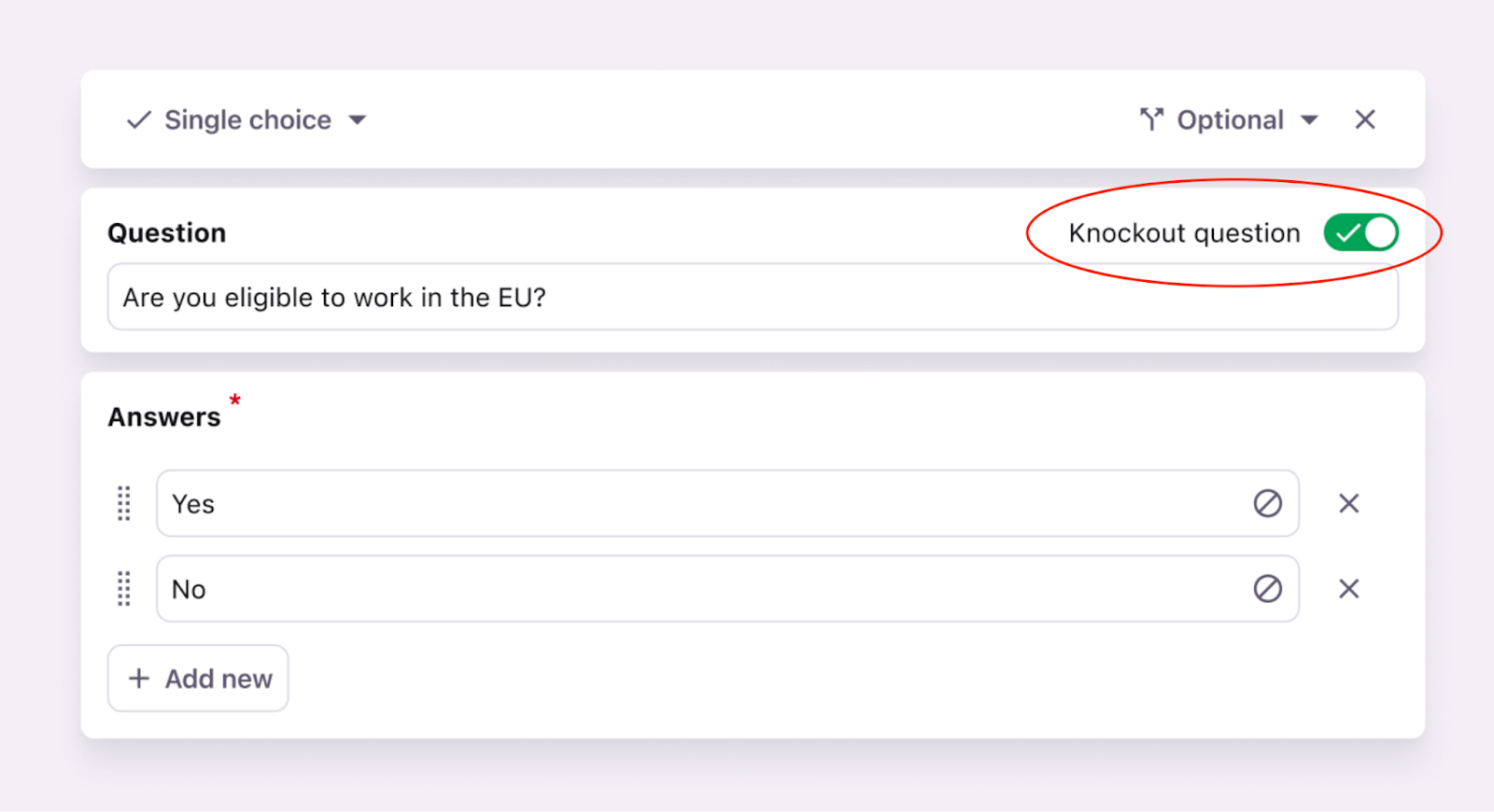
Knock out questions in Tellent Recruitee help you screen candidates who meet baseline criteria
This immediately reduces your applicant list, allowing you to focus on only candidates with the right qualifications.
You can also use AI as your first layer for reviewing resumes and identifying candidates that meet most of your predefined criteria.
In Tellent Recruitee, for instance, Screening Assistant reads candidates’ resumes, cover letters, and screening questions to show how many of your requirements each candidate meets (you can set up to six job-specific criteria).
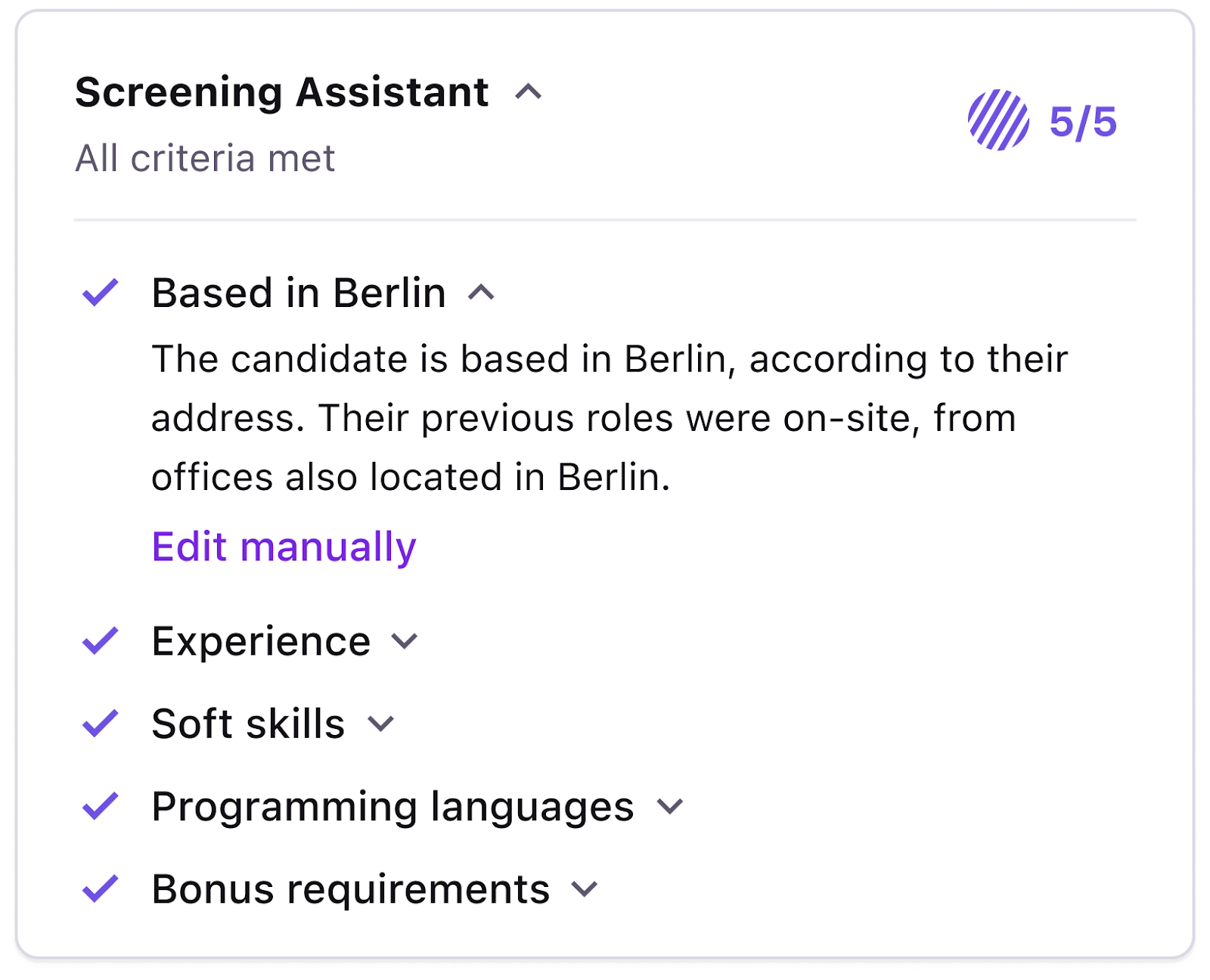
Screening Assistant in Tellent Recruitee rates candidates against six specific criteria you define
Then double-check the AI-shortlisted candidates — looking carefully for good-to-have skills that AI may not have picked up on but show candidates’ developmental potential.
Dig deeper: How to screen candidates faster: A 7 step practical guide
4. Build relationships with passive candidates
Many recruitment strategies focus only on candidates who are actively looking for work. But it’s also a good idea to tap talent that’s already employed by other companies.
These candidates likely have, and are actively using, the skills you’re looking for, and are currently driving impact at other organizations.
Reaching out to passive candidates and informing them about the possibilities within your organization is a great way to pique their interest and generate a talent pool of qualified candidates for future openings.
An ATS can help you maintain this talent pool by storing candidate profiles, tagging skills or roles, and keeping notes from your conversations — making it easier to reconnect when a suitable position opens.
This way, you’re not starting from scratch when roles open. Rather, you can reach out to candidates who already know your organization and may be open to exploring an opportunity.
5. Look beyond your local talent pool
Chances are, the best talent in your industry doesn’t always live within driving distance of your office.
To access a wider range of qualified candidates, recruiters often need to look beyond local or national boundaries.
Hiring internationally expands your talent pool and increases your chances of finding candidates with the right skills and experience.
To this end, you’ll need to support remote work. This is an appealing perk for many top candidates, and is often an expectation among workers in the post-pandemic world.
In fact, remote roles attract 21% more applicants than hybrid roles (conversion rates depend on clarity in job expectations) — confirming how remote work can significantly expand candidate supply.
6. Use recruitment automation
Recruitment automation reduces manual tasks to allow recruiters to focus more on candidate conversations and hiring decisions, according to LinkedIn’s Future of Recruitment Report.
Yet many teams still spend hours on repetitive tasks such as sending emails, scheduling interviews, and coordinating feedback among hiring managers.
Using an applicant tracking system helps automate these tasks so recruiters can focus more on evaluating candidates and improving hiring outcomes.
For example, you can:
- Automate actions across your hiring pipeline. For instance, trigger tasks for team members, automatically send rejection or update emails, and request evaluation feedback when candidates move to a new stage.
- Standardize recurring hiring workflows. Use workflow templates to structure talent pipelines, candidate profiles, screening questions, and evaluation forms.
- Automate interview scheduling. Reduce interview scheduling back and forth, and automatically send invitations, video links, and reminders to candidates and hiring teams.
Dig deeper: 10 manual tasks in recruitment that you can automate.
Automation saves significant time. Take it from our customers who share that they spend 64% less time on hiring admin after automating manual recruiting tasks with Tellent Recruitee.
Streamlined workflows can also reduce time-to-hire by as much as 60%, allowing recruiters to spend more time on assessing candidates.
7. Regularly track and optimize your recruitment progress
Unlike traditional hiring, strategic recruitment isn’t static. Instead, it’s an ongoing exercise in experimentation — continuously measuring and refining your hiring process based on areas of improvement you find.
This starts with determining which recruitment metrics are most relevant to you.
For example, time per hire and candidate close ratio are performance indicators that help spot bottlenecks in your hiring process and identify where candidates are dropping off.
Dig deeper: Read our complete guide to tracking the right recruitment metrics.
Once you’ve identified which metrics to track, actively track them to understand how each part of your strategic recruitment process is performing.
If you’re already using an ATS this should be fairly simple.
Tellent Recruitee, for example, gives you insights into drop-off rate on application form, proceed rates per stage, and the number of applications per channel.
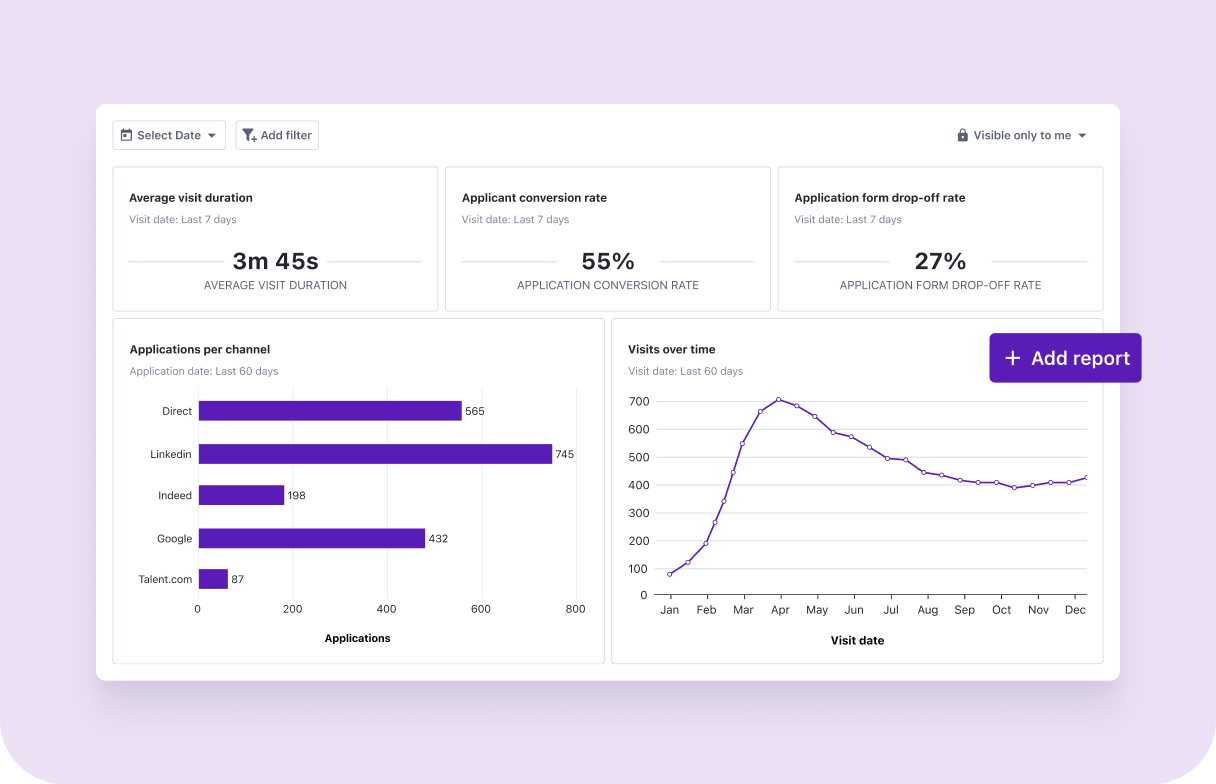
Track recruiting metrics using templates and custom reports in Tellent Recruitee
Additionally, ask candidates and hiring managers for feedback regularly.
Between this qualitative feedback and the quantitative data you track, you’ll have enough ongoing insights to continuously improve your recruitment strategy.
Is strategic recruitment worth the investment?
Yes — strategic recruitment helps organizations hire better candidates, reduce mis-hires, and build the talent pipelines needed to scale. As the talent market grows more competitive and hiring needs become harder to predict, a proactive, structured approach to recruitment isn't optional — it's what separates teams that consistently hire well from those that are always catching up.
Reactive hiring fills roles. Strategic recruitment builds the team your organization needs to grow.
Strategic recruitment is where better people decisions begin
Every component covered in this article — your employer brand, your hiring process, the data you use to evaluate candidates — shapes the quality of the decisions your organization makes about people. That's what makes recruitment strategic: not the tactics themselves, but the intent behind them.
Done well, strategic recruitment doesn't end at the offer letter. The clarity you build into how you hire — the criteria, the structure, the data — carries forward into how you onboard, develop, and retain the people you bring in. Hiring is the first decision in a much longer relationship, and the quality of that first decision sets the tone for everything that follows.
The organizations that get this right aren't necessarily the ones with the biggest recruiting budgets. They're the ones that treat every hire as a consequential decision — and build the processes to make those decisions well, consistently, at scale.