



.webp)

Hiring today isn’t just about finding candidates — it’s about moving fast enough to hire them before someone else does.
With the global talent shortage at a 12-year high, 45% of employers report difficulty finding the talent they need.
But for many teams, the challenge isn’t just talent availability — it's an unstructured hiring process that makes it harder to find the right candidates and move quickly.
Without clear stages and ownership, hiring slows down — and slow hiring has a measurable cost. According to Tellent's State of Hiring 2025 report, based on Tellent Recruitee data from over 5,000 companies, organizations with hiring cycles longer than 40 days experience a 12% increase in candidate drop-off rates.
That's why hiring needs to be structured — and continuously optimized.
A consistent process gives your team a reliable framework to work from, but the best hiring teams also know when to adapt it for different role types, sourcing channels, and candidate profiles.
In this guide, we break down the hiring process step by step and show how to optimize it so your team can hire faster, more consistently, and with less friction.
What’s a hiring process, and why should you even care about it?
The hiring process is a series of structured steps teams use to attract, evaluate, and hire candidates. It typically includes defining the role, sourcing candidates, screening applicants, conducting interviews, and making a final hiring decision.
A clear, stage-based hiring process helps teams:
- Move candidates through hiring more efficiently
- Evaluate each applicant consistently and fairly
- Reduce delays caused by unclear responsibilities or slow feedback
The importance of having a defined hiring process in place
A clear hiring process ensures your team hires consistently, efficiently, and based on clear criteria — rather than relying on ad hoc decisions. Without it, hiring often becomes slower, less predictable, and harder to scale.
Here’s why a defined hiring process is important:
- Reduce time-to-hire. Clear stages and responsibilities remove bottlenecks, helping teams move faster from application to offer.
- Improve candidate quality. Defined criteria and screening steps ensure only relevant candidates move forward.
- Ensure consistent and fair evaluation. Standardized stages and evaluation criteria make hiring decisions easier to justify and reduce bias.
- Strengthen collaboration across hiring teams. Defined roles and workflows align HR, recruiters, and hiring managers throughout the process.
- Improve candidate experience. Faster updates and clearer expectations keep candidates engaged throughout the process.
7 common steps of an efficient hiring process
While the exact stages vary by organization, most hiring processes follow a core sequence: defining the role, attracting candidates, evaluating applicants, making the final decision, and onboarding new hires.
So generally speaking, here’s what building a well-structured hiring process looks like:
1. Identify and define the hiring need
An ideal hiring process begins by identifying the need for a new employee. It’s easy to rush matters and agree to any and every hiring request. But it’s essential to critically ask:
- Why do we need this new hire?
- What skills do they bring that we’re missing?
- How does the role contribute to the goals of the team and the organization?
The goal is to determine whether a new hire will really contribute to the organization’s objectives.
Once done, define the role:
- What’s the business reason for the hire?
- What’s the role scope and responsibilities?
- What are the must-have and nice-to-have skills?
- Where does the new role sit in the reporting line and team structure?
Make sure everyone involved in the decision or affected by the new hire is included in the process.
2. Align stakeholders and create the job requisition
Once the new role is defined, create a job requisition or internal document to get authorization for it.
This stage typically revolves around the hiring manager:
- Getting HR approval for the budget
- Aligning with recruiters on the ideal candidate profile and evaluation criteria
- Putting together the hiring team for the specific role and assigning responsibilities for each stage of the hiring process
Many companies create and approve job requisitions in an Applicant Tracking System (ATS) to ensure everything is documented in one place and easy to track. This helps avoid hiring delays caused by unclear expectations or miscommunication.
You can also automate job requisitions so all approval and review steps are set up in the ATS, ensuring a smooth handoff between stakeholders and speeding up your requisition reviews.
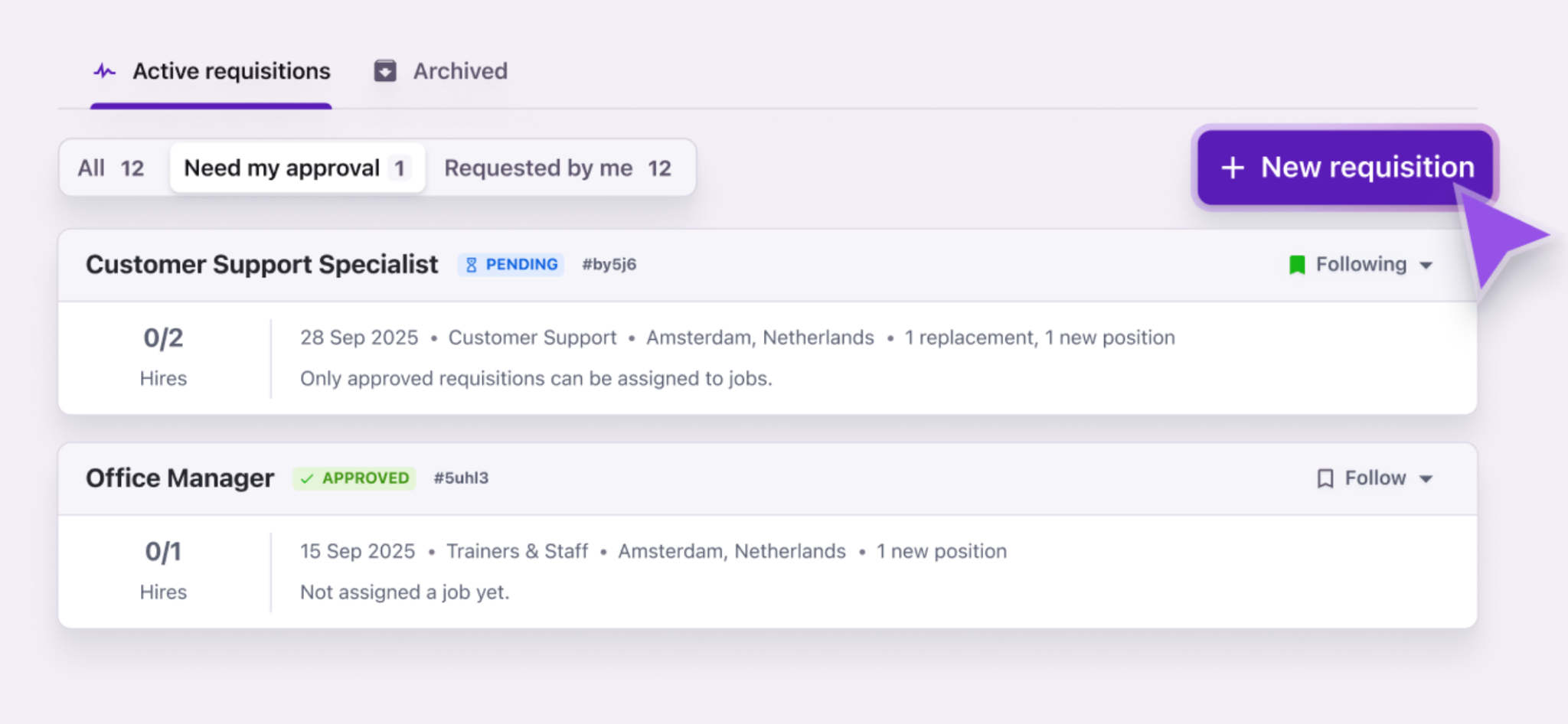
The requisition approval process in Tellent Recruitee.
3. Write and publish the job description
A clear, well-structured job description helps attract the right applicants, set expectations early, and reduces time you spend reviewing unqualified applications.
Focus on including:
- A concise summary of the role and its purpose
- Key responsibilities and outcomes
- Required skills and experience
- Information about the team and company
- Salary range or benefits where relevant
Dig Deeper: How to write a good job description (+ 20 job description examples)
4. Source candidates across channels and referrals
Job postings alone rarely generate the entire candidate pipeline. Most hiring processes combine active sourcing and inbound applications.
Common sourcing methods include:
- Posting the role on relevant job boards
- Promoting openings on company's social channels
- Encouraging employee referrals
- Searching professional networks such as LinkedIn
- Working with headhunters or specialized agencies for hard-to-fill roles
Combining multiple sourcing channels increases your likelihood of finding qualified candidates and helps you build a stronger talent pipeline.
Dig deeper: How to get better candidate applications in 7 steps
5. Screen and shortlist candidates
Once applications start coming in, the next step is to narrow the pool to the most promising candidates.
Start by reviewing applications against the role’s core requirements. But instead of parsing hundreds, even thousands of resumes manually, use AI as your first filter for shortlisting candidates that meet most of your defined requirements.
When enabled, Screening Assistant in Tellent Recruitee, for instance, reads candidates’ CVs, cover letters, and screening questions you set in the ATS to show you how many of your requirements each candidate meets.
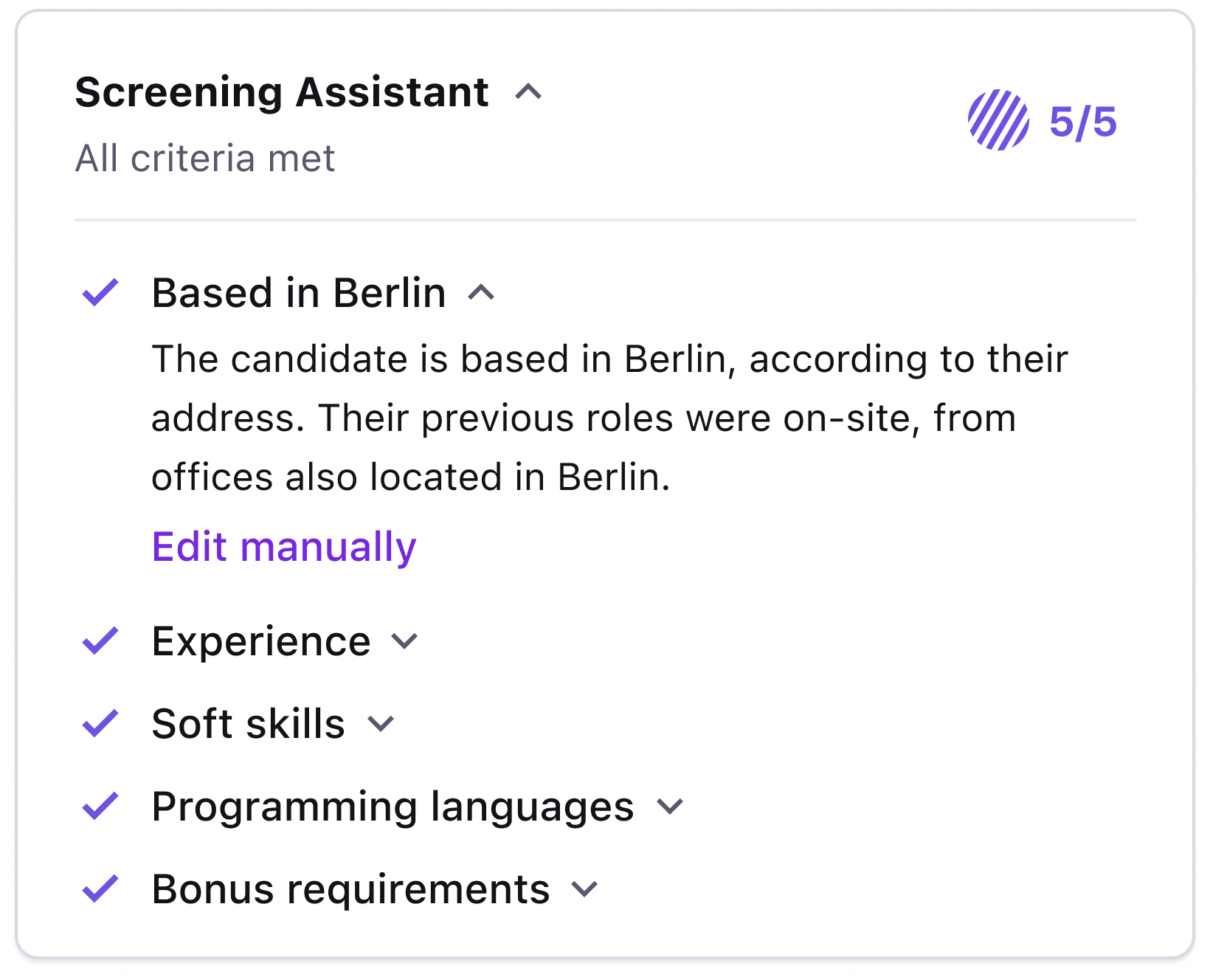
Screening Assistant rates candidates against six specific criteria you define.
Then, evaluate the filtered candidates’ relevant work experience, key skills, and alignment with the role's responsibilities to create a shortlist to move forward to the next stage.
Dig deeper: How to screen candidates faster: A 7 step practical guide
6. Conduct interviews and assessments
Interviews help hiring teams assess candidates more deeply and confirm whether they are a strong fit for the role and organization.
Most hiring processes divide the interview stage into several steps, such as:
- An initial screening call with a recruiter
- One or more interviews with the hiring manager or team
- Skills assessments and job tests
Dig deeper: How to choose the right pre-employment assessment tool
Keep in mind, it’s easy to assume that more interviews improve hiring quality, but the more interviews you add, the higher the risk of losing candidates.
Ideally, stick to 4–6 interviews to create a smoother, more engaging candidate experience, and take the pressure off your hiring teams.
Also, structure your interviews so your team can compare candidates more easily and make confident hiring decisions. For example:
- Ask consistent questions across candidate interviews
- Use evaluation forms to assess candidates against predefined criteria
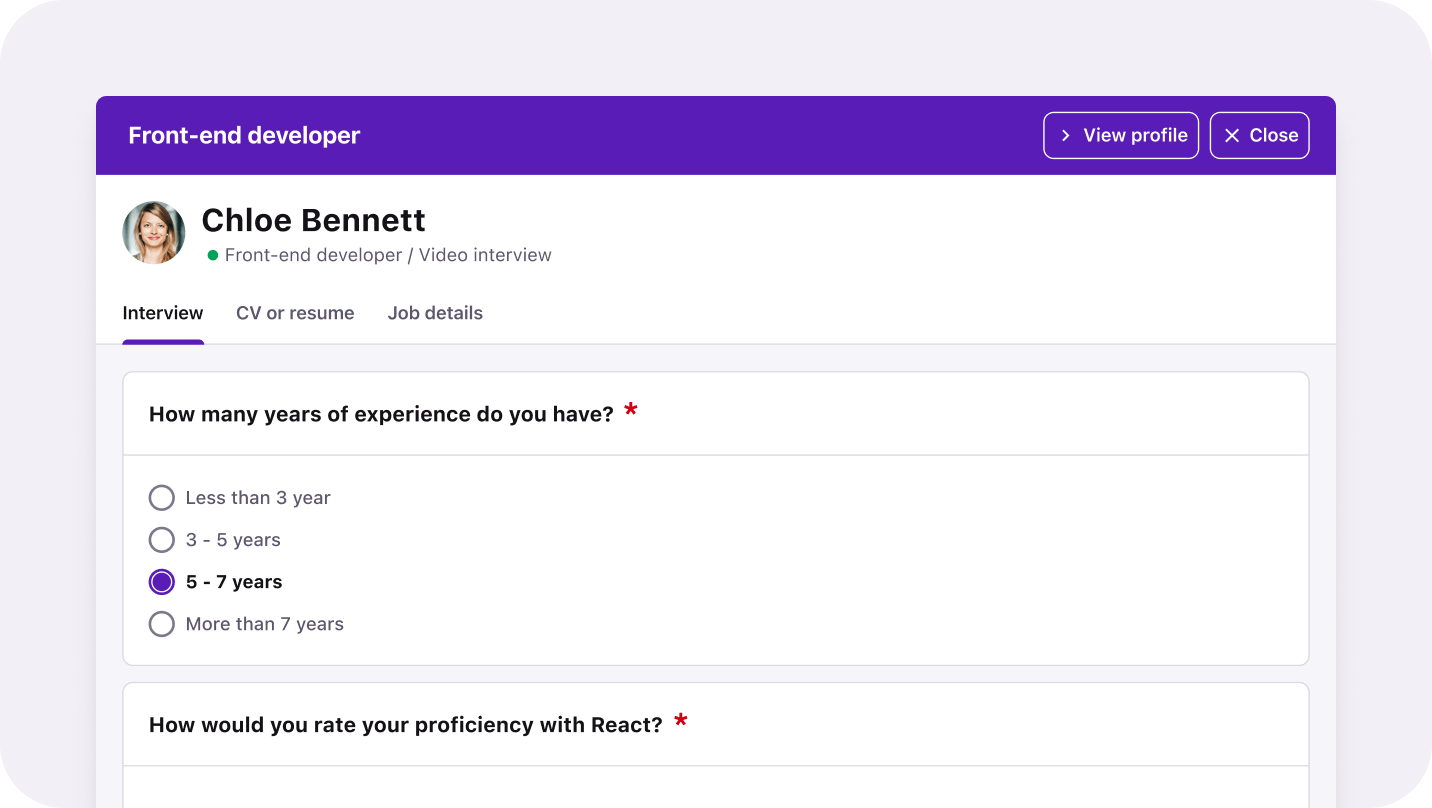
You can create custom evaluation forms and templates in Tellent Recruitee so everyone assesses candidates using the same criteria.
Dig deeper: How to speed up hiring team feedback and reduce time-to-hire
7. Select the candidate and extend the job offer
After interviews and assessments are complete, review the interviewer feedback and align with the hiring team on the preferred candidate.
At this stage, companies often complete final verification steps, such as:
- Reference checks with previous employers
- Background checks, depending on company policy or role requirements
Once done, prepare the formal job offer.
Offer letters typically include details such as salary and compensation, benefits, paid time off, severance pay, bonuses, overtime, and remote working policy.
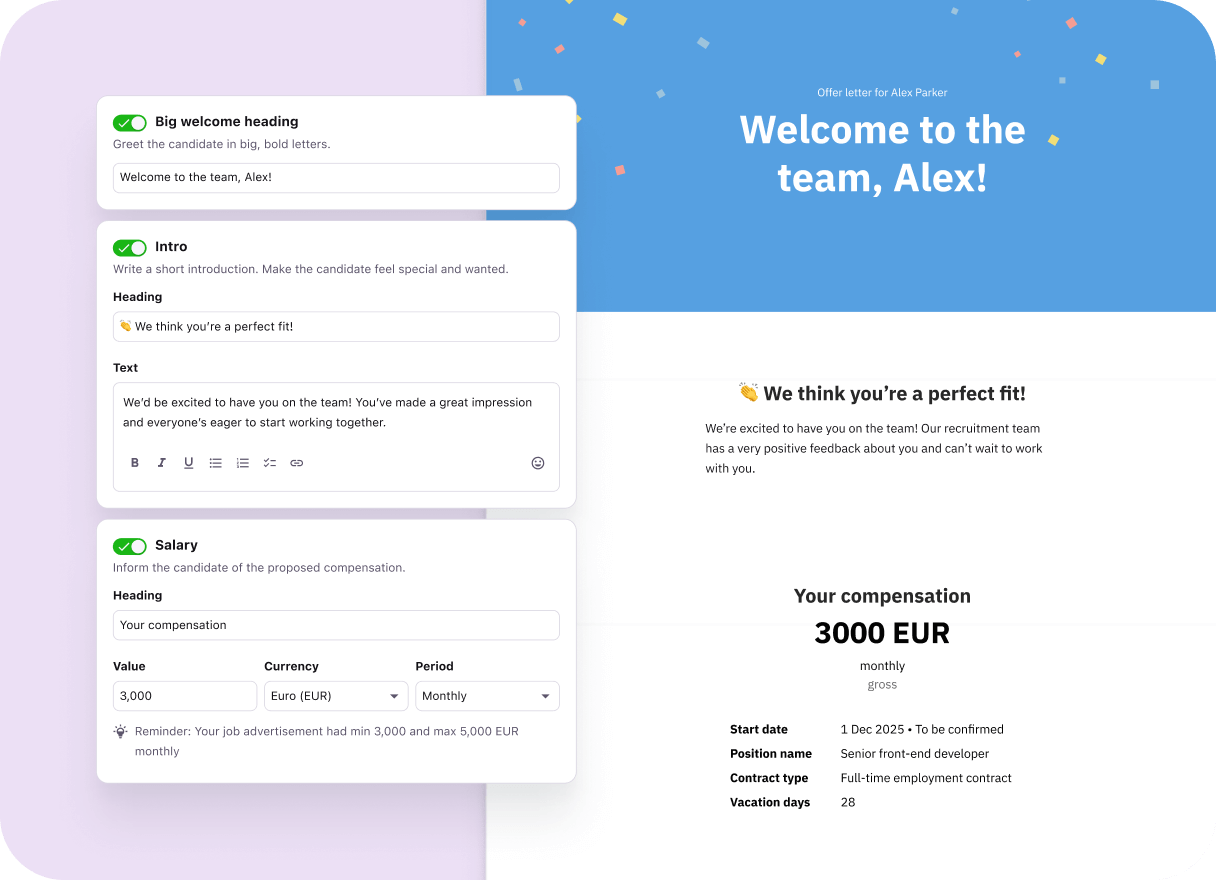
Create branded and professional offers in Tellent Recruitee and send them directly to candidates.
After the candidate accepts the offer, onboarding begins to welcome and integrate the new hire into the team.
A poor onboarding experience can leave new hires disengaged early and increase the risk that they will look for other opportunities (more on this below).
How to run an effective hiring process: 6 best practices
Having a defined hiring process is just the first step — its effectiveness depends on how consistently you apply and optimize it over time.
The following expert tips help you improve hiring speed, candidate quality, and decision-making — while ensuring a more consistent experience for both candidates and your hiring team:
1. Build a compelling careers page
Your careers page is often a candidate’s first impression of your company. It strengthens your employer brand and improves the quality of applicants entering your hiring pipeline.
An effective careers page should include:
- A clear overview of your company’s mission and values
- Insights into team culture and work environment
- Real employee stories or testimonials
- A simple way to browse open roles and apply
Make sure the page is also easy to navigate and mobile-friendly, since many candidates discover roles on their phones.
2. Simplify the job application process
According to Tellent's State of Hiring 2025 report, 41.2% of applicants who land on an application form abandon it before submitting — and one of the leading reasons is a long or complicated application process.
Lengthy or unclear application forms create unnecessary friction, discouraging candidates from applying.
In contrast, a shorter application process helps attract more qualified candidates and improves candidate engagement.
To improve application completion rates:
- Limit required fields to essential information
- Allow candidates to upload resumes instead of manually entering work history
- Enable quick apply options using LinkedIn or job board profiles
- Ensure the application process is mobile-friendly
Dig deeper: How to set up a job application process that reduces candidate drop off
3. Communicate consistently with candidates
47% of respondents in a Monster Work Watch Survey cited lack of communication as the top reason why they withdraw their applications.
Without regular updates, candidates often disengage — assuming the hiring process has stalled or that they’re no longer being considered — and move on to other opportunities.
Clear communication keeps candidates engaged and strengthens your employer brand.
One way to maintain consistent communication is to automate updates. For example, use your ATS to send candidates:
- Application confirmation emails
- Updates when they move to the next stage of the recruitment process
- Rejection notifications
Inside Tellent Recruitee, you can do this by selecting a trigger and subsequent action.
Say if you set moving candidates to the next stage as the trigger, select sending them a pre-drafted message as the automated action. This way, the ATS will automatically send relevant candidates an update email:
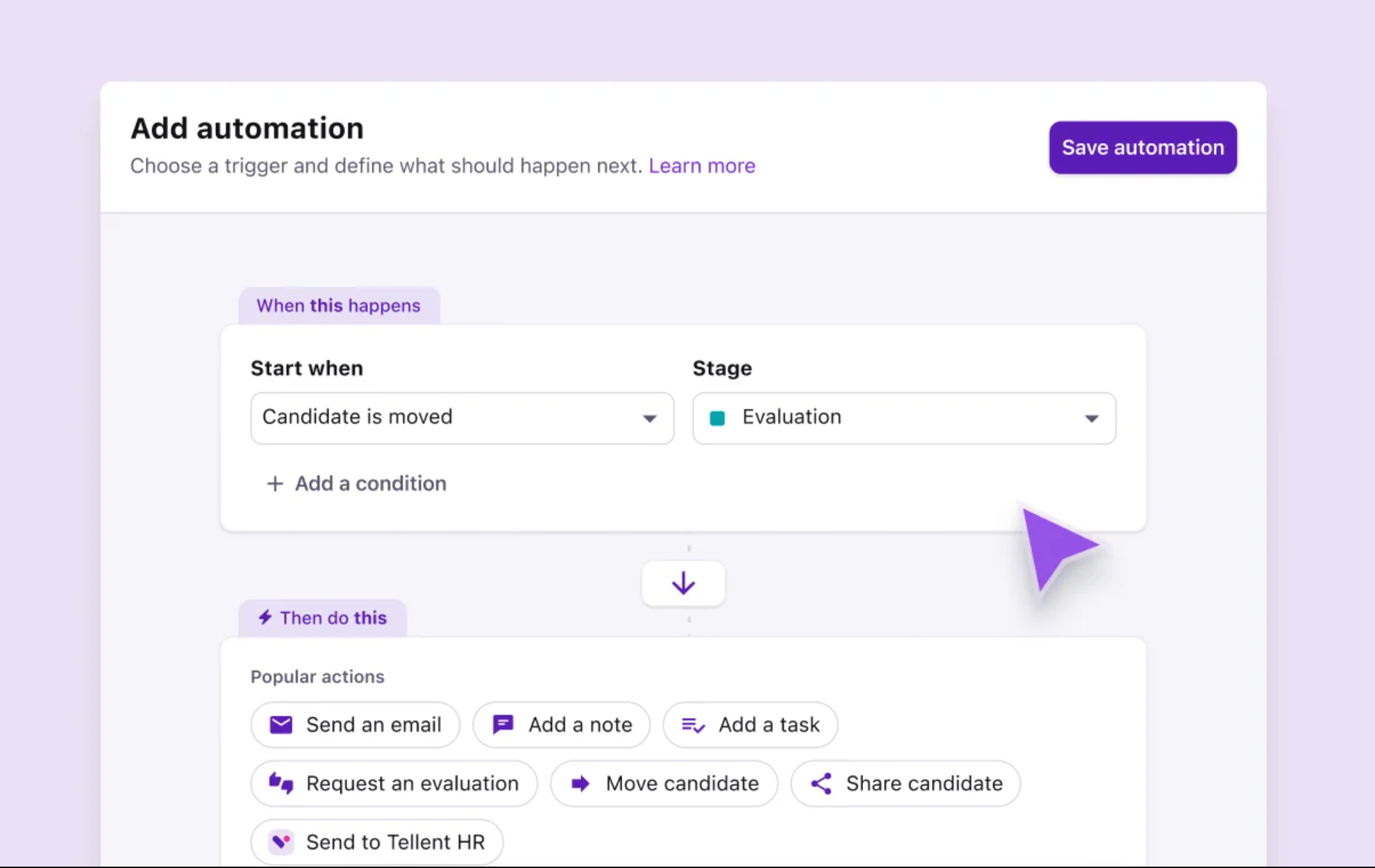 Use workflow automations in Tellent Recruitee to set up automated steps
4. Use structured criteria to make hiring decisions
Many hiring decisions still rely heavily on intuition rather than defined evaluation criteria, especially when interview feedback isn’t structured or documented.
This makes it harder to compare candidates objectively and increases the risk of bias or inconsistent decisions across interviewers.
So instead of relying solely on gut feeling, build a decision process based on consistent evaluation criteria — which also helps reduce hiring bias.
For example:
- Define key skills and competencies required for the role before interviews begin
- Collect structured feedback from interviewers after each stage
- Document interviewer feedback so the hiring team can review all evaluations before making the final decision.
This is also where collaborative hiring makes a measurable difference.
When hiring decisions involve only HR or the recruiter, you risk overloading a small team and missing role-specific signals that only a future colleague or hiring manager would catch.
Spreading evaluation responsibility across the right people — and giving each stakeholder a defined role — leads to faster, more confident decisions.
Dig deeper: Read the full guide to collaborative hiring
5. Build a strong onboarding experience
The hiring process doesn’t truly end when a candidate accepts the offer. Early onboarding plays a critical role in helping new hires succeed.
Effective onboarding includes:
- Preparing equipment and system access before the first day
- Introducing the new hire to the team and key stakeholders
- Providing clear expectations for the first weeks and months
A structured onboarding experience here helps new hires become productive faster and reduces early turnover.
To keep it consistent, turn onboarding into a checklist of key steps and touchpoints.
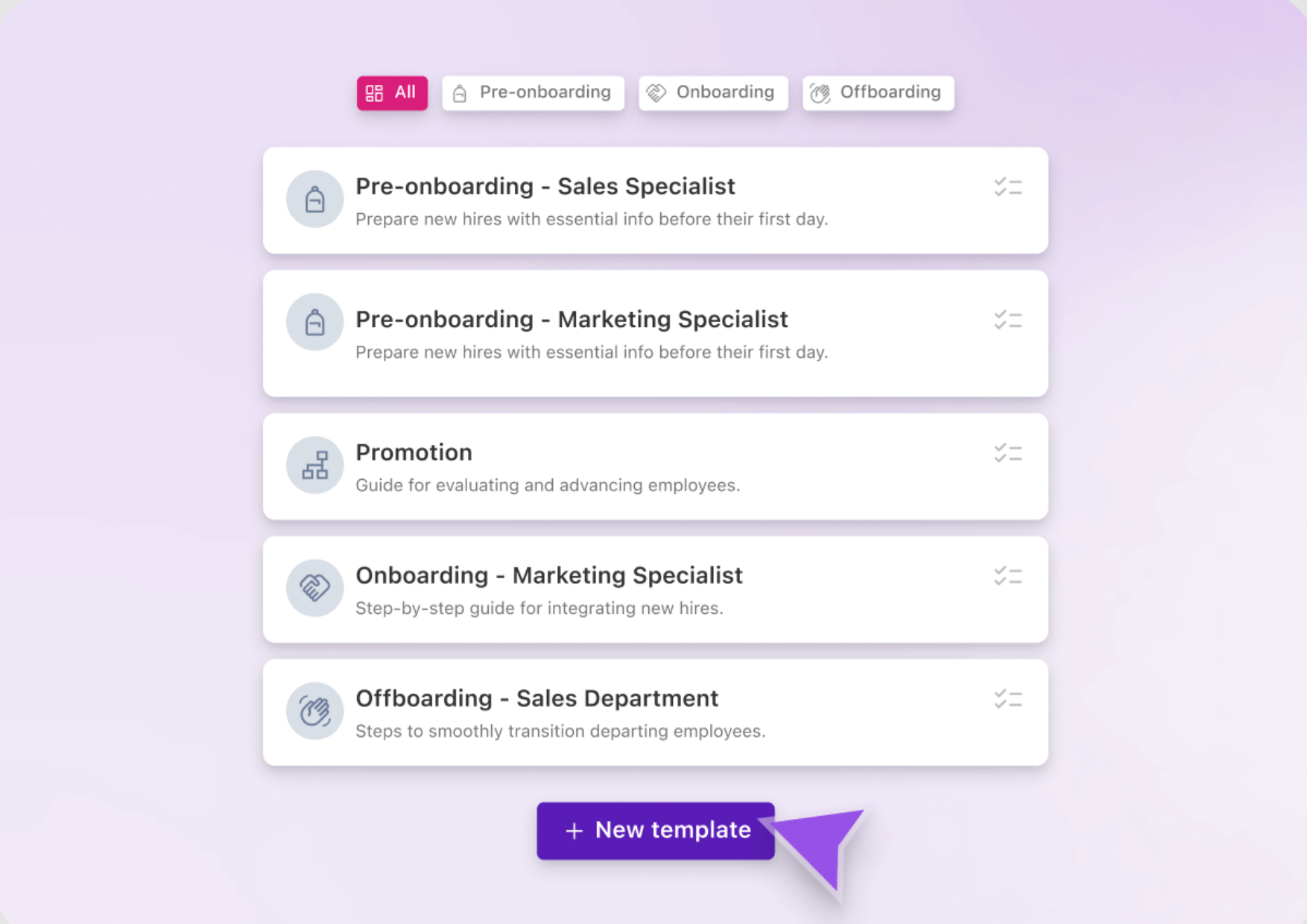
Create a checklist of automated steps to onboard new hires
With Tellent Recruitee’s Journeys, you can build this checklist and automate key steps — such as sending welcome emails, collecting documents, and assigning tasks — so every new hire follows the same onboarding experience.
6. Adapt the process to the role — don't use a one-size-fits-all approach
One of the most common reasons hiring processes underperform is that teams apply the same stages, timelines, and sourcing methods to every open role — regardless of seniority, function, or talent scarcity.
A standardized process can work well for high-volume or repeatable roles, but it creates friction for niche or experienced candidates who expect a more tailored experience.
To optimize for different role types:
- Shorten or simplify the process for entry-level, high-volume roles
- Add a portfolio review or technical assessment for specialist positions
- Adjust sourcing channels based on where your target profile actually spends time
- Align the interview format with the role's actual requirements.
Reviewing your most frequently hired-for roles and mapping where candidates disengage is a fast way to identify where your standard process needs adapting.
Wrapping up: Standardize your hiring process with a structured workflow
The real value of a hiring process comes from how consistently it’s followed across roles and teams.
Turning your hiring stages into a repeatable workflow ensures every candidate moves through the process faster, feedback is easier to collect, and decisions become more predictable — while reducing manual coordination and delays.
The impact is measurable: companies that streamline internal hiring workflows and approvals with tools like an ATS can reduce time-to-hire by up to 60%.

Over time, this structured approach becomes the foundation for faster, more consistent hiring across the organization.
Looking to build your hiring workflow next? Here’s a detailed guide on how to create a structured recruitment pipeline.